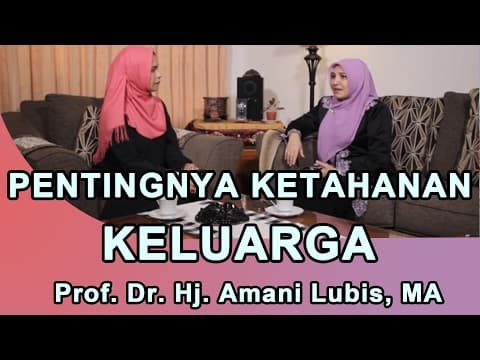
Transkrip diambil dari YouTube. Klik timestamp biru untuk melompat ke posisi tersebut di pemutar.
- Peace be upon you, and Allah's mercy
- and blessings. In the name of Allah,
- the Most Gracious, the Most Merciful.
- All praise is due to Allah, Lord of the
- worlds, the Most Gracious, the Most
- Merciful. Master of the Day of Judgment
- . How are you, brothers and sisters,
- fans of Silaturahim Radio and TV?
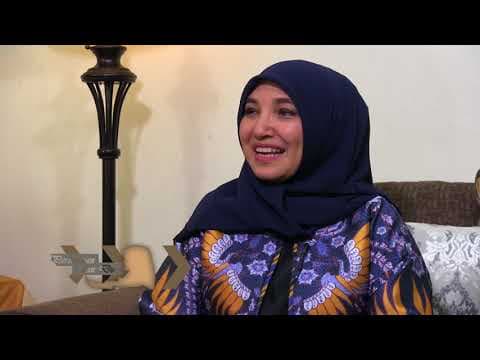
- Welcome back to the program "Women and
- the World." God willing, I, Nurfitri
- Tahir, with cameramen Robi, Cindi, and
- also Sandi, will accompany you,
- brothers and sisters, for the next hour
- and a half. Brothers and sisters,
- praise be to Allah, we are joined by
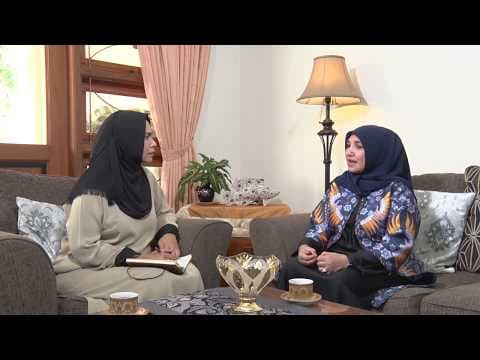
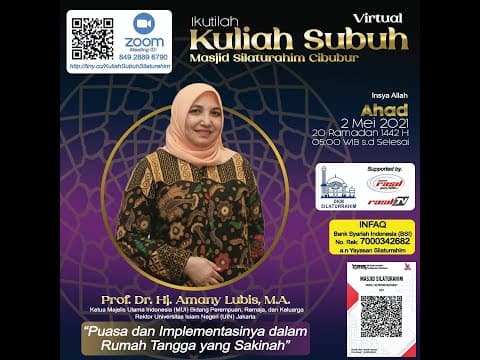
- our guest expert, Prof. Dr. Amani Lubis
- . Let us first welcome our guest. Peace
- be upon you, Ma'am.
- And peace be upon you, and Allah's
- mercy and blessings.
- It has been a very long time since we
- last met, Ma'am.
- Oh, yes. That is correct.
- I cannot wait to hear your
- enlightenment, Ma'am. Thank you. This
- time, brothers and sisters, God willing
- , we will discuss the concept of jihad
- for women. Brothers and sisters, please
- stay with us. We will discuss many
- things related to jihad and women. Very
- well, Ma'am. In the Quran itself, there
- are many explanations regarding jihad.
- But besides the word jihad, there is
- also the word "qital," which is a more
- detailed breakdown of jihad, meaning
- war. So we can agree that jihad is a
- broader concept than war itself, is
- that right, Ma'am?
- Yes.
- But in the eyes of Allah, which type of
- jihad holds the highest position?
- Oh, yes. In the name of Allah, the Most
- Gracious, the Most Merciful. All praise
- is due to Allah, Lord of the worlds.
- Peace and blessings be upon the most
- noble of prophets and messengers. And
- upon his family and all his companions.
- To proceed. Praise be to Allah, we are
- discussing today, for the viewers of
- Rasil TV and the listeners of Rasil
- Radio, that this theme is important
- regarding jihad for women and also how
- Allah accepts the good deeds of someone
- , regardless of whether they are male
- or female. However, all good, useful,
- beneficial, and positive deeds from men
- or women, God willing, will be rewarded
- by Allah, and Paradise will be their
- destination in the hereafter, God
- willing. Amen, Lord of the worlds.
- Now, earlier you linked jihad with
- qital. If we look at the definitions,
- indeed there is jihad of the self,
- jihad of wealth, jihad of knowledge,
- and jihad of time. So, jihad has many
- forms. We can perform jihad with our
- own souls. This means jihad of the
- battlefield, for those who fight in war
- with the intention solely for the sake
- of Allah Ta'ala. Then they will carry
- out jihad fi sabilillah, and that is
- qital-based jihad in a state of war. If
- the Muslim community is threatened and
- has been prepared to face the enemy,
- then Muslims are required to carry out
- that combat jihad. Now, as for jihad
- with wealth, we work hard in this world
- to, for example, become wealthy, to
- obtain as much property as possible
- through lawful means, of course. But
- the goal is to prosper this earth, to
- help those in need, to eliminate
- poverty, to eliminate ignorance, and to
- eliminate vice or immorality. Any funds
- allocated for such good causes are also
- considered jihad fisabilillah. Jihad of
- time, for example for those who do not
- have the opportunity or cannot perform
- jihad by donating money or funds, or
- thoughts, and they cannot contribute
- those things, but they have time to
- help others, that is also jihad. Jihad
- comes from the word 'juhd', an act that
- is intentionally strived for a specific
- purpose. Certainly, for a good purpose.
- And if it is 'jihad ilm', 'jihad ilmi'
- or 'jihadul ilm', that is also
- struggling to seek and disseminate
- knowledge. So, seeking knowledge is
- also a form of jihad. Disseminating
- knowledge is also a form of jihad. So
- we are all in the process of building
- the earth, prospering society, the
- nation, and also building the homeland
- is a form of jihad. And that is
- included in what is expressed by Allah
- Subhanahu wa ta'ala. "Whoever does
- righteousness, whether male or female,
- while he is a believer-We will surely
- cause him to live a good life." Now,
- this is what is meant by the meaning of
- the verse, that a person who does good
- deeds, whether male or female, and they
- are believers, "falanahu hayatan
- thayyibah". And we will give them a
- good life. And "wa lanajziyannahum".
- And we will also give a good reward
- that is commensurate with their deeds.
- Now, that is the essence of jihad.
- Perhaps it is very interesting what you
- said regarding the verse that promises
- a good life to those who perform jihad.
- In reality, there are many Muslim men
- and women who are quite afraid to be
- offered, for example, to perform any
- kind of jihad because perhaps what they
- imagine is not a good life. So what
- does the Qur'an mean by a good life,
- Ma'am?
- A good life, 'al-hayat at-tayyibah', is
- one that is carried out in its process,
- every second of it, 'fisabilillah'(in
- the way of Allah). Perhaps this is
- still a general expression, what '
- fisabilillah' actually is. Well, from
- here we must read a lot, study, listen
- to righteous people, our teachers, the
- preachers, so that everyone can lead us
- to the understanding of what '
- fisabilillah' and 'hayatan tayyibah'
- are. So, 'hayatan tayyibah' is a life
- in which no immorality is committed or
- things forbidden by Allah are not done.
- For example, food must be halal.
- Livelihood must also be halal. Then
- money that comes in is also from one's
- own efforts, not excessive. Even if
- there are gifts or if there is even
- greater sustenance, it is from their
- own efforts, from their thoughts, their
- energy, and from the profits they earn,
- for example from trade, transactions,
- and others. But not excessively.
- Because if it is excessive with overly
- extravagant promises, it could fall
- into usury (riba) which could wrong
- others. The profit is gained by oneself
- , but later there is injustice toward
- others. Well, hayat thayibah is a
- peaceful life, a serene one, that
- preserves family relationships. Uh,
- hayat thayibah. "Hayah" here, uh, means
- life. Our life is not only in society
- or on the battlefield, even if it is
- jihad or, uh, wanting to prosper the
- earth, it means we must keep working
- outside the home and also inside the
- home. Hayat thayibah is a sakinah
- family, a family that is, uh, full of
- mawaddah and also full of rahmah. Then,
- uh, protecting the young generation
- from destruction or from, uh, any act
- of, uh, anarchy, those evils are all (
- against) hayat thayibah. Let's imagine
- if life were like in, uh, the mountains
- for example, we imagine a green
- atmosphere, rice fields, farms, a very
- peaceful life. Uh, I am very happy to
- see nature like that, it's very
- peaceful. Uh, living there, a family
- that also, uh, carries out God's
- teachings truly and properly. Meaning
- the pillars of Islam are practiced, the
- pillars of faith are practiced, then
- the living atmosphere, the very
- beautiful natural atmosphere. This is
- already a paradise on earth. So, hayat
- thayibah is also a life that is, uh,
- similar to being in heaven. There is
- peace of soul, peace, uh, in
- interacting with family members, with
- society. Then it can also build peace
- on a wider level in nationhood. These
- are our efforts. It seems people
- shouldn't be afraid of the word "jihad"
- anymore because it is all positive
- things that can be done, and this
- country, the Republic of Indonesia,
- really needs every effort, however
- small, every positive idea, however
- small, is very necessary. So don't be
- afraid and don't, uh, lose heart with
- this or that. You said earlier that
- there are things that weaken us, uh,
- seeing the atmosphere of evil that is
- already prevalent in society. In the
- end, we also become lazy to change it.
- For example, as for me, I am very
- concerned about this young generation.
- It also makes no sense to me, why do
- children scribble on walls, you know,
- on public facilities, whether it's
- bridges or residential walls. This is
- very, uh, unfortunate, not positive.
- But we must have positive efforts to
- prohibit such graffiti. Then also, uh,
- it is encouraged that these children,
- this young generation, have positive
- activities. So, hayat thayibah is
- everything positive and leaving behind
- the negative. Right. Then for women,
- Ma'am, for us, is there a place for us
- to be able to fill all the lines of
- jihad provided by Allah?
- Yes, subhanallah. Uh, Allah actually
- does not discriminate; there is no
- verse in the Qur'an that, uh, says, uh,
- women can be in this field of jihad and
- cannot be in other, uh, fields of jihad
- . Everything, alhamdulillah, uh, has
- already been carried out by women. Of
- course, our reference, our main source,
- is the Holy Qur'an. So in the Qur'an,
- there are already many examples of, uh,
- women who are indeed, uh, examples for
- us to follow. First, in terms of
- politics, for example, there was the
- Queen of Sheba, who headed the kingdom
- of Sheba, Queen Bilqis. Then there are
- examples of believing women who fought
- to defend their faith, such as the wife
- of Pharaoh. There are those who
- defended their honor and also raised
- their children well, like Siti Maryam
- with the miracles given to her son, Isa
- Alaih Salam. Then, of course, in the
- Qur'an, there are many other examples.
- From the era, our role models are also
- the female companions, the women who
- lived during the time of the Prophet
- sallallahu alaihi wasallam. There are
- many signals within it, in the Qur'an,
- which indicate that we should emulate
- them. The appeal to the Ahlul Bait, for
- instance, for the women "waqarna fi
- buyutikunna," was an appeal to the
- Ahlul Bait or to the Prophet's wives
- specifically not to be out of the house
- too much. In this case, it might not be
- strictly necessary, but as the wives of
- the Prophet, they were asked to stay at
- home to maintain their honor and ensure
- their words were not misinterpreted. If
- they chatted here and there, there is a
- possibility that something could be
- miscommunicated. So, in order not to be
- misunderstood by the community. Whereas
- the Prophet was in the midst of
- building a civilization. In the midst
- of building a civilization. The
- priority of this civilization is the
- Islamic one newly built by the Prophet.
- He was the one most primary in
- conveying it. And the women also
- fostered civilization for women, but in
- their own realm. From this, we
- understand that women are actually not
- restricted in space. For example, even
- though it was suggested that the
- Prophet's wives stay at home, examples
- from the Sunnah and the traditions of
- the companions, as well as Islamic
- history, show that the Prophet's wives
- taught both female and male companions;
- when conveying Hadith, they were heard
- by the male companions as well. Then,
- when teaching family jurisprudence, for
- example, Aisyah radhiallahu anha, she
- was also heard by both men and women.
- But there is a procedure, which is*min
- warai hijab*, from behind a veil. That
- is specifically for the wives of the
- Prophet sallallahu alaihi wasallam,
- that explanations of religion were
- conveyed from behind a veil, which also
- served to eliminate or deny any
- possibility of slander or inappropriate
- things directed toward the Prophet's
- wives. From this, if we look at the
- Sunnah of the Prophet sallallahu alaihi
- wasallam from his life during his 23
- years of prophethood, there is so much
- to learn. He provided a lot of
- encouragement and even gave women
- significant authority, both on the
- battlefield and in society. Take the
- Prophet's wife, Siti Khadijah, she
- handled things like a Minister of
- Finance, a Minister of Social Affairs,
- what else?
- Maybe State Secretary, ma'am.
- Even though she was assisted by men or
- the companions who served as the
- Prophet's secretaries, she herself
- already performed many functions, and
- her role is undeniable. Then, when we
- perform jihad, can we choose which path
- of jihad we want to follow according to
- our desires, or is there something we
- must perfect first before we can move
- on to another jihad?
- Alright then. So, where is our space to
- move as women? Well, first, if we are
- still young, of course, as daughters in
- this day and age of education, we must
- follow the levels of education. Even
- though some say, "Oh, there's no need
- for a diploma; the important thing is
- being educated by the family, as noble
- character is enough." Uh, there are
- still many of our children, girls,
- especially in villages, who stop at the
- primary level or elementary school and
- do not feel the need to continue to the
- next level. If we look at the data or
- statistics from the BPS, it is still
- very concerning that many do not
- continue their schooling after
- elementary school. This is very sad.
- Besides the literacy rate, which is
- still a little low, though not as bad
- as in other countries. But I want to
- emphasize that for continued schooling,
- even for the mandatory nine-year
- education, women are still outnumbered
- by men. So, here, how can we ask for
- the quality of Muslim women if, for
- example, their education is limited?
- Now, how can we improve the quality of
- the population of the Republic of
- Indonesia if their education is not yet
- motivated or pushed to the maximum?
- Therefore, this is where the role of
- knowledge comes in. So, if we want to
- perform jihad, we must have knowledge.
- For example, a mother has skills from
- her family's home industry, like sewing
- or cooking. Her knowledge is in sewing
- and cooking. So, that is where her
- space for jihad is. After finishing the
- morning chores and breakfast for the
- family, she then cooks to sell. Now,
- where does the knowledge for her jihad
- come from? The knowledge comes from her
- talents or her abilities, from her
- interests that can be developed. So,
- this mother's jihad is in cooking and,
- for example, sewing. Then the wealth or
- the funds obtained are also spent for
- the family. And this is the greatest
- jihad for a woman, that she contributes
- economically to the household. Yes. And
- if viewed from family jurisprudence,
- this money from the woman is her
- charity. Because the obligation for
- support is on the husband, but the
- woman gives charity with her finances
- and her energy to her family. So,
- actually, if you look at a productive
- housewife, the reward is very great,
- and she has already carried out jihad.
- It's just that it is less recognized
- than the jihad of men who have to leave
- the house, let alone those who go to
- war. Now, our war is no longer about
- taking up arms. The role is now easy.
- Women can also just press a button. If
- you press a button and it explodes over
- there, that's easy, isn't it? Uh, war
- is different now. Therefore, we, the
- religious circles and the scholars,
- must also define jihad in a
- contemporary way. Jihad is no longer
- just jihad fi sabilillah; even jihad
- qitali is not just about taking up arms
- or being on the battlefield. Uh, it can
- also be done from a distance, it can be
- , uh, lethal, for example. Therefore,
- we must provide, uh, perspective that
- even if jihad qitali is done in a
- sophisticated way by pressing a button,
- it must also have a legitimate reason
- in our Indonesian fiqh, eh, our Islamic
- fiqh. So, we can maintain the integrity
- of this Republic of Indonesia by, uh,
- various means by, uh, striving for
- those positive things. Then, in the
- religious sphere, how can we develop
- jihad? Certainly, our duty is to
- understand the teachings of our
- religion, Islam, as broadly and as
- deeply as possible. Every Muslim, every
- man and woman, young or old, must
- understand their religious teachings.
- And this is obtained gradually. However
- , there must be a willingness.
- Sometimes there are people who do not
- want to. So they feel, "Oh, I've prayed
- , I've fasted, I don't want to develop
- further." Whereas in the science of
- creed, it is said that faith can
- decrease and increase with daily
- busyness. If at first we pray five
- times a day plus the nawafil, yes, with
- the sunnah prayers before and after.
- Then there are short prayers or dhikr
- after prayer, with busyness, with
- children growing up for example, with
- the busyness, in the end, it's just the
- five daily prayers. This decreases, uh,
- the room to increase one's reward
- decreases. Meanwhile, worldly threats
- or, uh, temptations are very numerous,
- added to, uh, shows or spectacles that
- are indeed not positive, yet they
- really encourage curiosity. Now,
- wanting to know so much, uh, what
- actually are those programs and others
- that are on the internet. So, the
- provision for a mujahid living in this
- world is actually if, uh, Allah says we
- were created to worship Allah, to
- glorify Allah, right. Wama khalaqtul
- jinna wal insa illa liya'budun. We are
- actually abid and abidah. Someone who
- does what, uh, worships Allah, serves
- Allah, submits themselves to Allah,
- whether male or female. So, we live in
- this world, besides being a mujahid and
- mujahidah, but primarily we are abid
- and abidah. Now, if we read insights
- from religious books more deeply, then
- our workspace in this world is actually
- worship. Yes, so jihad and worship are
- very strongly linked. If earlier jihad
- was always associated with, uh, war,
- qitali, or also, uh, earning money, for
- example, increasing wealth, that is
- also jihad. But actually, striving to
- improve the quality of our worship is
- also very important. Because our goal
- is, uh, to worship Allah. And
- subhanallah, Allah has also promised
- that all of this nature, whether it be
- the environment or the universe, will
- submit to humans. The creation of the
- universe is subservient to humans.
- Because humans are Allah's most noble
- creatures, given intellect to master
- this nature, and they are capable if
- they are willing to think about it.
- Therefore, the role of education is
- important, and as mentioned earlier, we
- must broaden our religious insights so
- we recognize our room for movement
- where positive things can be done. Then
- we must change ourselves, yes, change.
- We must change. The times have changed.
- Therefore, books on fiqh, books on
- aqidah, and history books must also
- change. Not changing the facts, and
- certainly not changing the principles
- of Islamic teachings, no. But changing
- their interpretation to align with the
- developments of the times. Yes, now we
- have cyber warfare, we have social
- media that can be used positively or
- negatively. Now, we must change, yes.
- Eh, therefore Allah also says that
- verily, Allah does not change the
- condition of a people until they change
- what is in themselves. So Allah
- Subhanahu wa ta'ala has also said in
- the Quran that humans must change. It
- is they who must change within
- themselves. In the Quranic verse, it is
- said that verily, Allah does not change
- the condition of a people until they
- change what is in themselves. So Allah
- will change a, what? A civilization,
- the quality of a nation, or a society,
- except for what is within themselves.
- That is what must change. So, the
- change within us, in our mindset, in
- our paradigm, that is what will make
- our world better.
- Very well. Subhanallah, brothers and
- sisters. Don't go anywhere. We will be
- right back after the following break.
- Still on "Women and the World."
- Brothers and sisters, this time we are
- chatting with Prof. Dr. Amani Lubis
- regarding women's jihad. Ma'am, it
- seems women today experience a dilemma
- when wanting to wage jihad on many
- fronts. Even though it is not in terms
- of warfare, right, Ma'am? Because
- perhaps our current society is not as
- communal as the society of the past,
- right? In the society of the past, even
- if people didn't appear, they were
- motivated by the Prophet's hadith which
- says that those who facilitate people
- going to jihad will receive the same
- reward.
- So what should women do today, Ma'am?
- So they can wage jihad without
- neglecting their families, for example.
- Very good. So, indeed we must
- introspect, yes, upon ourselves and our
- society, on how we should actually
- develop this concept of jihad because
- it is a command from Allah Subhanahu wa
- Ta'ala, that jihad is an important
- element in development, actually, yes.
- We must shift the language like that.
- Jihad is an important element in
- development. The development of a
- nation must be based on a strong
- principle that what we are aiming for
- is fisabilillah. Fisabilillah means we
- build this world, this country, for the
- sake of Allah Subhanahu wa Ta'ala. And
- that means we carry out His commands
- and abstain from His prohibitions. That
- amar makruf nahi mungkar is absolutely
- essential. Then there is law
- enforcement, which must start from the
- very beginning, from the oath of
- allegiance. We remember that in Islamic
- history, the oath of allegiance, or*
- bai'at*, meant a pledge from the
- followers of Muhammad. The early
- followers of Muhammad swore allegiance
- to the Prophet to obey what was
- commanded by Allah. Then they pledged
- to follow what was taught by the
- Messenger. To swear allegiance means to
- promise loyalty. Now, this promise of
- loyalty must be followed by a good
- intention to carry it out. And then, a
- strong effort. At that time, during the
- oath, there were six things conveyed in
- the promise. When the Messenger invited
- several people from Medina who had
- invited him to come to Medina, or
- Yathrib as it was called back then. The
- Messenger stated six things: to obey
- Allah and His Messenger, not to steal,
- not to commit adultery, and...Lastly,
- not to lie. So those were the
- principles, very simple things that
- were requested. But in the second oath,
- there were more, seven things requested
- , and that is in Surah An-Nisa, where
- the oath included one more element...
- Not to steal was already mentioned.
- Yes, it was.
- There is one more, which must be looked
- up later. In that second oath, the
- Bai'at al-Aqabah, it was more
- comprehensive: obeying the Messenger,
- obeying the Prophet, and being
- forbidden from stealing, adultery,
- lying, and also, what else? Amar makruf
- nahi mungkar. Now, this is the reason
- for the establishment of an Islamic
- state. Therefore, we are asked to unite
- . It is said that the Muslim community
- today is not cohesive; we are not
- united, not in step, and lack a shared
- vision. Actually, unifying our steps is
- a command from the Messenger, and it
- was exemplified in Medina right after
- his migration, when the Muhajirun and
- the Ansar were united. They even split
- their homes and their land in two so
- that they could live together. Yes. Now
- , what is happening today? Earlier, it
- was mentioned that...what was it? The
- spirit of jihad is weakening because we
- lack that sense of unity. We are living
- in a modern culture now. And our
- paradigms and ways of thinking are also
- modern. The nature of it is
- individualistic. So, if we want to
- return to the spirit of jihad and a
- more comprehensive way of building, we
- must shed this individualistic nature.
- Another thing that brings us down and
- causes our fragmentation and lack of
- concern is the materialistic culture.
- It has become deeply ingrained. So, it
- starts with individualism. This is a
- social illness, a flaw in our adopted
- way of thinking; individualism is the
- first mistake, where one only cares for
- themselves. The second is materialism,
- where one only wants to be wealthy for
- themselves and does not care about
- others. After that, there is secularism
- . Secularism is, uh, leaving behind
- things based on religion, then
- utilizing or using things that are
- strictly related to the world. So, for
- example, the development of medical
- science, agriculture, or engineering is
- just developed for, say, agricultural
- progress, without considering religious
- aspects or long-term consequences. What
- is the actual wisdom in farming besides
- providing food for the people? Then,
- what is the actual function of this
- land? What is the broad function of
- nature, really? Yes, it certainly must
- be preserved; it must not be destroyed.
- So, every effort must be thought out so
- as not to damage the environment or
- destroy nature. Now, from this, it
- turns out that jihad is very broad. It
- is not just that jihad only applies if
- there is a war and we think about being
- in a state of jihad. Of course, if
- there is a war, there is a threatening
- danger. If tanks are already in front
- of us, or say, sea vessels, tankers, or
- , what are they, large aircraft
- carriers are right in front of us, then
- we just stay silent. That is wrong.
- That is incorrect. Of course, we must
- prepare so that such threats do not
- happen. Now, there are also people who
- think about how our jihad should be in
- facing war threats like this. Now, what
- if the war is asymmetric? Asymmetric
- war is a war that is unbalanced. A
- country has weapons, has a military,
- then faces society, for example, women
- or men who hold certain views, whether
- radical or extreme, but they are met
- with weapons, meaning they are killed.
- Now, this is what is called unbalanced.
- What is balanced is weapon against
- weapon. A weapon threat is met with a
- weapon response. This is balanced. But
- it turns out that war today is no
- longer like that. This is the world
- paradigm that has already shifted. War
- turns out to not just be between
- weapons, but actually between those who
- have weapons and the society. What does
- the society have? They have thoughts
- that might be considered deviant or
- those who do not share the same
- ideology. Now, the new paradigm today
- is that such people, people who are
- radical or extreme, do not have to be
- met with weapons. Instead, there must
- be efforts toward awareness,
- anticipatory efforts, and also early
- detection, as the current terms go,
- that we must study the situation and
- find solutions. What is the solution?
- People do not get angry on their own
- without a reason. Perhaps they have
- economic needs, or perhaps their
- aspirations are not being channeled. So
- , this is where the channels for
- opinion must be opened. Furthermore,
- economic channels or economic
- empowerment must also be carried out.
- Thus, our efforts become integrated.
- Through these efforts in society and
- the state, we eliminate that
- individualism mentioned earlier. Then
- we develop material aspects but avoid
- capitalism. The kind of capitalism
- where the rich consume the poor, or the
- poor stay poor while the rich get even
- richer. There is no equality here, nor
- is there any thought of helping one
- another. That is also wrong here. Now,
- that is why, going back to the three
- things mentioned earlier, there is
- secularism. Secularism develops the
- world from a worldly perspective. We
- must develop the world with both
- worldly and spiritual perspectives. Yes
- , therefore, the role of religion is
- important. And this has been recognized
- by the Western world, and the Eastern
- world that is not Muslim. Everyone
- acknowledges that spirituality supports
- development. Physical development
- supported by spiritual development
- complement each other. Therefore, thank
- God, in Indonesia, efforts to maintain
- this spiritualism are very high.
- Because we are indeed religious people.
- If researched sociologically and
- anthropologically, the Malay people of
- the archipelago are religious people.
- They always bring religious elements
- into their policies. It is already
- their nature. So it is very different
- from the West. The West already has
- total secularism, a separation between
- religion and state. There is no thought
- on how religion should enter into state
- affairs. In Indonesia, thank God, it is
- not so. Because in our state structure,
- there is certainly a Ministry of
- Religious Affairs that will look after
- the religiosity of all Indonesians,
- whatever their religion. Then there is
- local culture, local wisdom that always
- preserves this because our spirituality
- is very deep.
- Now, in your opinion, from Indonesia,
- if you say that secularism is perhaps
- not concerning. But what about the
- individualism and materialism that
- exist in Indonesia? Should they start
- to be addressed, or are they still in
- good condition, Ma'am? Oh yes, of
- course, they must be addressed. Our
- individualism is still, what should I
- say? It still needs to be improved.
- Actually, in terms of togetherness,
- mutual cooperation, and helping one
- another, Indonesia is still strong,
- still high. I always give the example
- that abroad, specifically for women,
- the greatest example is Indonesian
- women. Because Indonesian women are
- always involved in organizations. It
- was said earlier that we aren't
- communal, but actually, within their
- environment, they are organized. The
- Indonesian state structure also makes
- the smallest unit of society, 40 houses
- , into one RT (neighborhood unit). Yes,
- that is actually to encourage unity, to
- get to know one another, to help one
- another.
- So, the state structure, from the
- smallest unit, the smallest
- administrative unit, RT then RW, has
- taught us to unite, to look after one
- another, and also to strengthen bonds.
- Now, in that environment, there can be
- Muslims and non-Muslims. As neighbors,
- we must maintain unity. Besides that,
- from a religious perspective, Muslims,
- both men and women, always have parent
- organizations they are affiliated with.
- Yes, we have so many Islamic mass
- organizations, and this does not exist
- in any other country. I am certain that
- there is no other country where the
- society, even before the Republic of
- Indonesia existed, was already
- organized and has remained intact until
- now, and even become a strong partner
- to this nation; that does not exist in
- any other country. In any country, NGOs
- or mass organizations are surely seen
- as threats and are feared. They can be
- shut down, dissolved, or even banned.
- Well, in Indonesia, thank God, that is
- not the case. As long as they build in
- line with and can carry out the goals
- of the Republic of Indonesia together
- as partners, then they become a
- constructive element. So, even if there
- is individualism, it only comes from
- small groups or individuals who do not
- think about others. But in terms of
- societal and state structure, we have
- been strengthened by unions or
- associations, community groups, and
- others that already exist. This is the
- positive side of it. Now, we are left
- with materialism. And this materialism
- is what ultimately must be addressed,
- constantly reminding us that we must
- pay zakat. The level of zakat payment
- and fulfillment in Indonesia is weak,
- and even more so for waqf. Yes, in this
- forum, we must reiterate that for both
- men and women, paying zakat is part of
- the pillars of Islam. Therefore, it is
- the obligation of every Muslim man and
- woman to fulfill zakat. How could they
- not fulfill zakat? When the command of
- the fourth pillar of Islam, or the
- fourth—yes, the fourth before Hajj—
- is zakat. So, it must be carried out.
- The Government of the Republic of
- Indonesia has also made good efforts,
- with many regulations regarding zakat.
- However, its implementation is not yet
- fully understood or carried out
- properly by the authorities. So, this
- is the duty of us all. The duty of
- Rasil radio, the duty of Rasil
- television, the duty of all of us in
- society to develop zakat. Zakat is what
- will eventually eliminate those
- diseases of individualism, materialism,
- and secularism; they will disappear
- through zakat. Zakat means we care for
- those in need, those who are weaker,
- those who are less fortunate, and those
- with special needs. Yes, those are the
- channels for zakat. Once all of this
- has been addressed, there will
- certainly be other issues. We can use
- zakat productively. If the need for
- school is already met, then the
- community's need for higher quality of
- life is to be more economically
- empowered. So, after the other asnaf (
- categories of recipients) have been
- provided for, zakat can also be given
- to those who need capital for business.
- Waqf is the same; the idea of waqf has
- also evolved. It turns out that, in the
- past, the concept of waqf in Indonesia
- was only for cemeteries, madrasas, and
- mosques. That is not enough for waqf.
- My family, for example, my grandmother,
- taught me to give waqf—back then, it
- was book waqf. So, after we finished
- our exams and moved up a grade, we
- would donate our old books; we would
- tie them up and give them to a library
- or to those who needed them, inviting
- them to read. So, waqf of books, waqf
- of wearable clothing, and waqf of money
- . So, waqf has also developed.
- Basically, waqf is an item or a
- necessity that can be utilized. But it
- is not something that is expected to be
- fleeting. If it is cash waqf or land
- waqf, it must be managed well to be
- productive, for instance, farmland must
- produce. Don't let the waqf go
- unmanaged and unproductive, leading to
- calls to cancel or sell it. Well, that
- is simply not allowed. So even for book
- waqf, our intention must be eternal.
- Because waqf must persist, for books,
- it lasts as long as they are useful
- until they are worn out, for example.
- These concepts foster a spirit of
- togetherness and allow us to build one
- another. Back in the era of Umar ibn
- Abdul Aziz, during the Umayyad dynasty,
- there was a time when zakat could not
- be distributed. People did not want to
- accept zakat funds. They felt it was
- like charity. Like helping those who
- cannot fend for themselves. They had
- dignity, or muruwah; they had great
- self-esteem. They did not want to
- receive handouts from the government.
- They refused. They said, "Oh, I am
- healthy and I have knowledge. I will
- perform jihad, as mentioned earlier. I
- want to strive to earn my own living. I
- do not want to hold out my hand to
- receive from the government." In the
- Umayyad era, that situation already
- existed. People did not want to accept
- zakat. Well, that doesn't mean the
- obligation of zakat vanished. Those who
- meet the zakat nisab still pay their
- zakat. But the community no longer
- needed it, or they had such high
- self-esteem that they didn't want
- handouts. From there, of course, that
- condition would not last forever. It
- would not remain that way indefinitely.
- There will surely be natural disasters,
- and zakat distribution can also go to
- disaster relief. There were disease
- outbreaks in the old days, that was
- well-known. Even if they didn't need it
- economically, nature has other ways. It
- brings disease outbreaks. There are
- pests, plant pests or agricultural
- infestations. There are natural
- disasters, earthquakes, floods, and so
- on; they all happen, once again
- creating poor people who desperately
- need zakat. Therefore, this cycle
- always repeats itself. This is the
- natural cycle that, if we think about
- it, logically, this is the scope of our
- collective jihad. So we should not
- belittle ourselves. The Indonesian
- Muslim community is already very strong
- , very strong with all the efforts
- present in society. We just need to
- appreciate and improve them further,
- and we can look at other Islamic
- countries that are more advanced, more
- prosperous, or have a higher Islamic
- civilization. Well, we can emulate or
- we already possess the social capital,
- the intellectual capital sufficient to
- advance Indonesia as a center of
- Islamic civilization. This is the time
- for us in Indonesia to rise, to know
- ourselves, to value ourselves, and then
- build Islamic civilization. God willing
- .
- Glory be to God. We will take a short
- break, Ma'am. Brothers and sisters. Do
- not move from your seats. We will
- return shortly to Women and the World.
- Brothers and sisters, we are now in the
- final segment of the program Women and
- the World. We will continue our
- conversation with our guest, Prof. Dr.
- Amani Lubis. Ma'am, based on the
- explanation you provided earlier, does
- it mean that every Muslim can actually
- become a mujahid? But does that make
- jihad easy in the eyes of God?
- Oh, it is certainly difficult, very
- difficult, because what we are fighting
- against is our own base desires. Jihad
- —the greater jihad—is precisely the
- struggle against our own desires. Human
- desire is the hardest thing to fight,
- the hardest to restrain. Thus, the
- lesser jihad is the qitali jihad, the
- jihad of warfare. Because if one knows
- the tactics, one simply studies the war
- tactics, identifies the enemy, goes to
- the battlefield, and fights. Or even in
- this modern era, where wars are fought
- without weapons, we can still learn the
- strategies and tactics. Now, with base
- desires, it is difficult to delve into
- ourselves because there are always
- whispers of yes and no, what is allowed
- and what is not. Therefore, what gives
- us a strong stance and strong faith is
- by equipping ourselves with a strong
- religious perspective as well. In terms
- of creed, in terms of fiqh, Islamic
- laws or Islamic jurisprudence—it is
- very important to provide us with inner
- strength. Then it also expands the
- horizons of the spaces for jihad that
- we can open. By expanding our religious
- insight, we open up spaces for jihad.
- Not limiting it only to qitali jihad,
- but jihad with wealth, with time, with
- knowledge, with energy, and with other
- things needed by society. Yes. Here too
- , jihad becomes difficult, not easy.
- Therefore, we also remember the verses
- of the Qur'an that link jihad with
- righteous deeds. Righteous deeds are
- good, positive actions that are
- beneficial for society, for oneself,
- the community, and the country. The
- verse of the Qur'an reads, "In the name
- of God, the Most Gracious, the Most
- Merciful.""For the servants," God the
- Almighty has spoken. This means that
- whoever performs good deeds, the
- results and the impact will return to
- themselves. "For himself," it will
- return to himself. So it returns to him
- ; the benefits and advantages return to
- himself and, of course, to his society.
- He becomes a light. If one has done
- good, they become radiant, providing
- illumination and enlightenment to their
- environment. But if man asa—whoever,
- uh—uh, ruins their, uh, deeds, or
- performs them in a bad way, then it
- also returns to their own soul. Their
- soul will, uh, become corrupted. All
- those bad traits will eventually reside
- there. There is malice, there is envy,
- there is laziness, there is lack of
- creativity, and lack of productivity.
- That is asaa alaiha faalaiha. So, uh,
- those negative deeds return to oneself
- as well. Then Allah continues in the
- next part of the verse, saying, uh,
- fama rabbuka wama rabbuka bidzallamin
- lil abid. Indeed, Allah does not, uh,
- oppress His servants. Therefore, all
- our deeds return to us, right? Uh, we
- will be a light to ourselves and to
- society if we do good; if we do bad,
- then, uh, the impact will also affect,
- uh, society and also the country. Now,
- from here, our obligation is, uh, to
- purify ourselves—scholars from the
- perspective of, uh, Sufism, from the
- perspective of religious sciences,
- right? What is our path to
- self-purification? There are so many.
- First, besides strengthening our
- worship, we must also, uh, eliminate
- those traits: the materialistic, the
- secularistic, or the, uh, hedonistic,
- which is too much love for the world.
- We must begin to practice zuhud (
- asceticism). Zuhud in the modern era.
- Back then, Umar ibn Khattab, because he
- was a zahid, he really did not want to
- take state money, did not want to take,
- uh, profit for himself, until his
- clothes were tattered. Remember, when
- he entered Al-Quds, Jerusalem, and met
- with, uh, uh, what? The head priest,
- the head priest in Jerusalem. This head
- priest did not know which one was the
- Commander of the Faithful, Umar bin
- Khattab. He didn't know. It turned out
- Umar was resting under a date palm tree
- , his clothes tattered. He said, "Is
- that our commander sitting under the
- tree?" Subhanallah. He shook his head.
- He was amazed that, uh, the commander
- of the Muslims was like this. And that
- was indeed how it was. His, uh, nature
- of zuhud had really surpassed any
- concerns. He wasn't afraid of not being
- considered a leader because his clothes
- were not proper, or afraid of being
- considered, uh, his jihad, uh, what,
- lacking in requirements. For example,
- because he wasn't riding a magnificent
- horse or wearing clothes with grand
- attributes. No. He had let go of all
- that. Because what he aimed for was
- only Allah, only the truth, only what
- is right, and also, uh, only the
- afterlife. Now, even though he was a
- great commander, that is an example,
- right, from, uh, Islamic history.
- However, we can now translate the
- asceticism and wisdom of our former
- commanders, for we are actually
- commanders ourselves today. Do not
- think that all commanders are on the
- battlefield. But if jihad is not just
- war, then we are also commanders in our
- own lives. That in our society, I am an
- academic by profession, for example,
- and you are, uh, what, uh—working in
- the media industry, or being media
- practitioners, we are all commanders
- and we are responsible for our own
- fields so that we can carry out our
- mandate. Therefore, jihad is not
- difficult. Jihad is our sense of
- responsibility towards ourselves,
- towards society, and towards the
- country. All right. However, it seems
- that the stereotype of the words jihad
- and mujahid is currently at a low point
- , isn't it, Ma'am? Who is actually to
- blame? Is it the fault of Muslims
- themselves or is it indeed those who
- dislike Islam? Yes. Hmm. For Arabs
- themselves, whose daily language is
- accustomed to using derivatives of the
- word jihad. There is jahada, juhdun,
- jahid, mujahid, mujahidah. That is
- everyday language. We can say to our
- child who is studying for an exam, "
- Anti mujahidah wa anti mujtahidah."
- Meaning you are diligent and you are
- also doing jihad, meaning you are
- striving for your exam. Yes. Yes. Well,
- that is normal, but for non-Arabs, this
- has become a stereotype because they
- only know jihad as fighting. Then, if
- we examine Western literature, they are
- the ones who first labeled religious
- groups that are somewhat militant as
- jihadis. The word jihadi. Yet, they
- might just be a religious movement
- focused on purification, or perhaps
- just, for example, what? Defending.
- Defending the truth of their religion,
- like the mujahideen, or groups like the
- Taliban in Afghanistan. Taliban comes
- from Thalib. Talib. Talib ilm means
- seekers of knowledge who want to
- broaden their religious horizons, but
- they are immediately labeled as jihadis
- . So, they were branded, and the word
- jihad became a stereotype. So, there is
- another meaning, or the meaning has
- been narrowed down to someone who likes
- to wage war. Yes, that group is one
- that fights. So the opponent must also
- be someone who likes war. Must be
- military. Well, this is what happened.
- But that was a period, perhaps in the
- 90s or the 2000s, there were still acts
- of terrorism, radical movements, but
- those also had specific reasons.
- However, Western references still use
- the word jihadi. But in Islamic
- references, Muslims do not write it as
- jihadi. Even though it comes from
- Arabic, it is not referred to, for
- example, as jihadiin using the word
- jihad. No. But they remain a mujahid,
- or they have a socio-religious da'wah
- movement that is stronger in
- strengthening their faith. Then they
- are solid, having high solidarity among
- themselves. Yes, so we are now in the
- year 2016. Let us just admit that we
- are no longer afraid of the word jihad.
- Because jihad does not mean kital, it
- does not mean war. Because now our
- battlefield is not just on the front
- lines. Our battlefield can be at home,
- on the road, or in our office space. If
- we consider all of that a battlefield,
- then we must constantly be a mujahid in
- our offices. We must be able to develop
- a healthy, polite work culture. There
- should be good organizational structure
- , good planning, good program
- implementation, monitoring, and other
- good management elements. That is our
- sphere of jihad in the office. Then, if
- in universities, we develop knowledge
- sincerely while also developing broad
- insights that build civilization. Not
- that which belittles ourselves or the
- Muslim community, but a broader, more
- responsible civilization. We give
- students responsibility. Well, I am
- reminded of our earlier conversation
- about leaders or figures in Islamic
- history who were generally young. Back
- then, the age of 16 was a very
- productive age that could be emulated.
- 16. Many Islamic figures at 16 were
- already successful as scribes for the
- Prophet's revelations at that age.
- Hassan bin Tsabit. He also became a
- great poet at a young age, under 20
- years old. Khalid bin Walid was also
- the same. Ali bin Abi Talib, at a very
- young age, had already become a leader;
- his stature and leadership were already
- visible. Then Usama bin Zaid, who led
- the army to Persia that was sent by the
- Prophet. However, the Prophet passed
- away, then it was continued by Abu Bakr
- . This troop had to go to Persia. Led
- by a commander who was 18 years old,
- Usama bin Zaid. So these young ages are
- actually very potential ages. Now it
- just depends on whether we, the
- teachers, want to provide spirit and
- develop the potential that exists
- within the children or not. But if they
- are always considered children, even
- until age 20 they are still considered
- children. Even at 25, they are still
- considered children, still young. When
- will they grow up if we keep treating
- them as children? Therefore, from this
- spirit of Islamic history, we
- understand that age is not an obstacle.
- Young age is not a barrier to
- struggling and fighting hard. But there
- are many examples in Indonesia of
- creative young people too. High school
- students can already be innovators. So
- those with high creativity make the
- precursors to robots. Precursors—no,
- not precursors—they make useful
- robots. Useful cars, then gadgets, it
- turns out those were also innovations
- from Indonesians. Now, we learn to
- appreciate ourselves, that our
- creativity does not lag behind any
- other nation. And with our faith, Islam
- , we become strong, and we also
- dedicate ourselves to science, to the
- nation, but we do not abandon our roots
- as strong Muslims with a foundation of
- strong religious insight, as well as a
- strong spirituality. Then, of course,
- that is with sincerity for Allah
- Subhanahu wa ta'ala.
- Perhaps that begins with giving
- appreciation and the way we view those
- young people, which is not trivial,
- isn't it, Ma'am? Respecting their views
- , and this can also extend their
- productive age, right, Ma'am?
- Yes. Yes. Yes.
- Yes. Correct. So, this is the role of
- the Ministry of Youth, right? Well,
- it's very broad in meaning that indeed
- these youth, this young age, is a very
- potential age. They must be directed,
- or we work together to support,
- mutually supporting on all fronts, all
- parties must support. If there are
- problems, then solutions must be sought
- so they can be more creative and
- innovate even more. And the point is
- that the Indonesian nation is a great
- nation and is actually highly
- anticipated by the Arab nations that
- are currently experiencing turmoil or
- are unable to develop due to the
- current political, economic, and social
- situations. Their hope is Indonesia.
- This archipelago is the hope for world
- civilization. Here is where wasatiyyah
- (moderate) Islam is developed. Wasati
- Islam, moderate Islam that considers
- all aspects in its implementation. Not
- extreme right, not extreme left, but we
- are in the middle. This middle path
- must have the characteristics that we
- actually already possess in elements of
- Indonesian society; we already have the
- spirit of justice, moderation—meaning
- balance—and then there is development
- , and all the primary values of the
- Indonesian nation exist and have become
- culturally ingrained, so that we can
- become a civilized and progressive
- society, Insha'Allah. Amin ya Rabbal
- Alamin.
- Amin. Alright, the final question for
- our discussion this time. Ma'am,
- what line of jihad is most needed by
- Indonesia from our women, Ma'am? And at
- the same time, your final message for
- the women listening.
- Insha'Allah. Masha'Allah. So, the jihad
- space for Indonesian women, I must say
- the most important one is in the home.
- That is true. So it is not just one
- group that says a woman's primary duty
- is at home. Then there are other
- parties who say, "Oh, no, she should be
- at home and in society." Well, this is
- what you call a debate. Meaning a
- disagreement or just wanting to say
- whose opinion is actually correct. This
- is not it. So we must return to the
- fact that a woman's jihad must start
- from the home. Meaning, we educate our
- daughters to have their attention on
- the home. They are taught household
- cleanliness, personal hygiene, personal
- purity, then positive thinking,
- respecting the elderly, respecting
- others, respecting those of other
- faiths, and respecting the efforts of
- others, being grateful, forgiving, and
- expressing affection. All these values
- start in the household. We instill
- these values in both our daughters and
- sons. God willing, they will also be
- able to thrive in society. Furthermore,
- the household is also where safeguards
- against danger are formed. Positive
- values must be developed. But the
- methods for guarding against danger are
- also taught at home. For example, if
- something improper is being done, what
- should our attitude be? Hearing
- inappropriate language, what should our
- attitude be? Someone inviting others to
- do wrong, for example, inviting them to
- use drugs, watch inappropriate films,
- or join groups of questionable
- character. Things like this are also
- addressed within the family. Therefore,
- a mother and a father must truly open
- their eyes wide to see if there are any
- issues within the home. Now, moving
- beyond the home, this actually requires
- practice, skill, and intelligence from
- both husband and wife to see or build
- such a family. These are the
- prerequisites to be able to ward off
- all dangers and also build positive
- things. So the parents must be
- intelligent and geniuses. Correct. But
- we do not demand such things from every
- mother and father because everyone is
- not the same. We each have our own
- environment that we can utilize to
- engage in positive things and leave the
- negative ones behind in the household.
- Therefore, encouraging good and
- forbidding evil begins in the household
- before we go outside. For example, from
- my own personal experience, until I was
- about to pursue my master's degree, I
- was not yet busy working or teaching
- outside the home. Therefore, until my
- oldest child was 6 years old. Oh, not 6
- years old, 4 years old. There were no
- younger siblings yet, just the first
- child, so I was indeed fully at home,
- and I am truly confident that I
- understood the ins and outs of this
- household. Including getting to know my
- husband. I also introduced myself to my
- husband. Who am I actually? Is it safe
- for me to be let out of the house or
- not? What provisions do I have? What
- potential do I have? If it is safe,
- then go ahead. Eventually, I equipped
- myself with more knowledge—master's,
- doctorate. And so, Amani is no longer
- seen as someone who must stay at home
- all the time. If Amani is not at home,
- it doesn't mean she is a mother of
- lesser value. She has already left the
- house to work outside. That is not the
- perspective anymore. Because in our
- society, working mothers and career
- women are needed, and there are many
- workspaces in society that require them
- . So, the question was, where is the
- priority? The priority is certainly the
- household. Even if they aren't married
- yet, they should still have that vision
- within their own home. They should also
- instill positive values within their
- extended family and ward off negative
- ones. Then, in society, they must also
- act with that sense of responsibility.
- Kullukum ra’in wa kullukum mas’ulun
- ‘an ra’iyyatihi. Meaning, each of
- us is a responsible person, and we are
- accountable for those in our circle or
- under our care. Now, that is a Sunnah
- of the Prophet Muhammad (peace be upon
- him) that we continue to uphold today,
- knowing our scope for jihad is vast. We
- must be creative in seeking it, and God
- willing, there is reward, there is a
- path, and there is new enlightenment so
- that our society can progress through
- these collective efforts.
- Well, thank you very much, Ibu Amani,
- for being here. May everyone watching
- or listening to our program be inspired
- to strive in the path of Allah
- according to their own capacity. Amen.
- Well, brothers and sisters. It feels
- like we have already reached the end of
- the program. Nurfitri Tahir and the
- entire crew take our leave. God willing
- , we will meet again on the same
- program with our guest, Prof. Dr. Amani
- Lubis. Subhanakallahumma wabihamdika,
- asyhadu alla ilaha illa anta,
- astaghfiruka wa atubu ilaik.
- Wassalamu’alaikum warahmatullahi
- wabarakatuh. Yes.