Transkrip diambil dari YouTube. Klik timestamp biru untuk melompat ke posisi tersebut di pemutar.
- Hayati Quran Rahman ya Rah
- Yes. Welcome back, brothers and sisters
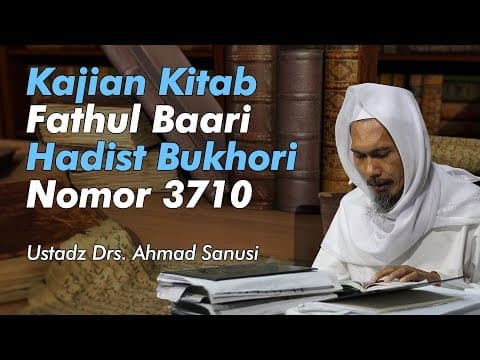
- , to our Fathul Bari book study session
- this morning. We still have about 10
- minutes left before ending with a Q&A
- session, and two questions have already
- come in, Ustaz. I’ll combine them,
- Ustaz. Oh, I see.
- I will answer them all at once, Ustaz.
- Oh, God.
- There is a question regarding Qada
- prayers, Ustaz?
- How do we perform Qada or make up for
- missed prayers? Because we don't know
- or have forgotten how many prayers we
- have missed. Then how do we pay them
- back? Should we perform the Qada
- prayers first before the current ones?
- What is the intention, and when is the
- time to perform Qada for Asr and Subh
- prayers? Please enlighten us, Ustaz.
- Now, regarding the Qada prayers, I will
- combine this. This one is from 083836
- and so on. Are the past prayer debts
- mandatory to be made up as well, Ustaz?
- Thank you. And also another question,
- Ustaz. How is the ruling on reciting
- the Quran at graves, a practice that
- has long existed in our community? Is
- this a tradition, or is there a real
- guidance for it?
- Reciting the Quran at
- at the cemetery, Ustaz.
- Very well.
- Yes. Because nowadays, there are a few
- new people who say this is wrong and
- has no basis. We hope the Ustaz can
- provide knowledge and clarification so
- that our worship becomes more certain
- and firm. Ustaz, one more, earlier. How
- should we act toward a controversial
- figure whose behavior is close to
- cultural or mystical practices under
- the guise of preserving culture? Please
- enlighten us, Ustaz.
- Very well. Bismillahirrahmanirrahim.
- Auzubillahiminasyaitanirrajim.
- Bismillahirrahmanirrahim. Prophet
- Muhammad sallallahu alaihi wa alihi
- wasahbihi wasallam taught his
- companions, including Abdullah bin Umar
- . Almukminu alladzi yukalitunas. Said
- Abdullah bin Umar, those who associate.
- The believer who mingles with people
- and is patient with their harms. And is
- patient with the actions that are
- actually wrong that they do. That is
- better. Than those who do not mingle.
- Who mingles with people and is not
- patient with them. So, in short, in the
- book Fathul Bari, volume 10, page 628,
- if it is possible for us to associate
- with them and we can influence or give
- input without being too abrasive.
- Meaning, how do we preach politely but
- still be able to enter and provide good
- advice, then that is good. But if we
- cannot provide input and will instead
- be carried away, then it is better for
- us to avoid them. So that is one side.
- Regarding such figures, first, we
- should have husnudzon (good thoughts),
- second, do not insult or mock, and
- third, if their actions align with the
- Quran, we follow and accept them. If it
- does not align with the Quran and
- Sunnah, we do not follow it and look
- for something better, and we leave the
- rest to Allah Subhanahu wa Ta'ala.
- Regarding the qada, that includes
- issues like clinics and such. God
- willing, the issue is resolved.
- Hopefully, we can put the issue of
- reciting Quran in the graveyard behind
- us. Reciting in the graveyard doesn't
- require inviting many people; it can be
- just family, individuals, or a group.
- Inviting people is not a problem if we
- can afford it. Essentially, you can
- recite anywhere. The important thing is
- not to recite in the middle of the road
- . Just that, for fear of disturbing the
- ants passing by. Actually, what is
- discouraged is when someone cannot
- afford it. First, and second, forcing
- it, especially when there are set rates
- . Reciting is meant for praying,
- helping, or gathering to do dhikr and
- pray together. Especially if it's about
- mutual help, where there is mutual
- consent. If someone gives food, drinks,
- or even a modest envelope, it’s fine
- if we are capable and want to give
- charity, as the reward goes to the
- living and the deceased. Because that
- was demonstrated by the Prophet and his
- companions. That is a Bukhari hadith.
- But did the Prophet ever offer advice,
- a reminder, or tazkirah? If a simple
- reminder is beneficial, then reciting
- the Quran or placing palm fronds is
- even more so. Palm fronds.
- Yes, placing palm fronds on a grave.
- As long as it's not dried out.
- It is beneficial, let alone the Quran.
- Oh, so those inside are considered
- sinners? Honestly, what human doesn't
- have sins? So, we aren't judging; it's
- simply prayer support. Don't assume
- prayer support is only for those with
- sins. No. It's just called prayer
- support. That's one thing. Secondly,
- the Prophet once said, "Pray for
- forgiveness for your brother." The
- Prophet gave a speech. In our modern
- language, it's called "talkin." Back
- then, it was like a lecture or a speech
- regarding someone who had passed away.
- When someone died, the Prophet would
- stand and say, "Assalamu'alaikum
- warahmatullahi wabarakatuh." For
- example, after saying, "From it We
- created you, and to it We shall return
- you.""From it We created you, and into
- it We shall return you, and from it We
- shall extract you another time." Before
- that, "O inhabitants of the graves,"
- and so on. Then the Prophet, after the
- shahada, alhamdulillah, and shalawat,
- said, "Seek forgiveness for your
- brother, for he is currently being
- questioned.""Brothers, let us all, the
- Muslim community, seek forgiveness."
- That is in Ibn Kathir. Check it, it’s
- also in Abu Daud. Check if that has
- been removed or not. It is there. So it
- is for that purpose. So it is allowed,
- it is allowed. Then what about the
- previous qada? Perform the qada
- according to your ability. God does not
- burden a soul beyond its capacity. So
- that is one thing. For qada, like Asr
- and Maghrib, prioritize whichever comes
- first if there is still plenty of time.
- For example, if there is still time for
- Maghrib, do Asr first, then Maghrib to
- keep it orderly. But if the Maghrib
- time is about to expire, do Maghrib
- first, then Asr. So that you don't end
- up having to qada everything. Now, when
- is that? Once you remember what, or at
- their respective times? At the time of
- our study last week in the Bukhari
- hadith. So after we remember that, just
- like the Prophet's example. But if we
- perform them at their respective times
- —Asr qada at Asr time, Maghrib qada
- at Maghrib time—then there is no
- problem. That means "if'alu ma syum."
- Then how many prayers should be made up
- ? If you forget, please do as many as
- you remember. So regarding qada prayers
- , please check Bukhari 5,000—I repeat
- , 597 to 598. Fathul Bari volume 2,
- page 49 to—I repeat, Fathul Bari
- volume 2, page 89 to 92, or just check
- it directly. And that is based on the
- Quran, Surah Taha verse 14. That is
- regarding the issue of qada. Then the
- last one is also about qada. Please
- check Qatadah. "q Rasulullah sallallahu
- alaihi wasallam ahadukum." If you fall
- asleep and miss a prayer, or if you are
- neglectful, forgetting and missing it.
- Whether it was intentional or out of
- forgetfulness, "falyusolliha," you must
- perform the prayer. "Manha," to the
- prayer? "Akaroha fainnallah yaqul
- aqimissalata lidikri." Bukhari hadith
- 597, Fathul Bari volume 2, page 89.
- That is if you wish to follow that
- opinion. If you do not want to follow
- that opinion, that is your own business
- . Subhanakallahumma bihamdik, nashadu
- alla ilaha illa anta, nastaghfiruka wa
- natubu ilaik. Wassalamualaikum
- warahmatullahi wabarakatuh.
- Waalaikumsalam warahmatullahi
- wabarakatuh. Brothers and sisters.
- Because of our limited time, we will
- take our leave. We apologize for any
- mistakes and shortcomings. Ustaz Ahmad
- Sanssi, thank you. We will meet again
- next Saturday, and God willing, on
- Monday night he will also give his
- Al-Qurtubi book study. I am Ondi, along
- with Zulfikar and Zain.
- Subhanakallahumma wa bihamdik, nashadu
- alla ilaha illa anta, astaghfiruka wa
- atubu ilaik. Wassalamualaikum
- warahmatullahi wabarakatuh.