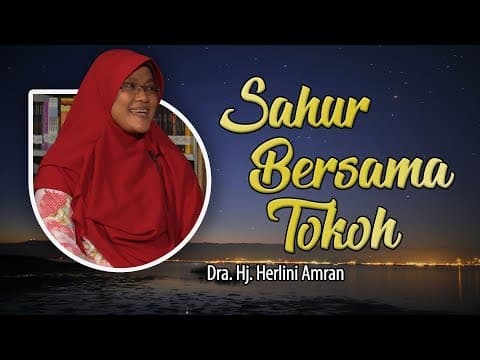
Transkrip diambil dari YouTube. Klik timestamp biru untuk melompat ke posisi tersebut di pemutar.
- In the name of Allah, the Most Gracious
- , the Most Merciful. Peace be upon you,
- and Allah's mercy and blessings. Praise
- be to Allah, Lord of the worlds. May
- peace and blessings be upon Muhammad
- and his companions. O Allah, guide us
- to the right path. Broadcasting from 36
- Masjid Silaturahim Street, Cibubur,
- Bekasi, Radio Silaturahim is the visual
- radio for Islam. Brothers and sisters
- blessed by Allah SWT, how are you doing
- during this suhoor time? May you always
- be in good health and have all your
- affairs facilitated by Allah SWT. I am
- very pleased that I, Angga Aminuddin,
- can greet you once again wherever you
- are. Accompanying your suhoor time.
- Wherever you are right now, you can
- listen to our broadcast in Batang and
- its surroundings via Radio Salah FM.
- For those of you in the Sukabumi area
- and surroundings, via Radio Latansa FM.
- In the Banyuwangi area via Suara
- Habibullah, and those in the Semarang
- area via our station in Semarang. And
- alhamdulillah, this year we are also
- broadcasting in the Jogja area via
- Radio Silaturahim Jogja, and for those
- in the Gorontalo area via Radio Poliama
- . In this edition of 'Suhoor with
- Figures,' we are featuring a youth
- leader. Usually, the figures we invite
- are a bit older, right? Now, we have
- invited a youth leader from the Central
- Board of Muhammadiyah Youth, the
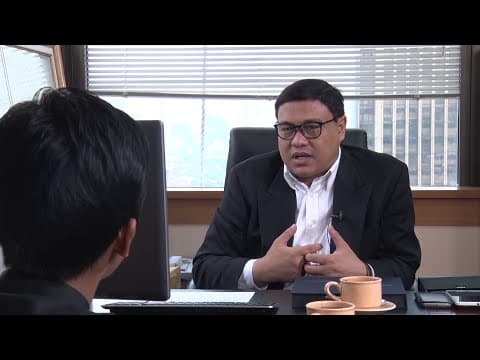
- chairman himself, Bang Dahnil Anzar
- Simanjuntak. Peace be upon you, and
- Allah's mercy and blessings.
- Peace be upon you, and Allah's mercy
- and blessings.
- So, it's been since 2014, right?
- Yes, I...Since 2014, I have been a
- chairman on the central board.
- Yes, yes. There is a general chairman,
- and there are chairmen.
- Hm. So the term is 5 years, right?
- The term is 4 years.
- Muhammadiyah Youth is 4 years. My term
- is from 2014 until the end of 2018.
- Why isn't it the same as the President,
- 5 years?
- Well, Muhammadiyah Youth is a cadre
- organization, you see. If Muhammadiyah
- is 5 years, then Muhammadiyah Youth is
- 4 years, and further down, the IRM/IPM
- is only 2 years. Why? Because as a
- cadre organization, it must constantly
- undergo a process. Then, in Da'wah,
- there is the 'Marhalah' or stages of
- Da'wah. So, this is the arrangement. So
- ...
- the term for Muhammadiyah Youth is
- indeed 4 years.
- Right. What are your activities like,
- Bang Dahnil? You seem really busy.
- As usual, my routine is teaching. Yes,
- I am a lecturer at a state university,
- Sultan Ageng Tirtayasa, every day in
- the Faculty of Economics and Business.
- Yes. Then, for the rest, I am with
- Muhammadiyah Youth,
- and also, yes, business, for what...for
- ...
- to maintain...usually, I use business
- to protect the dignity of the movement,
- and my own dignity as well.
- So that, economically, I am also
- self-sufficient. A lecturer. I think, I
- am a lecturer at a state university. So
- , but clearly, what is it called? You
- know yourself, the salary of a civil
- servant is as it is. Besides that, I
- also have several businesses,
- especially in property and plantations.
- And the busy Bang Dahnil is also active
- in writing, and I have his latest book
- in my hand titled "Rent-Seeking
- Political Logic."
- This is my eighth book.
- Your latest, the eighth book, right?
- Yes. This rent-seeking political logic
- is a trilogy of three books. The first
- is titled "Development Acrobat."
- Yes. Then the second one is "Rent
- Dynasty." Then this third one is "
- Rent-Seeking Political Logic." So, the
- theme revolves around the behaviors
- of Indonesian politics, where the
- political framework is rent-seeking,
- hunting for personal gain. Yes. It's
- like becoming a business field
- for our politicians to accumulate
- wealth, not to provide service to
- the public.
- Highlighting deviations, right? The
- deviations that occur in this country.
- If we look at the book, there is an
- endorsement from Novel Baswedan. There
- is also Busro Muqaddas. For those
- active on social media, especially
- Twitter,
- they must be very familiar with Dahnil
- Anzar Simanjuntak when typing the name
- Novel Baswedan. Even until now, his
- Twitter account is still at a number—
- yes, still at the number 300, I’m
- counting the days.
- So that is a symbol to remind the
- public. On my Twitter, I change it
- every day; for example, like this, let
- me show you, today is 309, 339 days, so
- indeed
- the perpetrator of the attack hasn't
- been caught.
- Not being caught, that is my way of
- reminding the public that there is an
- event
- that has not been revealed at all for
- almost a year.
- So, I intentionally keep counting the
- days so at least the public remembers,
- "Oh, why is this person counting the
- days?" This is a calculation showing,
- oh yes, this hasn't been resolved. Many
- major cases, high-profile cases, are
- not resolved at all.
- Now, even though I'm teased, "why
- bother counting the days," for me, as a
- ...As a symbol of a movement, it is
- important. Now, why do I give special
- attention to Novel? Well,
- for me, the attack on Novel is not just
- an attack on Novel personally, but an
- attack on the anti-corruption agenda.
- Plus, personally, Novel and I have a
- good relationship, he is my close
- friend. Novel,
- just observe that Novel was attacked at
- dawn.
- One habit of Novel that has never
- changed. Novel is a KPK investigator
- accustomed to changing his activity
- patterns to avoid
- attacks or terror. He usually doesn't
- go to the office using the same route.
- Tomorrow it can be different, his
- vehicle can also change, he can take an
- ojek, drive a car, sometimes take a
- taxi, all sorts of things he changes.
- But there is one thing that has never
- changed about Novel, and it's
- impossible for him to change, what is
- it? Praying at the mosque. Praying at
- the mosque, and that was read by
- Exactly, that's why at dawn, Novel
- surely goes to the mosque.
- Well, that provides us with the same
- spirit, that praying Subuh at the
- mosque is very important for us.
- To be honest, maybe many of us can't
- possibly do all five
- prayers at the mosque. But for me
- personally, what is Subuh? It's a
- symbol of friendship and everything
- else,
- aside from being an obligation.
- Correct. So, the symbolism of meaning
- from that is also important. Now, for
- me,
- um, what’s the novel's name? He has
- very high personal piety. And that is
- what became his strength in eradicating
- corruption. I have the conviction that
- a person with strong monotheism will
- never be afraid of anything. And a
- person with strong monotheism will
- never lose in any battle. Because for
- us, even if the opponent is huge,
- mighty, and powerful, a person of faith
- never feels defeated. Musa, back then,
- if thought about rationally, couldn't
- possibly defeat Pharaoh.
- But what made Musa keep fighting? His
- monotheism. His monotheism to Allah
- Subhanahu wa Ta'ala. That is why I even
- wrote a poem to...express the
- importance of monotheism. We in
- Muhammadiyah often call it pure
- monotheism.
- A person with pure faith, a young
- person with pure faith, is not afraid
- of anything. They only fear one thing:
- Allah Subhanahu wa Ta'ala. That's it.
- Right. If the voice of Novel Baswedan
- has accompanied Johan Afad on Rasil's
- broadcast, well, now he has a friend,
- right? We were just talking about Bang
- Novel. Who exactly is this Bang Dahnil
- Anzar Simanjuntang? Well, at this Sahur
- time, we will introduce him to you.
- Maybe you can share some stories.
- Stories that can be told by Bang Dahnil
- that can inspire, because we know from
- the media, oh, this is what this person
- is like. Many. Yes, many ask me, "Mas
- Dahnil, why aren't you afraid?" A lot,
- for example, in the Siyono case, we at
- Muhammadiyah Youth were confrontational
- in defending and seeking justice for
- the family. I was accused of being
- pro-terrorist and many other things.
- But for me, we actually did that to
- fight the stigmatization against
- Muslims. Yes.
- Muslims are accused of being terrorists
- and everything else. On the other hand,
- what I and the Muhammadiyah Youth did
- to seek justice was actually an effort
- to deradicalize.
- Why does terrorism in Indonesia arise
- so much, Mas? Because of resentment.
- If they don't get justice, they will
- harbor extraordinary resentment. So, we
- try to bury resentment by seeking
- justice. Many friends advised me, even
- my parents said, "Dahnil, you have to
- stop, be careful, because no one is
- protecting you, you're facing the
- police, politicians, and the powerful."
- That is, that is not easy, you know. I
- always say, I once had a second chance,
- you know. So I feel I have no fear
- whatsoever regarding that. What is the
- second chance I mean? Sir, two years
- ago, I had an experience where I was
- diagnosed with a retinal stroke.
- Two years ago.
- Two years ago I got a retinal stroke
- from
- With a retinal stroke, can you still
- see?
- No? I couldn't see. My right eye
- suddenly couldn't see anything at all.
- Then, I went to the Jakarta Eye Center
- here in Menteng.
- Over there in Menteng. Then the doctor
- said it would be hard to be normal
- again. Then the doctor said, "Try
- taking him to Singapore." Finally, I
- was taken to Singapore.
- In Singapore, it was the same thing. It
- would be hard to be normal. It was even
- the same as the diagnosis from the
- doctor at Jakarta Eye Center; it could
- spread to the left eye.
- My left eye could also go blind and not
- be able to see at all. So then my
- family, my father, my mother, my wife
- and children were all stressed about
- that. I was still young
- and then declared that I could go blind
- .
- Yes.
- So that was two years ago. Then
- in Singapore for a week, because there
- was no certainty, it was finally
- decided that I wouldn't go back to my
- house in Tangerang first. It was
- decided that my parents would take me
- back to their hometown in Binjai.
- Binjai.
- Binjai. I was left there with my
- parents while doing what? Taking
- medicine as usual, yes. Trying all
- sorts of things, medically pursuing
- every treatment effort. Now, there was
- one habit I practiced. Since my
- activities were limited, I found it
- hard to walk because I couldn't see,
- and the left one was a bit blurry. But
- I tried to keep going to the mosque
- routinely. Then
- in every prayer, I just prayed for one
- thing. What
- I prayed for was, "O Allah, if I still
- have a chance and You grant Your
- miracle, then please give me a chance.
- If I can return to normal, I want to
- work for Your religion." That was all I
- said. Almost every prayer, Mas,
- Mas Angga. So I recited that prayer
- every fardhu prayer and Tahajud prayer
- because I was so stressed and
- frustrated. So that was the prayer I
- always offered, and at night, I was
- afraid to sleep. Why was I afraid?
- Because when I opened my eyes, I might
- not be able to see anymore. There was
- even one incident at night
- when I woke up in the middle of the
- night. Everything was dark. I screamed
- as loud as I could in that house, in my
- parents 'house. I thought I couldn't
- see anymore.
- I screamed as hard as I could. It was a
- shock. Then suddenly, someone came in
- from outside and turned on the lights.
- It turned out the power was out, sir.
- So it was nothing; the lights had just
- gone out.
- But because I was scared, I thought I
- had gone blind. So
- I felt that way for almost 3 months. So
- I kept on praying.
- In the second month, my right eye
- slowly started to see again, little by
- little. How long until it was normal?
- 3 months. So my eye went back to normal
- because of prayer.
- Now, that is why I said, "It was like I
- had a second primordial covenant."
- It’s like I made a promise to God,
- and then it was as if that promise was
- being called in, sir. Yes.
- Called in from me. Suddenly there was a
- woman named Suratmi who complained to
- Muhammadiyah.
- Suratmi filed a complaint. At that time
- , I wasn't fully recovered yet. But I
- had already returned to Jakarta.
- When she complained, I didn't think
- twice. I just wondered if this was the
- debt being collected. The debt sent
- directly by God. In the end, my parents
- and everyone tried to stop me, telling
- me to be careful. I said, "No, there is
- no one who can stop me now." Like that.
- I was given a second chance, so I had
- to do it.
- The same thing happened when Novel was
- attacked.
- I was contacted by Novel's wife. Then
- Mr. Buso and I went to see Novel at the
- hospital. Is that why Novel was taken
- to Singapore? Because that was the
- experience I shared when Novel asked me
- to speak to his family, sir. A story.
- What story? The story I just told.
- Novel wanted to tell his family not to
- be afraid.
- That God is there. There is a God who
- will surely help us. If we do good, God
- will definitely help us. That is what I
- always admire about Novel, his faith,
- and I try to learn from that. Many
- people have learned that the most
- powerful force is when we believe and
- fully surrender; we will definitely be
- accompanied and helped.
- So, what upbringing did you receive
- from your family to have your current
- character and personality? My father
- was a businessman; since I was little,
- he would do anything. My mother was a
- village woman from Aceh, my father was
- Batak, and my mother was Acehnese.
- We used to live in Aceh, as my father
- was once stationed there. Then from
- Aceh, my father had to move to North
- Sumatra because his business was burned
- down. At that time, there was a period
- called the GPK, the Security Disturber
- Movement. Yeah.
- That's what Mr. Harto called it.
- Uh-huh. So, our business was burned
- down, and in the middle of the night,
- my family and I—I was in 6th grade of
- elementary school—were taken away.
- In 6th grade, I was taken to North
- Sumatra. My mother's family lived there
- because...My father's business place,
- his sawmill, was burned down by rebels
- and the like. We then went to North
- Sumatra, specifically to Sibolga, my
- father's hometown, where I started
- junior high school.
- So, starting from scratch. Then, it
- happened again in Sibolga; my father's
- business went bankrupt.
- Then my father had to, uh, start over
- again. Finally, my father decided to
- move to Jakarta.
- Now, in Jakarta, what did my father
- trade? He traded fish. Yes.
- Now, when we moved, when I moved to
- Jakarta, I had to enter high school at
- that time,
- Sir. I couldn't go to school
- at that time.
- At that time, because we had no money
- at all. Finally, I was taken by my
- uncle to register at Muhammadiyah High
- School
- in Cileduk.
- In Cileduk. I didn't pay anything at
- all.
- Entering Cileduk, the registration was
- free. Then for 3 years I studied there
- for free and received a scholarship.
- Yes.
- So at that time, I wanted to enter SMA
- Negeri 1 Cileduk, but it was expensive
- and I didn't have the money. Finally, I
- decided, "Well, my grades are good.
- I've always been number one, so to
- speak, in school.""So, finally at this
- school." That's why for me,
- Muhammadiyah is not just an
- organization, or a place for me to do
- activities, or my vehicle for dakwah.
- But for me, Muhammadiyah has a very
- deep emotional connection. When I had
- no hope, Muhammadiyah was like giving
- me hope. Muhammadiyah schools gave hope
- to this poor child. Now, my father was
- a fighter, truly an extraordinary
- economic fighter. Usually, my father
- sold fish at dawn; at midnight I would
- join him there. I worked as a parking
- attendant in Cileduk. So we did
- everything. Even my mother, if she
- wanted to have dinner, had to wait for
- me to get home. Why? Because from 2 PM
- to 6 PM, I was parking cars in Cileduk.
- Parking in front of the hospital. I
- guarded the parking lot there. So after
- what? After parking, I would go home,
- bring money, and then mother would buy
- food for my younger siblings. I am the
- oldest child, yes. So
- for me, education, what is it? The life
- education experienced from my parents;
- they rarely taught verbally because
- they gave more examples. My father set
- an example of surviving and then being
- useful
- in life. My father always had this
- message, my parents did,
- that life only has two choices.
- What are those choices? You must be
- remembered in history. The choices to
- be remembered in history are only two:
- be very good or very evil.
- So, Pharaoh is in the Quran because he
- was very evil. Abu Lahab is in the
- Quran because he was very evil. Or, be
- very good; there are only two choices
- in life. Don't be the one in the middle
- . If you live in the middle, then you
- die, then you are buried and not
- remembered at all. So make something
- truly great that makes you remembered
- in history and
- but for sure don't be mediocre.
- That's right, the choice my parents
- wanted to convey to me was just this.
- This choice is to be that great thing,
- never settle for half-measures.
- Something like that. Yes.
- Then, looking at Muhammadiyah's social
- movement from its early days, Danil.
- The early days
- K. H. Ahmad Dahlan.
- Yes.
- Then the periods influenced by the
- politics of the Old Order, New Order,
- reform era, and now the millennial era.
- Yes.
- What is the difference?
- The challenges are getting bigger,
- right? Then what about the
- responsibility? I see the main
- character, the main character of the
- Muhammadiyah movement championed by
- Kiai Dahlan is, in sociological terms,
- altruistic.
- Or in Sufi terms, it's futuwwah. It's
- the level, the spiritual station. So,
- working for the interests
- of many people or public interests in
- social terms. Yes.
- So, those who choose to join
- Muhammadiyah, be active in the
- organization, and use Muhammadiyah as
- their vehicle for da'wah, their choice
- is to work for the benefit of the
- people, for the public interest. The
- level of altruism or the station of
- futuwwah. So, what does that mean? Kiai
- Dahlan started this movement with the
- spirit of how Islam could be present in
- society as a solution.
- Back in the 19th century, specifically
- 1912, what was depicted by Kiai Dahlan
- was not being presented as a solution
- as an enlightenment, as an instrument
- of progress that advances civilization.
- Instead, religion was used as a tool
- for exploitation. So, religion was used
- by certain elites as a means of
- exploitation for their own interests.
- Especially elites who had better
- religious understanding and so on. So,
- Kiai Dahlan appeared to present Islam
- in Java at that time as a solution. How
- Islam could encourage the people out of
- poverty, how Islam could encourage the
- people out of ignorance and so on. Thus
- , Kiai Dahlan's choice of da'wah was a
- cultural da'wah. By cultural, I mean
- that while HOS Cokroaminoto or other
- figures chose the political path, Kiai
- Dahlan chose the cultural path through
- what? Through education, through health
- ,
- and poverty eradication. This is what
- Kiai Dahlan did. It doesn't mean Kiai
- Dahlan didn't care about politics.
- That's wrong. In fact, Kiai Dahlan
- remained active in the SI and Budi
- Utomo. But Kiai Dahlan saw something
- missing in long-term cultural work.
- Because people who choose to work in
- culture must be patient because this is
- long-term work.
- Education is long-term work. Health is
- the same. Unlike politics. But the
- message Kiai Dahlan wanted to convey is
- that political instruments will remain
- exploitative if we do not first improve
- education, health, and economic welfare
- . His chosen path of da'wah means
- defending the marginalized. That is why
- the most influential chapters in
- Muhammadiyah, frequently taught by Kiai
- Dahlan, are Surah Al-Maun and Surah
- Al-Asr, which we now know as the
- theology of Al-Maun and the theology of
- Al-Asr. Al-Maun symbolizes social
- concern. How religion can be beneficial
- and liberate the community from poverty
- . To Kiai Dahlan, religion is action.
- Yes.
- Religion is good deeds. The same
- applies to the interpretation of Surah
- Al-Asr. What was the term? Buya Hamka,
- in his Tafsir Al-Azhar, mentions that
- there are at least four main messages
- in Al-Asr. First, the message of faith,
- concerning the importance of time. The
- message of time, which includes the
- dimension of faith. Second is the
- message of good deeds, "wa tawasau
- bil-haq" and...Urging the truth and
- urging patience. Those are the messages
- conveyed in Al-Asr. For Muhammadiyah,
- that already encompasses the
- instruments and ideals of progress.
- What does the desire to progress look
- like? Look at time, and use it as best
- as possible. For what? To perform good
- deeds. What are good deeds? Acquiring
- knowledge is a good deed. So, to
- progress, we must keep knowledge alive.
- We must keep effects alive. What comes
- after that? We move to the spirit of
- urging the truth. That is "wa tawasau
- bil-haq." So, convey the truth, enjoin
- good, and forbid evil. Right.
- That spirit must be continuously
- nurtured. After conveying the truth,
- one must be patient and tolerant. Not
- everyone can accept the truth. Not
- everyone will agree with us. That is
- when we must be tolerant and have a
- spirit of dialectics. Well,
- to me, Muhammadiyah operates in this
- space, the space of culture. In history
- , Muhammadiyah has interacted with
- politics, like in the Masyumi era,
- where Muhammadiyah was a driving force,
- and later, for instance, young people
- in Muhammadiyah formed PMB. Now, they
- are spread everywhere. I think that is
- an inseparable part. Indeed, cultural
- work will inevitably intersect with
- political interests. But in my view,
- what must not be done is using
- Muhammadiyah as a political vehicle.
- That is what is dangerous.
- It was interesting when discussing Kiai
- Dahlan's concepts and the theologies of
- Al-Maun and Al-Asr.
- Besides Tawhid Rububiyah and Tawhid
- Uluhiyah, the concept of social Tawhid
- emerged.
- Yes. Indeed.
- This is related to society.
- Yes. Yes.
- However, when discussing Tawhid, the
- facts often clash when Islam is
- understood by Indonesian society based
- on a figure.
- Yes.
- According to this cleric, Islam is like
- this, fiqh is like that.
- But another cleric says, no, Islam is
- like this, the fiqh is like that.
- Now,
- this becomes a problem when we want to
- work together to build a good Islamic
- social society. but we are faced with
- fiqh issues and different perspectives.
- So, how does Muhammadiyah handle that?
- That is why I see Kiai Dahlan as a very
- visionary figure.
- Imagine, back in 1912, a cleric was
- already thinking about having a women's
- organization.
- Islamic.
- Never mind Indonesia, even Muhammad
- Abduh, as a figure of Islamic reform,
- didn't think of having a women's
- organization.
- in the Islamic world. Yet Kiai Dahlan
- in Indonesia thought about it, Aisyiyah
- , believing that the education of
- civilization starts with women. I want
- to say, what I see is that our people
- listen to religious understanding from
- various figures because there is an
- absence. Absence of what? Absence of
- education. There is an absence of
- common sense. So, in the end, religion
- is practiced dogmatically.
- Dogmatic. Then there is blind imitation
- , as they say. That is what happens.
- Why do they experience that? Because of
- education. That is why Kiai Dahlan's
- choice, if I like to use my term, Kiai
- Dahlan's path of da'wah is the path of
- scientific reason.
- What is scientific reason? Kiai Dahlan
- wanted to present a generation of Islam
- that preserves its common sense.
- Yes.
- He became an Islamic generation with
- autonomous thinking. Yes.
- Autonomous thinking is the presence of
- common sense. So he can filter what he
- learns from tradition. If a person has
- a learning tradition, they won't follow
- blindly. They certainly won't have a
- single reference. Why? Because they
- will always want to know and develop
- their knowledge. So, the path we must
- choose in understanding religion, the
- trend, is the path of education. So
- enlighten the Muslims; when they are
- intelligent, they will be accustomed to
- differences.
- For example, recently there was a ban
- on niqabs at a university. It was the
- university that banned it, you know. In
- Islam.
- Even in Islam.
- And for me, that is ridiculous. Why
- ridiculous? First, from the
- university's side, it has uprooted the
- nature of a university. A university is
- a place of universality.
- Meaning all schools of thought, all
- ideologies are valid there. They must
- compete ideologically, through ideas
- and concepts; the process of dialectics
- happens there. Openly. If suddenly
- someone is repressive and says, "Eh,
- this ideology is not allowed, this one
- too." Then they have already uprooted
- the nature of universality from the
- university. I am shocked that an
- academic or professor would have a
- repressive action at a university. It
- means they have destroyed the character
- of the university. That is second,
- Islam.
- Look, Islam is very diverse. The Qur'an
- is absolute.
- The Qur'an is absolute. Interpretations
- of the Qur'an can develop in many ways.
- I certainly do not agree with the niqab
- .
- We in Muhammadiyah always give advice.
- There is no such thing as wearing a
- niqab. So, if someone wears a veil,
- they aren't Muhammadiyah. Because for
- us, a woman's aurat—that which is not
- meant to be covered—is the face and
- the palms. Now, if there are those who
- interpret it differently, we must
- respect that.
- If we disagree with that, what are our
- options? The option is dialectics,
- dialogue. And dialogue—the tradition
- of dialogue—can only be born from
- people who nurture their scientific
- reasoning,
- those who are educated. Now, that is
- why the tradition
- of the Muslim community, as taught by
- Kiai Dahlan through education. Now, Mas
- Angga, what is missing in our country
- is this tradition of dialogue. First,
- people don't want to learn. Look at
- young people today—this is also a
- critique for the youth. Look at what
- young people read; it's Twitter.
- Twitter only allows a few characters,
- and they already feel smart.
- And they never read books.
- Yeah.
- Just look. Because they never read
- books, there's no reading tradition, no
- writing tradition. Then their only
- activity is playing on Twitter.
- What happens in the end? Constant
- misleading, constant misunderstanding,
- persistent errors. That’s why, if you
- follow my Twitter, Mas Angga, you’ll
- see I love using the term "reason."
- Reason.
- I am constantly reminding people
- everywhere to bring reason with them.
- How can reason be nurtured? Read, write
- , discuss. Yeah.
- So, after reading, you discuss, then
- you write. But today, the tradition of
- reading is actually declining.
- That's right.
- Look, in the past, people would bring
- books in the car to read.
- Read.
- On the road now? No, Mas. Everything is
- just this.
- Even though the stages of studying
- something begin with reading first.
- That's right. Everything starts from
- the reading tradition. If you don't
- even read, how can you study or use
- your reasoning?
- In Islam, the first verse of the first
- chapter is "Iqra"(Read). Now, this
- tradition, in my opinion, is
- experiencing a decadence in Indonesia
- and in Indonesian Islam, and that is
- what causes the lack of a dialogue
- tradition. So, what happens in the end?
- Just like what you said, Mas Angga, "
- My group is definitely the right one,""
- My group is the most correct." Whereas
- every group surely has a message of
- truth,
- and it becomes very vulnerable when
- influenced by views that are not in
- line with them.
- They are fed issues, right? And
- eventually, the country becomes
- anarchic.
- Anarchic.
- Anarchy arises.
- That is why I always remind young
- people that they must have a tradition
- of dialectics and dialogue, and the
- foundation of dialogue is healthy
- reasoning. Including this, during a
- political year. Political years are
- filled with hoaxes everywhere, so what
- must be brought back is common sense.
- Right, Bang Nadil, we have to take a
- break for a moment, it seems. If you
- want to keep going, keep watching, and
- stay with us. We will be right back.
- The eighth one, right? Bang Dahni was
- born in Pematang Jaya, Langkat. Now,
- April 10th.
- Truly still young, Ivan Afad.
- Born in '82.
- Right. He is a lecturer and also an
- entrepreneur, right? He's also a writer
- and has been active in the Muhammadiyah
- organization for quite a long time.
- Yes. Since I was a child, yes.
- Since I was little, yes.
- Since I was little, I had this
- experience; it also relates to dialogue
- . So, I have this childhood experience;
- in my village, where I lived as a child
- —in Kuala Simpang, East Aceh back
- then, now Aceh Tamiang.
- So, my house was here, there was a big
- mosque here, and a small prayer hall, a
- ' langgar ', here. A' langgar 'is a
- small prayer room. Usually, when we
- were kids, like 4th or 5th graders, we
- would go to the mosque for Maghrib
- prayer, especially in groups. Kids
- praying at the mosque would usually be
- rowdy,
- noisy, joking around, you know. Yes,
- joking around, whispering—it would
- surely be disruptive. One day, the
- mosque caretaker got angry, the elders
- there got angry; we were scolded and
- treated poorly. Basically, it was
- hurtful. For kids, you know. It still
- happens now.
- So, we were scolded and yelled at as
- kids. Then, most of my friends didn't
- dare to go to that mosque anymore.
- They stopped going to that mosque. But
- then, one day, there was a man we
- called Atuk. We called him Atuk. His
- house was over there.
- Atuk means grandfather.
- Yes, Atuk is grandfather. Every day, he
- would walk past my house to go to the
- mosque, to this prayer hall.
- Even though his house? His house was
- closer to this other prayer hall. And
- this was a Muhammadiyah prayer hall.
- Atuk would always pass by and see me
- because I went to this mosque. One day,
- I wasn't going to the mosque. Atuk
- passed by and asked, "Why aren't you
- going to the mosque?""Come with me," he
- said. Eventually, I followed Atuk. I
- was only in the 4th grade of elementary
- school. So, Atuk invited me to this
- prayer hall. At the prayer hall, what
- did Atuk do? Atuk asked me to do the
- call to prayer, the Adhan. "Can you do
- the Adhan?" I was so happy; kids love
- getting on the microphone, right? I was
- so excited to be trusted to give the
- Adhan, so I did it there. After that,
- for every prayer, I would go there with
- Atuk. He would always have me do the
- Adhan. What happened was, I felt my
- Muhammadiyah training began right there
- . What am I trying to say? Atuk was
- very kind.
- Atuk was very kind to children and gave
- opportunities to a child who had been
- chased away and yelled at at the other
- mosque.
- He was treated with such harshness. So,
- what am I saying? Even those considered
- "nobodies," if given the chance and
- nurtured, can become "somebodies." What
- am I trying to say? The education
- provided by my grandfather was
- extraordinary. He gave trust, he gave
- opportunity. That trust and opportunity
- made this little boy confident. That
- young person became confident. Well,
- for me, in Indonesia, the Muslim
- community should be encouraged that way
- . Give them opportunities, give them
- trust. They will develop themselves
- into even greater people. And this is a
- story from that grandfather. And once
- again, at that time I was in 4th grade
- and I
- felt, wow, that was amazing.
- An extraordinary experience.
- An extraordinary experience. I still
- remember it to this day.
- How many children do you have, Bang
- Danil?
- I have four children. One wife.
- One wife, right. Is your wife also from
- Sumatra?
- My wife is Javanese. Central Java. Yes.
- I am, what do you call it? My
- father-in-law is an NU cleric from Cepu
- .
- My father-in-law is an NU cleric from
- Cepu. My mother-in-law is also in the
- NU women's wing.
- Then back when I was proposing, as a
- young man. Yes. Now, this story is
- funny, Mas Sil. So back when I proposed
- , the one most insistent on accepting
- it was actually my mother-in-law, not
- my wife. My wife was a former head of
- Kohati HMI, you see. I was in IMM at
- the time. I got married very young. I
- was still 22 years old.
- 22, yes.
- Yeah. Back then, there was this
- doctrine of marrying young, right.
- Married at 22, Bang Danil.
- When I married, my wife was 21.
- Now, when I proposed to my wife, the
- one who wanted to accept immediately
- was my mother-in-law. My wife was
- hesitant. Why? "Mom, marrying this
- Muhammadiyah guy will be troublesome,"
- she said. Why troublesome? said the
- young mother. Yes. Imagine, he
- celebrates Eid earlier. I laughed,
- celebrating Eid earlier. Then, if Mas
- Danil doesn't go to the mosque for Fajr
- , he prays at home and he would lead me
- , he doesn't use Qunut. So I wouldn't
- use Qunut, she said. Our NU traditions
- could disappear. What did my wife say,
- or rather, what did my mother-in-law
- say? My mother-in-law simply said, "
- Good, differences are good. In fact,
- they can make you learn from each other
- ." My mother-in-law said. But my
- mother-in-law said, this is the most
- important part. This is serious, Mas.
- Mas Arsil, or eh Mas what, Mas Angga.
- If you don't believe me, I'll give you
- my mother-in-law's phone number.
- So my mother-in-law said, "There are
- two things more important that you must
- understand. Muhammadiyah guys have two
- advantages
- that the average NU cleric doesn't have
- ." What are they, Mother? First,
- Muhammadiyah men rarely practice
- polygamy, my mother-in-law said.
- So you are safe. My mother-in-law said,
- "This is serious, first of all,
- Muhammadiyah people rarely practice
- polygamy. You are safe, said my
- mother-in-law." Then what is the second
- thing? Second, Muhammadiyah people
- rarely smoke. So they are frugal,
- careful, and modest. So I have those
- two things. Ultimately, because they
- rarely practice polygamy, it doesn't
- mean it doesn't happen, right, Mas? So,
- Muhammadiyah people really do rarely
- practice polygamy. On average, even
- dreaming of polygamy, Muhammadiyah
- people don't dare to. Then, it seems
- like there is no such culture.
- Huh?
- There is no culture.
- Yeah. It's like a corporate culture. So
- if it's a corporate culture, it's just
- a habit. So it's rare, quite rare. Then
- second, they don't smoke. Finally,
- because of these two things, I married
- my wife.
- But as for my father-in-law
- well, later on
- that is a different story.
- A different story. Oh, because it's
- very interesting.
- No. But I want to convey an important
- message, the most important message my
- mother-in-law conveyed is that dialogue
- is important. So just like
- our conversation this dawn. Dialogue is
- important because it makes us
- understand each other, truly understand
- . Now, what is the key to dialogue? A
- healthy reason, an open, healthy mind.
- Or as we quoted earlier from
- what surah? Al-Asr earlier. The fourth
- point as conveyed by Buya Hamka.
- Watwasso bilhaq watwasso bis-sabr.
- Patience is the key to what was
- mentioned as tolerance. It is important
- to convey the truth. Yes. Yeah.
- And conveying the truth. Then the one
- who has the task of turning hearts and
- accepting the truth is Allah Subhanahu
- wa ta'ala. Don't let us take over God's
- duty, forcing people to accept the
- truth. Our duty is to convey it. After
- that, what? Patience and tolerance.
- Hm.
- Now, speaking of reason, I will move to
- the book. Ee Bang Dahnil
- the logic of rent-seeking politics. The
- background, why raise this? It stems
- from worry, it stems from frustration
- too.
- Yes. So I see there is, if there is a
- Chinese figure, what, what is his name?
- Jaya Suprana, he introduced "
- Kelirumologi"(the study of errors). For
- me, what is happening in Indonesia is
- indeed "Kelirumologi."
- What is "Kelirumologi"? Politics is
- referred to as a space, sociologically,
- theoretically, it is called a space of
- service.
- Yes. If, for example, Mas Angga decides
- to enter politics, then what Mas Angga
- must understand is that when entering
- politics, the logic brought by Mas
- Angga is service, volunteerism. That's
- why there is no such thing as a "
- politician" profession. There isn't.
- There isn't.
- Ee being a politician is not a
- profession. So it is volunteerism for
- those who enter politics. So it must be
- understood that it is a space of
- service. People who become civil
- servants must understand that it is a
- space of service.
- But if you want to be rich, if you want
- what? To gain wealth in large amounts,
- then go into business. What kind of
- space is that? A space to maximize
- profit. Although in Islam, there must
- of course be alms, donations, zakat,
- and so on. Now, in theory, there is a
- term, Auguste coined the terms altruism
- and egoism. Now, politics is the space
- for altruism. Altruism means putting
- the interests of the many above
- personal interests.
- Egoism is the opposite; personal
- interest above all else. Now, politics
- should be, when we become politicians,
- state officials, presidents, regents,
- mayors, governors, what must be brought
- is the reasoning of altruism. Now, if
- the reasoning is altruism, they surely
- won't be corrupt.
- Why? Because what they understand is
- providing public service to the
- community. This level of altruism, in
- Islam, is the level of ihsan. Now, they
- feel constantly watched, wanting to
- work for the public, then they will be
- optimal for the public. However, what
- happens in Indonesia is actually the
- opposite.
- The reasoning when people enter
- politics is egoistic reasoning. Now,
- the reasoning of egoistic people is
- surely that they want to prioritize
- their own interests and those of their
- group. Finally, what happens? They want
- to maximize their personal utility,
- their personal gain. Ultimately, when
- entering politics, what is sought is
- personal gain. Finally, what is done?
- Rent-seeking.
- Now, that is what I then use the term
- rent-seeking political reasoning for.
- Because why? Because in politics we
- bring egoistic reasoning which
- eventually leads to rent-seeking.
- Rent-seeking is seeking profit, yes, in
- an illicit way. Once it's rent-seeking,
- it's seeking profit through illicit
- means.
- Now, because they want what? To enrich
- themselves, eventually, everything is
- done to accumulate wealth, eventually
- corruption and so on. Now, that is what
- we are facing in our politics right now
- .
- And ultimately, the competition is not*
- fastabiquul khairat*(competing in
- goodness), but rather elbowing each
- other, tearing each other down.
- Yes.
- Undermining each other.
- So the spirit
- the political arena becomes terrifying.
- Exactly. So the spirit of politics is
- no longer*tawanu alal birri wa takwa*(
- cooperating in goodness and piety), but
- has changed to instead colluding,
- colluding for evil. That is what is
- happening. Colluding for evil, for what
- ? For rent-seeking.
- Yes.
- So we find, that's why in the past,
- when we were—soon in May, it's reform
- anniversary. This fasting month is the
- reform. Now, the main resistance during
- the reform was KKN. We rarely hear the
- term KKN now; it's often just
- corruption. Corruption.
- The correct term is that KKN is
- complete, yes, corruption. Corruption,
- collusion, nepotism.
- Collusion and nepotism. That is where
- the collusion is.
- Yes. People enter politics and end up
- colluding, practicing nepotism, and
- eventually political dynasties,
- rent-seeking dynasties, are born. What
- is the goal? Corruption again. What is
- the goal? Rent-seeking. But I want to
- say, Mas Angga, it's not just an elite
- symptom, it’s spreading to our
- society too.
- Even our society, when an election is
- coming up, these regional elections
- soon,
- when a politician comes to them, what
- do they ask for? An envelope.
- Yes. So they only vote if they get paid
- , and that's where the rent-seeking
- mindset meets the transaction, turning
- our political market into a vote-buying
- market.
- But if it reaches the public, they
- eventually become victims of it, don't
- they?
- That’s certain.
- Yes, victims of a system that causes
- this.
- Because our elites don't use political
- parties or politics as a means for
- education.
- And don't forget, Mas Angga, about
- Indonesia's democracy. We are
- extraordinary, the world's largest
- Muslim-majority nation that can
- implement democracy well.
- And this has become a best practice
- globally. But don't forget, the
- material soul of our democracy, the
- voters, on average, the years of
- schooling for Indonesians is only 7.3
- years. Meaning they didn't finish
- middle school.
- Didn't finish middle school. So those
- who didn't finish middle school are the
- ones who are voters. Imagine that with
- that level of education, those who
- didn't finish middle school are the
- ones determining the quality of our
- democracy. That is why I am always
- convinced that Kiai Dahlan's choice of
- outreach through Muhammadiyah was never
- wrong. That is, through education. Yes,
- by providing education and guidance to
- our society as we face political years,
- specifically for the Muhammadiyah
- institution itself.
- Yes.
- Make sure to pay attention to how its
- members will make their choices. Then,
- generally to the Indonesian society,
- Muslims, right? What is it that we need
- to do? I always urge the public to use
- their common sense.
- When choosing, of course, you look at
- their track record,
- what they have accomplished so far.
- That's the first thing. Then second, of
- course, look at their integrity. In
- terms of religion, the Prophet was once
- asked by his companions, "What is
- religion, O Messenger of Allah?" What
- is religion, Messenger? And the
- Prophet's answer was brief. "Ad-din
- husnul khuluq." Religion is good
- character. So, this integrity is
- essentially good character. So the
- essence and substance of religion is
- actually good character. There is no
- Islam without good character. So Islam
- isn't just about Sharia, but the
- integration between character and
- Sharia. Therefore, integrity is the
- primary requirement. So when looking at
- those running for office, regional
- heads or presidential candidates, what
- is their character like? If they are
- prone to lying, easily prone to lying,
- well, I think the requirement is
- already gone. Don't vote for people who
- are habitual liars, especially if they
- are willing to pay for votes. So never
- accept money politics or handouts. Why?
- Because we are certainly trading away
- our future for that money. So, for me,
- the third track record of integrity is
- certainly the program. Now, for Muslims
- as a whole, for instance, I quote Ibn
- Taymiyyah who said that politics must
- be in the framework of protecting
- religion and managing the world.
- What should politics be used for? To
- protect the faith and manage world
- affairs. So, managing the world
- involves science and technology, as I
- mentioned, having a track record, and
- ensuring those people are committed to
- safeguarding Islam. Now, that is
- what’s important. The way I see it,
- safeguarding Islam means using Islam as
- a political value, rather than making
- Islam a political tool. That is
- important. Those are two different
- things. Islam as a political value and
- Islam as a political tool. We
- shouldn’t see many politicians
- suddenly talking about Islam just
- before an election. Yes.
- Politicians talking about Islam before
- the presidential election.
- Right.
- But then, in their life history, in
- every step and breath they take, there
- are no Islamic values at all. So, it is
- easy for us to see, and my advice to
- all listeners of this radio is this:
- Look at whether the leader truly
- upholds and carries real Islamic values
- or integrates those values into every
- breath they take.
- What advice would you give specifically
- to the social media generation? Because
- for the social media generation, what
- they see is what appears most on social
- media, right? Well, it goes back to
- that. Be diligent in reading. Reading
- is the key to getting to know
- someone. As I mentioned earlier, we can
- see a person's track record through
- social media.
- Yes.
- Through social media, we can also track
- things like their consistency.
- Their consistency in speaking. On
- social media, let’s say, in their
- statements. What are their opinions
- based on social media trends, where do
- they stand on Islam, and do they have a
- commitment to upholding Islamic values?
- Or not? Or are they just using Islam as
- a political tool? Those are the two
- things that must be watched. So, the
- main requirement for using social media
- , for me, is to use common sense.
- Common sense.
- Use your common sense. Check a person's
- track record, don't share easily, and
- don't believe everything quickly.
- Because in the end, what does social
- media produce? It produces empty
- image-building,
- political dramaturgy.
- That’s what’s been happening lately
- , right? Political dramas. So, avoid
- judging politicians based on their
- physical appearance, for example.
- Yes.
- Right? Their image-building. But look
- at a politician based on their track
- record, their integrity, their thoughts
- , and their ideas. Not what shoes they
- wear, what clothes they wear, what
- vehicle they use, or if they sleep on
- the floor; the most important thing is
- the consistency of their thinking,
- their integrity, and so on.
- Hm. And when talking about social media
- production, these terms keep popping up
- , right?
- Yes.
- Uh, even these hoax producers have
- apparently become part of the
- production
- of the industrial business
- of Islamophobia.
- Oh, I see. Now, the concept of
- producing Islamophobic products is
- apparently also used on social media as
- well as hoax products.
- It seems like this concept of evil is a
- collaboration, and once again, Muslims
- are being attacked,
- the social order is once again being
- attacked. Now, for a public figure, a
- leader, an official, a scholar, or a
- preacher. Now, I’m getting to that
- point. Since it keeps happening to the
- community.
- Yeah. How do we anticipate it? So that
- the community doesn't become a victim
- again.
- I always remember the message from HOS
- Tjokroaminoto very well.
- Yes.
- This is important for the Islamic
- generation.
- Tjokroaminoto had three messages.
- Islamic activists or, let's say,
- Muslims must have three main
- characteristics, he said.
- First, the highest and purest
- monotheism.
- Uh-huh. The highest level of knowledge,
- and the smartest of strategies. So, the
- Islamic generation, our Muslim youth,
- must have pure monotheism,
- must have high knowledge, and must be
- clever in their strategy. Yes.
- Now, sometimes our youth's Islamic
- spirit, the Islamic spirit of our youth
- , or our congregation, let's say, is
- already pure in terms of
- their monotheism and their knowledge is
- high, but sometimes what's neglected is
- the strategy.
- I want to say this: on social media,
- what do I have? A sure-fire move. I
- always remind all Muhammadiyah youth
- cadres, never, ever use a fake account,
- don't use a fake account.
- Yeah.
- An anonymous account.
- Yes.
- If you use an anonymous account, your
- first requirement is immediately gone.
- People who don't dare to reveal their
- identity must have bad intentions.
- There's no one with good intentions. Oh
- , we don't want to show off. That's a
- lie. Asking things like that. So if the
- intention is to use a fake account,
- they definitely have bad intentions.
- Now, I want to say the requirement we
- always state is: don't use fake
- accounts, don't use anonymous accounts.
- That's why I'm harsh on social media;
- that's my sure-fire way to remind
- everyone. I call them by the term "
- social media goblins."
- Why act like a social media goblin?
- Because we don't know their form, we
- don't know who they are. Suddenly what?
- They slander, suddenly they act as they
- please. Suddenly they voice opinions
- without caring about the dialogue
- process; they don't understand anything
- . That’s why I use the term "social
- media goblins," even though it’s then
- called very harsh. That is my way of
- reminding people. There are people who
- can be reminded through dialogue, and
- there are people we need to warn.
- Because in this social media era, we
- need gimmicks or narratives that can
- alert people. When people are warned,
- boom, they are immediately struck.
- Therefore, I always say don't use
- anonymity, then don't share recklessly,
- don't retweet carelessly.
- God willing, I continue to try to
- maintain that.
- So, these hoax producers can actually
- be fought. If we don't get trapped by
- their efforts, especially by spreading
- those hoaxes as mentioned before
- Yes, remind them with narratives that
- might be painful for them. Yes.
- For me, it's important to do that.
- It's a form of resistance; if we leave
- it be, it only
- Oh yes, they will continue to act
- blindly. Now, why does it seem like
- there's a symptom of massive
- Islamophobia on social media? Well,
- that's what has brought about many
- accounts that then fight back against
- it.
- Yes.
- Actually, those are resistance accounts
- . That is what I always remind my
- friends, the Islamic activists.
- Resistance cannot be carried out with
- fake news.
- Hmm.
- Precisely when, for example,
- Islamophobia is spread through fake
- news using anonymous accounts. Then we
- fight back using anonymous accounts as
- well. And then using fake news too.
- What happens then, Mas? What happens is
- that we are the ones who get picked up.
- Yes.
- Is there evidence of us engaging in
- fake news? Yes, there is. So actually,
- it could be that these accounts are
- intentionally provoking us.
- Yes. Getting baited.
- Baited into using their own methods,
- right? We get arrested
- while they already
- have a strategy.
- They have been doing that from the
- start. That is what I always remind
- activist friends on social media, don't
- let your resistance end up trapping you
- . That’s why I always say common
- sense must be used. Strategy and
- tactics must be employed. If they use
- fake news, we use the truth. Something
- real and transparent, you see. Don't
- let the fake side end up being real. If
- law enforcement doesn't act, then
- something is wrong.
- It means there are indeed those
- producing it on purpose to provoke us.
- But this isn't the case. Even some of
- our friends use anonymous accounts. Yes
- .
- This will slowly shift. They will sink
- on their own because they have
- succeeded in provoking that. So, these
- are the ones being legally prosecuted.
- That is what friends on social media
- and in the Islamic movement don't
- understand. Right now, for instance,
- the whole MCA thing, they’ve already
- fallen into the trap. That’s
- a trap. Even though I have said for a
- long time, if you notice or follow my
- social media, I keep reminding people.
- I remind them because this intelligence
- game, this game of trapping the Muslim
- community, has been done with recurring
- patterns. I mentioned Mr. Busro, my
- mentor who keeps reminding me, like the
- case of the Jihad Command in the past.
- Which was then instigated and formed by
- LB Moerdani himself. It keeps repeating
- itself. That's why I often use the term
- "farmed terrorism." There are people
- who intentionally farm terrorism. They
- create it themselves, and they
- eradicate it themselves so the budget
- keeps flowing in. Well, things like
- this are rarely understood by the
- community. I always remind people that
- you have to be clever with your
- strategy. That is exactly why being
- part of a group is important, Mas Angga
- .
- Right.
- Being in a group,
- we shouldn't act alone. When we are in
- a group, there are those to remind us
- and access to enough information from
- the larger congregation. That’s why
- groups like Muhammadiyah, NU, Al
- Washliyah, and Persis are important.
- Take care of your respective groups and
- follow what is conveyed by the leaders
- of your respective organizations.
- Alright, to reach our point since our
- time is limited.
- It’s nice to listen to our stories
- while having suhoor, right? Telling
- stories non-stop.
- But we haven't had suhoor yet. We
- haven't had our meal. Alright, as a
- closing, Bang Dahnil, do you have any
- Ramadan messages from Dahnil Anzar,
- Chairman of the Muhammadiyah Youth?
- Yes, for me, Ramadan or fasting is like
- my book, fasting is joyful.
- For me, fasting is a joyful form of
- worship.
- Living Islam should be a joyful
- experience. So, fellow congregation
- members, let’s make our fasting
- joyful. How do we make fasting joyful?
- I mean, remember, when we have suhoor,
- we are joyful, right?
- And then, we spend the whole day
- resisting hunger and thirst.
- Right? Resisting is quite a struggle,
- isn't it? Then finally, when it's time
- for Maghrib to break our fast, we feel
- joy. But we shouldn't enjoy that joy
- alone.
- What are we commanded to do in fasting?
- Maximize your charity. Meaning, who
- does that charity make happy? It makes
- the poor happy.
- Even later during Eid al-Adha, or sorry
- , Eid al-Fitr, we shouldn't be happy
- alone. We must bring joy to the poor,
- to the...what? To the mustahik, so we
- must pay zakat. I want to say that
- practicing Islam brings joy to humanity
- . Practicing Islam brings joy to life.
- So, our fasting this time must ensure
- we bring joy. So, rejoice in fasting,
- rejoice in life, and rejoice in
- humanity.
- There is a narration saying the most
- pleasant time when fasting is when we
- break it. That's why the Prophet said
- to give more charity.
- Right. Because it spreads joy
- everywhere.
- Alright, Bang Dahnil. Thank you very
- much.
- You're welcome, Mas Angga. May all your
- activities always be under the
- protection of Allah Subhanahu wa Ta'ala
- . Hopefully, this won't be the last
- time. Hopefully, another time you can
- broadcast again, not just on this show.
- I hope you stay healthy, Bang. Amen.
- Thus, those of you who are blessed by
- Allah Subhanahu wa Ta'ala. On today's
- Suhoor with Figures, we presented
- Dahnil Anzar Simanjuntak, Chairman of
- the Muhammadiyah Youth. He is a
- lecturer, a writer, and also an
- entrepreneur. He is also an activist
- and certainly a preacher. Because he is
- also busy giving lectures and sermons.
- Anyway, this is a very complete
- individual.
- May it be useful and inspiring for you
- all. I am Angga Aminuddin, joined by
- Muhammad Robi and Muhammad Imam,
- signing off. May peace and guidance be
- upon you. I apologize for any mistakes
- in my words. Glory be to You, O Allah,
- and with Your praise; I bear witness
- that there is no god but You; I seek
- Your forgiveness and repent to You.
- Peace, mercy, and blessings of Allah be
- upon you.