Transkrip diambil dari YouTube. Klik timestamp biru untuk melompat ke posisi tersebut di pemutar.
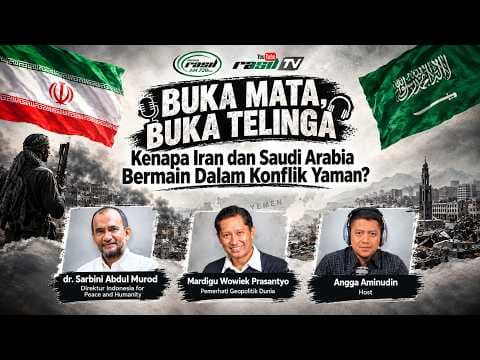
0:28 In the name of Allah, the Most Gracious 0:29 , the Most Merciful. Peace be upon you, 0:30 and Allah's mercy and blessings. Praise 0:32 be to Allah, Lord of the worlds. 0:34 Blessings and peace be upon our master 0:36 Muhammad, and upon his family and all 0:37 his companions. O Lord, increase me in 0:40 knowledge; O Allah, benefit me with 0:41 what You have taught me, teach me what 0:43 benefits me, and provide me with 0:44 knowledge that is beneficial. 0:45 Broadcasting from Jalan Masjid 0:48 Silaturahim number 36, Kalimagis, 0:50 Cibubur, Bekasi, Radio Silaturahim and 0:53 Rasil TV for a united Islam. Brothers 0:55 and sisters, may you be blessed by 0:56 Allah Subhanahu wa ta'ala. How are you 0:58 doing this evening? I hope you are all 1:01 in good health, wherever you are 1:04 listening to our broadcast. I am very 1:07 pleased, I am Angga Aminudin, 1:09 accompanied by Fahri at the operator's 1:12 desk, and Ondi as the cameraman. We are 1:15 here on Sunday, September 27, 2026, the 1:19 4th Sunday of this month, for the "Open 1:22 Your Eyes, Open Your Ears" program with 1:25 our guest, Dr. Sarbini Abdul Murad, who 1:29 is already connected via Zoom meeting. 1:33 Peace be upon you, and Allah's mercy 1:35 and blessings, Dr. Ben. 1:37 And peace be upon you, and Allah's 1:39 mercy and blessings, Mas Angga. 1:41 Yes, your voice cannot be heard yet, 1:43 Dr. Ben. Peace be upon you, and Allah's 1:45 mercy and blessings. 1:46 Ah, now the sound is coming through. 1:49 Are you doing well, Doc? 1:52 Praise be to Allah. Praise be to Allah. 1:54 Praise be to Allah. This September, we 1:57 are going to raise the topic of the 2:01 Saudi Arabia conflict and Yes. It's 2:31 breaking up, this war, the sound is 2:33 breaking up. Yes. 2:36 Yes. Can you hear now, can you hear? 2:42 Yes. We will look at what the actual 2:45 impact is on the Ummah and the world. 2:47 Especially, of course, here in 2:49 Indonesia, Doc. And let's also see what 2:52 the way out is, as seen by analysts 2:54 regarding the conflict between Saudi 2:56 Arabia and the Houthis in Yemen. That 3:00 is why I asked earlier what the 3:01 solution is. This is our dialogue, 3:03 brothers and sisters. So, you can join 3:06 us later. Please send your questions or 3:09 comments regarding the topic we are 3:11 discussing on tonight's "Open Your Eyes 3:13 , Open Your Ears" program to our 3:15 WhatsApp number at 0811999720. Alright, 3:22 Dr. Ben, how shall we begin our 3:24 discussion tonight regarding the 3:26 conflict between Saudi Arabia and the 3:28 Houthis in Yemen? Where would you like 3:30 to start, Dr. Ben? 3:32 Yes, yes. Right. Indeed, after reading, 3:35 studying, and analyzing it, it turns 3:37 out that the Saudi conflict is very, 3:39 very complicated, you know. Very 3:42 complicated, that 3:44 complicated. 3:45 Complicated, and yes, yes. 3:48 And we really need to find a way to 3:51 offer some balanced suggestions. 3:56 Because I think that no matter how 3:58 complex, tangled, or messy it is, there 4:00 are always knots that we can slowly 4:02 pull so that the complexity can be 4:05 resolved. Well, we see that the story 4:09 of the conflict between Shia and Sunni, 4:12 especially in Yemen, is quite quiet. It 4:16 doesn't seem like it's being heard as a 4:19 benchmark for division among the 4:21 elements of the nation's children in 4:23 Yemen. But after they united, between 4:29 North and South, remember there used to 4:31 be North Yemen and South Yemen, 4:34 separated by British and Ottoman 4:36 colonialism. Well, after they united in 4:40 the 90s. Well, moving on from there, 4:45 there were indeed sparks of conflict 4:49 between the Zaidis and the Sunni groups 4:54 , Mas Angga. So, indeed 4:57 there were parties trying to stir that 4:59 up. If we look at the geographical map, 5:02 the north is more dominated by the 5:05 Zaidis, and the south is more dominated 5:07 by Sunnis. But in terms of population, 5:10 there are more Sunnis. The Shias are 5:13 only 30 to 35%according to the census. 5:17 Now, I think if it enters the political 5:21 realm, Mas Angga, these two schools of 5:25 thought will definitely experience 5:28 clashes. There must be clashes, or they 5:31 are being pitted against each other. 5:33 Because in politics, let alone 5:35 differences in schools of thought, Mas 5:37 Angga, 5:38 even among the same school of thought, 5:39 once it enters politics, there will be 5:40 clashes and they will be pitted against 5:42 each other. Look at how, for example, 5:45 Saudi Arabia and the UAE are both Sunni 5:49 , but they don't see eye to eye on 5:52 political perspectives in the Middle 5:55 East. 5:57 Or for example, Iraq attacking Kuwait 6:00 in the 90s, that was Sunni against 6:01 Sunni too. Because once it enters the 6:04 political realm, Mas Angga, this will 6:08 create sparks of tension. That is 6:12 definitely happening in Yemen. That is 6:15 why 6:17 we know in 2012, after Sana'a fell and 6:20 Ali Abdullah Saleh died, it was 6:23 controlled by the Houthis, and this 6:26 became a particular fear for Saudi 6:30 Arabia, Mas Angga. 6:34 I observed why Saudi is so afraid of 6:36 Yemen, they are panicked. And I studied 6:41 it, and indeed, Mas Angga, monarchies 6:45 —especially in the Arab world—are 6:48 absolute; they are not like in England. 6:53 The King is a figurehead, like in 6:54 Malaysia. 6:54 But in the Gulf countries, they are 6:58 absolute, so the King holds all the 7:02 power, which is why, psychologically, 7:07 countries ruled absolutely by a king 7:11 will develop paranoia. So, 7:16 any groups that have a unifying center 7:20 are considered enemies. That is what is 7:25 happening between Saudi Arabia and the 7:28 Houthis, who we see are Shia Imami, Mas 7:31 Angga. 7:33 Historically, they were built by 7:35 Hussein Badreddin al-Houthi; Houthi is 7:38 actually a tribe name. 7:40 But they are part of Ansarullah. 7:43 So, they are Shia Imami, just like 7:45 Hezbollah and Iran. 7:47 Yes. The Imami system has such high 7:51 internal solidarity. I think this is 7:55 what Saudi Arabia is worried about. 7:58 Masangga, if these Zaidiyyah people 8:00 weren't like those in Iran or Hezbollah 8:03 , perhaps there wouldn't be any 8:04 concerns arising in Saudi Arabia. 8:08 Because they lack a single, strong, 8:10 unified leader, and that is very 8:13 influential; in the mind of an absolute 8:16 royal system, this is a threat. 8:19 A threat. 8:20 Now, I am trying to shift from there, 8:22 Mas Gap. Why are the Muslim Brotherhood 8:25 not given access or allowed to live in 8:27 Saudi Arabia? Because that system is 8:30 also [a threat], Masangga. So, within 8:32 the Muslim Brotherhood system, they are 8:34 like an Imamate in quotes, like in Iran 8:37 , and they have a command structure, 8:39 and this can also threaten the 8:41 existence of a dynasty. Because, as I 8:45 said earlier, the absolute dynastic 8:47 system is paranoid; suspicion toward 8:49 certain groups always arises. That is 8:54 why many Brotherhood members were 8:55 arrested in Saudi Arabia, despite the 8:57 fact that they are Sunni. 9:00 So, the complexity arises there, Sangga 9:02 . So, the Saudi Arabian side is trying 9:05 to rally Sunni forces in the south to 9:08 face the Houthi groups because if left 9:10 alone, the Houthis will become 9:12 independent, Masangga, and that is very 9:14 strong. Why? Because Iran has interests 9:19 there, interests in the Red Sea, 9:21 interests— 9:24 what they share, their vision is the 9:27 same as Hezbollah's, right? 9:31 Yes, their enemy, they create, uh, 9:34 Israel, and not explicitly Saudi Arabia 9:37 . I misread that Saudi Arabia, in the 9:40 eyes of the Houthis, in the eyes of 9:42 Iran, is also part of the enemy, in 9:44 quotes. But that is not actually 9:47 expressed. Why is this the case? 9:49 Because Saudi Arabia has long been, 9:52 what is it? Part of, uh, America; 9:56 because people say [they are] 9:58 anti-America and all that, they are 10:00 very close. So, when the big enemies 10:03 are America and Israel, which are 10:06 Iran's enemies, indirectly, countries 10:08 that have close ties to America or 10:10 close ties to Israel are, in quotes, 10:13 part of the enemy. Without being 10:16 written down, Sangga, without... 10:18 being written that Saudi Arabia is part 10:20 of their enemies. This is my analysis, 10:22 Masangga. My analysis is why Saudi 10:24 Arabia is so worried about the Houthis. 10:27 So, when we try to push for Islamic 10:30 unity and all that, with this 10:33 complexity, it seems it will be very, 10:36 very difficult, what, it will be very 10:39 difficult for reconciliation to happen. 10:44 Now, for example, when China called 10:46 Saudi Arabia and Iran to, what, to make 10:49 peace, and what happened, their proxies 10:52 also made peace; Saudi Arabia's proxy 10:55 in the south and Iran's proxy in the 10:58 north. 10:59 They made peace as well. 11:02 But the question is, Saudi still 11:04 blockades the sea and blockades the air 11:06 for the Houthis, right? So, there is 11:10 concern, yes. High concern among those 11:13 in Saudi Arabia. If the Houthis were 11:17 independent, not just in aspects, 11:18 especially in military terms, this is 11:20 what they are very worried about. 11:23 And I see that the closeness of Iran 11:25 with the Houthis is what makes Saudi 11:27 unable to sleep soundly, like that, Mas 11:30 Angga. Now, I notice that the actual 11:34 key, Mas Angga, is how Saudi Arabia 11:37 does not make the Houthis an enemy, and 11:40 the Houthis also do not make Saudi an 11:42 enemy. So, there really needs to be a, 11:47 uh, magnanimous attitude from both 11:49 leaders to consider that they are not 11:51 enemies. But the question is, is this 11:54 possible? That will be difficult 11:56 because 11:56 yes 11:58 if that happens, then there will be a 12:00 reconciliation between the north and 12:02 the south, where the northern group and 12:04 the southern group are supported either 12:06 by Saudi, the United Arab Emirates, or 12:08 by Iran. Now, if a reconciliation 12:11 occurs, the end result would be an 12:12 election. Now, an election is very 12:14 difficult to implement because, well, 12:16 why? Because all the people in Yemen 12:18 have weapons. It would be impossible to 12:20 form a 12:22 fair, just, and honest election. If 12:25 groups are still holding weapons. 12:28 There will definitely be pressure on 12:30 certain groups to choose certain people 12:32 , Angga. Now, especially among, 12:35 especially now, for example, the 12:37 southern group, the southern group does 12:39 not have harmony. Because why? Because 12:41 Saudi and the United Arab Emirates are 12:43 not getting along. They consider, Saudi 12:45 considers the UAE an enemy, and vice 12:48 versa. Now, this means the Sunni 12:50 context is also experiencing, uh, 12:52 division. Now, the question is, Mas, if 12:55 they don't have an election, then 12:57 surely weapons will do the talking. Now 13:00 , speaking of weapons today, Ansar 13:03 Allah is much stronger, much more 13:05 organized. Proven when the war happened 13:08 yesterday up to the 13:12 no, the war between Saudi and the 13:14 Houthis, meaning the groups that 13:17 the Houthis, right? So, that was won by 13:18 the Houthis, right? Defeating the 13:20 groups supported by Saudi, right? Even 13:23 capturing, what, uh, what, the Mocha 13:25 islands, to the battle, to Mandab, to 13:28 the coast, they were taken by...So, 13:31 that's why, wow, this issue is very 13:33 complicated, very complicated. It is 13:36 not as easy as we imagine. I already, 13:38 Saudi Arabia lifted the blockade and 13:40 all kinds of things, but Ustaz, because 13:42 the suspicion is very high, the 13:44 suspicion is very high indeed. Now, 13:47 that's why I see that Iran, with its 13:50 calm, then quiet profile, right? This 13:53 is, the Saudis say, very frightening. 13:57 If Arabs, they just lash out, but Iran 14:00 is calmer, it’s organized, but for 14:02 years it has been able to maintain its 14:05 composure in facing Israel. Iran has 14:08 been at it for almost 50 years. It 14:10 doesn't do anything, but prepares 14:12 everything to face the chaos or a major 14:15 conflict between America, Israel, and 14:17 Iran; it can do that with its calmness 14:20 and strong command, right? 14:22 Yes. Yeah, that's why we really need to 14:25 have this discussion. That's why there 14:27 should be a public discussion. 14:28 Especially if we try to enter these two 14:31 gaps, Mas Angga. When we look at it 14:34 from Saudi Arabia's geopolitical 14:36 context, we're definitely seen as 14:38 pro-Saudi Arabia. And vice versa, Mas 14:42 Angga, if we are pro-Shia; it's very 14:45 sensitive if we try to explain both 14:48 sides, Mas Angga. Even if we say this 14:52 is a geopolitical analysis, meaning I 14:53 have my own perspective. 14:55 Yes. Yes. 14:56 So, I try to analyze that on this side, 15:00 Saudi is indeed at fault, 15:03 and on that side, Iran is also at fault 15:05 . So, both sides indeed have their own 15:09 different sets of faults. It's natural 15:13 for Iran to arm its proxies since it 15:15 has an enemy, Israel. And quote-unquote 15:18 , Saudi Arabia as well. Now, Saudi 15:21 Arabia is also worried about the 10 to 15:24 15 percent, 15:27 those Shia people in Saudi Arabia, and 15:29 they are located on the border near 15:32 Saudi and 15:34 yes, yes 15:34 with the Ansar Allah people. Now, this 15:36 is a separate concern for Riyadh. Like, 15:39 why aren't we...if we're not 15:43 tough on this, the Shia in Saudi might 15:47 revolt, given the execution of Sheikh 15:50 Nimr three years ago. So, I think there 15:56 are too many variables that make this 16:00 conflict difficult to resolve, as they 16:04 all lead to national security, Angga. 16:09 Then there is also the intervention of 16:12 outside parties, America is there, and 16:15 Israel is also there. Now, I think like 16:18 this, Mas Angga, Yemen's population is 16:20 around 40 million people. Saudi Arabia 16:22 has around 20 million people. Just 16:23 imagine, Mas Angga, if a fair election 16:26 could be held and Yemen were peaceful. 16:29 And they solved their problems through 16:33 elections. Without outside interference 16:36 and then becoming their own independent 16:38 country. This is a threat, 16:41 quote-unquote, to Saudi if the Ansar 16:43 Allah group is the one in power. I see 16:47 that Saudi, even without saying it, has 16:50 a national interest in keeping Yemen 16:52 unstable. 16:54 Yes. Yes. 16:54 Now, if it were stable, what? Iran, 16:56 it's not actually the Houthis they fear 16:58 , but who is behind the Houthis, like 17:00 ... 17:01 the lion behind it, which is Iran. This 17:03 is what they are worried about. Back 17:06 when the Shah of Iran was in power, 17:08 these seeds didn't exist, meaning there 17:11 were no fears or tensions between Saudi 17:13 and Iran. But after the Shah fell and 17:18 Imam Khomeini became the supreme leader 17:21 , these things emerged. So, wow, this 17:25 is really intense. It’s even more 17:27 complicated. So 17:29 it's quite a dilemma if another party 17:31 decides to jump in. An example from 17:33 yesterday is, for instance, America 17:34 refusing. H 17:35 Why did America refuse to help Saudi 17:37 Arabia, for example, to attack the 17:39 Houthis? Well, America calculates 17:42 things too, Angga, even though by 17:44 agreement, America has a treaty to 17:46 provide security guarantees to Saudi 17:49 Arabia for their national security. 17:52 Moreover, the Houthi-controlled Yemen 17:53 is not recognized by America. 17:56 Yes. 17:56 Yeah. So, so imagine if America, for 18:00 example, said okay and followed Saudi 18:03 Arabia's request; we also have to think 18:06 that this Bab al-Mandab, 10%of 18:08 international trade passes through 18:11 there, and many American ships are 18:14 there to guard it too, 18:18 so that, what's it called, no 18:19 disruption occurs to, what, the 18:20 American economy. 18:23 The same goes for the UK, even though 18:25 the UK says that it is helping in other 18:28 aspects, not to carry out attacks, but 18:30 to maintain stability for trade and 18:33 shipping of British and American 18:35 vessels. So, so what, yeah? So if, 18:40 sorry, they are still thinking 18:43 stubbornly like this, then I am sure 18:46 that there will be cracks, as I said in 18:50 my video, between MBS and KDS, Khalid 18:53 bin Salman, in viewing the Houthi 18:56 issues because 18:59 there is, there is a blood brother, 19:00 Angga, right? 19:01 And why? Because from the beginning, we 19:04 gathered, Angga, that the Saudi Arabian 19:06 attack on Yemen was without King 19:08 Salman's blessing, right? H 19:10 That's why the rumor is, is it true 19:13 that MBS manipulated King Salman's hand 19:15 to mobilize the troops? 19:18 So, so he suppressed his younger 19:20 brother there to launch the attack. So 19:22 there are still many stories, Angga. 19:24 Still many stories. I think this 19:26 needs discussion. Something like that, 19:28 Angga. 19:28 Alright. Especially since we want to 19:31 look at the root causes and also the 19:33 development of the conflict, Dr. Ben. 19:37 It was also mentioned earlier when 19:40 discussing this, that the public 19:42 perception in Indonesia regarding the 19:45 conflict between Saudi and Yemen is 19:47 very dynamic and fragmented, right, Doc 19:50 ? It is also influenced by religious 19:53 sentiment, foreign policy, as well as 19:55 other issues. Moreover, broadly 20:00 speaking, the public perception in 20:02 Indonesia sees that, oh, Saudi has, 20:05 what, holy lands, right, so it is paid 20:08 attention to by the ummah, there are 20:11 two holy cities, right? Then they also 20:15 see, from the side of Yemen, how this 20:18 conflict started from an internal 20:21 conflict in that country itself. The 20:24 sectarian aspect is also highlighted. 20:26 However, there is a kind of, Doc, 20:29 agenda-setting, right, from Western 20:32 media. Even the agenda-setting from the 20:35 superpower nations. Before we pay 20:38 attention to the conflict between Saudi 20:41 and the Houthis in Yemen. So, the ummah 20:44 , when they are about to speak up, like 20:46 siding with Yemen, oh, this person 20:48 belongs to this sect. When they are 20:50 about to side with Saudi, oh, this 20:52 person belongs to this sect. So it's 20:54 like it has already been agenda-set. 20:57 Now, the point is how we actually see 21:00 this as an ummah, not from those 21:03 scenarios, but by viewing it as fellow 21:06 Muslim nations, Doctor. Both are Muslim 21:10 . Different sects, different political 21:12 interests, and also different systems. 21:16 What about the neighboring countries 21:18 other than Yemen, which might cause an 21:20 even greater clash with Saudi Arabia? 21:24 So, how big do you see the West's role 21:27 in this conflict, Doctor? 21:32 Well, I see, Mas, that there are no 21:34 serious, systematic, or earnest efforts 21:36 from the West—let's say America or 21:39 even Britain, who are influential—to 21:41 reconcile them. I don't think there are 21:45 any. 21:45 But what is present is China. 21:47 China. 21:48 China has what? Has what? Has the 21:51 opportunity, or what? The desire to 21:55 mediate, and that has been done by 21:57 China by calling Saudi and Iran, even 22:00 though the two actors, Saudi and Iran, 22:02 aren't at war, but still... 22:06 The proxies underneath are all their 22:07 people, right? 22:08 Proxies underneath. 22:09 Just imagine, just imagine, right now. 22:14 Saudi Arabia's fighter jets are easily 22:18 battered by shoulder-fired missiles 22:21 that are locally made. So, it's a 22:26 surprising thing, meaning that—what 22:28 to call it—part of the militia, or a 22:31 part of Yemen, not exactly Yemen, but 22:34 they have sophisticated capabilities to 22:37 defeat...... 22:39 the technological sophistication of 22:41 Saudi Arabia. So, this is what is 22:44 getting scarier, Mas, it's getting 22:47 scarier for Saudi Arabia to see how the 22:49 Houthis 'capabilities in arming 22:51 themselves or their military industry 22:54 independence are skyrocketing, and we 22:57 cannot deny, Mas, that not only Shias, 22:59 but Sunni people in Indonesia, in 23:02 particular, many choose the Houthis or 23:04 support Iran. 23:06 And... 23:06 And although, although they might not 23:11 know the background or what is behind 23:16 it, they see that today, with their 23:20 missiles, they are firing shots at 23:24 Israel. 23:26 Then they can strike American warships, 23:29 and America doesn't have the capability 23:32 to...... 23:33 defeat the Houthis, so... 23:36 So the public perception, which we—I 23:38 won't say it's noble, but it's like 23:41 everyone says, "Wow, they admire Iran." 23:44 If we ask them, "Why do you admire Iran 23:46 ?" Iran is not of the Sunni sect. They 23:50 don't see that. They don't look at 23:52 sects, but what they have been waiting 23:55 for for a long time is for there to be 23:57 a party, a group, or a country that can 24:00 truly offer resistance or say no to 24:03 Israel, no to America. This has been a 24:05 public desire for a long time. So, when 24:08 it exists, they grasp it, they support 24:10 it. Heh. 24:11 Outspokenly. And that is not...... 24:14 in Saudi Arabia. Meanwhile, Saudi 24:17 Arabia, up until 2026, has purchased 24:19 nearly 3,000 trillion worth of weapons 24:22 from America. Not to mention France, 24:27 China, or Russia, and such a vast 24:29 amount of weaponry is just stockpiled, 24:33 not used for what our public or the 24:36 world hopes it would be used for 24:38 against Israel. 24:41 Attacking Israel. 24:43 Israel, right. That is what we hope for 24:45 . But 24:46 the reality is not like that. So, I 24:49 don't blame the public if some say, " 24:51 Wow, this is support for Iran." 24:54 Yes. 24:54 Or supporting Iran. If they ask, "I 24:57 don't care if it's Shia or Sunni, the 24:59 important thing is this party is brave 25:01 enough to attack Israel," there is a 25:03 shift, Masangga, a shift in perception. 25:07 Among non-Shia circles regarding this 25:09 conflict. So it's no wonder we see how, 25:12 for example, the Iranian embassy is 25:15 visited by many groups, many elements 25:17 of the nation to offer sympathy to the 25:20 Ambassador for... 25:23 for the victims attacked by America; 25:25 they are not even Shia, you know. 25:27 Well, I felt the impact of that, 25:29 Masangga, along with the late [scholar] 25:31 . So, I try to analyze that geopolitics 25:34 . 25:35 And I found, wow, these stigmas, they 25:38 are stigmas. So 25:41 it doesn't mean we are worried or 25:44 afraid to do something just to avoid 25:46 getting that stigma. That's not it, 25:49 Masangga, it's not like that. But I 25:51 want to see how sensitive our public is 25:53 to issues like that. So I try to 25:57 explain to them that when Kuwait was 26:00 attacked by Iraq, we shouldn't perceive 26:03 it as Sunni fighting Sunni; that is a 26:06 political context. Once politics enters 26:09 , it's a different story. Sunnis can 26:12 fight each other; NU and Muhammadiyah 26:14 today are not exactly in harmony, yet 26:15 both are Sunni, right? So we invite the 26:19 public, our community, Masangga, 26:21 meaning you must see things 26:23 operationally. Okay, we have our 26:26 allegiances. Okay, I support A, but 26:29 when A is wrong, we criticize them for 26:32 being wrong; it doesn't mean I hate A. 26:34 No. It means we are trying to intervene 26:37 to unite. 26:39 Well, not uniting the entire community, 26:41 that ambition is too grand. We want to 26:45 intervene to provide a small solution; 26:47 even if it's not a rushing river, at 26:50 least it's a drop of dew that we can 26:53 offer to sprinkle on the heat of this 26:55 conflict, Masangga. So this is what we 26:59 can do. Thus, through Rasil radio, we 27:02 try to voice it everywhere that... 27:05 I 27:06 actually, this is a matter for the 27:08 community, meaning our main enemy is 27:10 truly Israel. 27:11 So, why, for example, do I, Masangga, 27:14 try to highlight cases or happy news, 27:16 like the victories of Muslims in 27:18 America, and so on? So, this is part of 27:21 the good news. The good news is that 27:24 the Prophet's promise regarding the 27:26 Muslim Ummah will eventually happen, 27:27 but 27:28 the process will take place and it will 27:30 be slow. So, that is why 27:33 there are also people who say things 27:34 like, "Let the House of Saud be 27:36 destroyed, let it collapse, let it be 27:37 crushed," and so on. 27:40 Let's say we don't think like that. So, 27:42 for a Muslim, the thinking should be 27:45 how to have Allah open the hearts of 27:47 the House of Saud so that they love 27:49 Al-Aqsa. Not just the Haramain, but 27:51 they should love Al-Aqsa too. Then they 27:53 have what? They have a way, like King 27:56 Faisal did in the past regarding 27:58 Palestine; we don't want the House of 28:00 Saud to be destroyed, it's not like 28:02 that. Because we understand, Mas Angga, 28:05 if the House of Saud were to collapse, 28:07 what would happen? Chaos, there would 28:09 be chaos in Arabia. Because, as I have 28:12 said everywhere I speak, Mas Angga, 28:15 Arabia is not a country suitable for 28:17 the application of a Western democratic 28:19 system. Arabia isn't suitable, 28:22 it just can't be. 28:24 It has to be, well, it has to be firm; 28:25 if you apply it like in Iraq, it breaks 28:27 apart and isn't safe to this day, or 28:29 look at Libya, democracy was forced 28:30 upon it and it split in two—that's 28:32 what happened, and that is reality, 28:34 whether you like it or not, that's how 28:35 reality is. So, they want democracy, 28:38 but how? It couldn't work in 28:41 Afghanistan; America took over 28:43 Afghanistan, and when the Taliban fell, 28:45 American democracy happened, and what 28:47 resulted? Corruption everywhere, war, 28:50 and criminality occurred. 28:52 But when the Taliban took hold—that 28:54 system is an Imamate, quite similar to 28:55 Iran— 28:57 what happened? It was peaceful. 28:59 Indeed, there were no debates or 29:00 fighting; such things are not important 29:02 . So, this democracy isn't suitable to 29:05 be applied in every country, just like 29:07 in China, for example. Just imagine 29:09 China with its 1.4 billion people, if 29:11 democracy were applied, China would 29:13 fall apart tomorrow. 29:14 Yes. 29:15 So, this is what we see, that we are 29:18 not saying the House of Saud must 29:20 disappear or collapse. Our thinking is 29:23 not like that at all. So, what we hope 29:26 for is how the House of Saud can return 29:28 to being like King Faisal in the past. 29:32 He truly loved Palestine and he carried 29:34 out an oil embargo against America, 29:36 which caused an extraordinary oil 29:38 crisis. That is what happened, isn't it 29:41 ? 29:42 Secondly, Mas Angga, 29:44 we are not criticizing Saudi Arabia, we 29:46 are not criticizing its people. We know 29:49 the Saudi people are extraordinary, 29:51 truly extraordinary. We are not going 29:52 in that direction. So, what we want to 29:56 convey, Mas Angga, is how we can now 29:59 find a way or offer suggestions, some 30:02 contribution we can make so that the 30:05 people of Yemen can enjoy peace and 30:08 independence in their own way; if the 30:11 Houthis are the ones in power, then so 30:15 be it. The Houthis must also accept 30:18 other minority groups. 70, 70 to 80%of 30:22 them are Sunni people, people who are 30:24 non-Zaydi, they must be able to accept 30:27 it, after all, that is their happiness. 30:31 So we must leave it to Yemen how they 30:33 build their country without any outside 30:35 baggage, whether it's Saudi Arabia, the 30:38 UAE, or Iran interfering in determining 30:40 the choices of the Yemeni people. But 30:43 that's the thing, Masangga. Now, what 30:46 needs to be looked at and underlined, 30:48 as mentioned earlier, is when some 30:51 groups of society in Indonesia view 30:53 this conflict through the lens of 30:55 political rivalry in the Middle East 30:58 region, it is also often understood as 31:00 an indirect war or proxy war between 31:03 Saudi and Iran, where those supporting 31:05 the Houthis, whose background is 31:07 constantly highlighted on social media, 31:10 are Zaydi Shia, and so on. However, it 31:15 was emphasized earlier that experts or 31:18 analysts see this conflict not just as 31:21 a conflict regarding sectarian 31:23 sentiment. But, these experts want to 31:27 educate that the root of the conflict 31:30 is purely a matter of power struggle, 31:32 resource justice, and also the 31:33 geopolitical issues, right, Doc? 31:37 But from here, Doc, what about the 31:39 global security impacts, Doc? Let's 31:41 look at it this way, Doc. The 31:44 escalation continues to grow, the 31:47 Houthi conflict is expanding to 31:49 maritime territories, sea areas. And 31:54 also, Dr. Ben said that public 31:56 perception has also started to shift. 31:59 This concerns security in the Red Sea, 32:01 Doc. Its connection to the global 32:03 economy. There is a threat when the 32:06 situation in the Strait of Hormuz is 32:08 like that. Iran positions itself there. 32:12 Now, the Red Sea as well. The Houthis 32:14 are positioning themselves just like 32:16 Iran. Finally, many citizens of the 32:19 world are looking at this and wondering 32:21 about the global economy. So, how do 32:23 you see it, Doc? Yes, so it cannot be 32:30 denied, Masangga, that the February 28 32:33 attack, the joint attack by America and 32:36 Israel on Iran, is 32:39 further sharpening the world crisis, 32:41 right. So, in this context, Masangga, 32:43 America cannot just wash its hands of 32:45 it. Meaning that the Houthi conflict 32:47 with Saudi Arabia today cannot be 32:49 separated from the conflict between 32:51 America and Iran. Because what happened 32:55 yesterday was when, when Saudi planes 32:58 allegedly attacked what planes? Planes 33:02 carrying pilgrims from Yemen, that was 33:04 the beginning of it, Masangga. 33:07 Now, it cannot be denied that these 33:09 pilgrims wanted to attend the funeral 33:12 of Ali Khamenei, who was bombed by 33:14 America, it is all related there too, 33:16 Masangga. So indeed, the control of the 33:20 Bab-el-Mandeb Strait and the control of 33:22 the Strait of Hormuz really determine 33:24 the bargaining power of both sides. 33:27 That is why, in the past, Masangga, 33:30 when the Houthis had not yet reached 33:32 the coast, had not yet reached what, 33:35 Mocha or the Port of Mocha? 33:38 i 33:39 So they are indeed controlling the Red 33:41 Sea through missiles, right? And now 33:44 it's getting closer and closer, isn't 33:46 it? Well, that's why 33:48 it could very well happen when Iran 33:52 says to stop or close the Bab el-Mandeb 33:55 , and that's why there was a meeting in 33:59 Muscat between 34:02 America and the Houthis, which is being 34:04 called a betrayal or whatever. Granting 34:08 access to America but not to Saudi, and 34:10 so on, saying Israel is being given 34:12 access, and so on. So, in politics, 34:15 things like that do happen. 34:18 Political things happen. There's no 34:20 such thing as one plus one equals two, 34:22 you know. That's why we're surprised, 34:25 how can someone who understands 34:27 geopolitics want to talk to America? 34:30 Yeah. 34:31 Regarding the issue of freedom of 34:33 navigation for America through Bab 34:35 el-Mandeb. 34:37 Why not just bomb them? So we have our 34:39 own perceptions, right? We force our 34:41 perceptions to match our own thinking, 34:43 you know. 34:44 Yeah, when if it were me, I'd attack 34:46 everyone, don't let anyone through. 34:48 Yeah, that's it, right? If it were us 34:53 Yeah. 34:53 Okay. For example, they've gone quiet 34:55 now. Why isn't Iran attacking Israel 34:57 full-on? 34:58 Or why are they quiet 35:00 now? Meanwhile, Israel is still 35:02 committing massacres in Palestine. The 35:05 war continues. The Houthis keep 35:09 attacking, Iran keeps attacking, and 35:11 Hezbollah continues its resistance, 35:13 right? Logic doesn't work like that. 35:16 Yeah. 35:17 So, when America opens communication 35:19 channels with the Houthis, it doesn't 35:21 mean the Houthis are betraying Iran. 35:23 That's just the art of war, you know. 35:27 So, I think for those who consider the 35:30 meeting in Muscat, where they gave 35:34 America freedom so they wouldn't be 35:37 attacked by the Houthis, as a betrayal. 35:41 It's not just some conspiracy or 35:43 backroom deal, whatever. Actually, they 35:47 have bargaining power, meaning "Okay, 35:50 I'll give you access, but don't attack 35:53 me, or Saudi Arabia." 35:56 War isn't just about constantly raising 35:58 arms; there's lobbying and negotiation 36:00 involved. 36:01 Yeah. 36:02 Yes, that's right. 36:04 Yes, sometimes we have to enlighten the 36:06 public on this. We assume that the 36:09 logic of war has its own flow of 36:11 thought, and sometimes it's not the 36:14 same as what we think because 36:15 everything is secret. Everything has 36:19 things that cannot be disclosed, it's 36:22 impossible. I mean, meeting like this 36:24 isn't like that, it has to be kept 36:26 secret. Whatever the public or the 36:29 world perceives that meeting or plan to 36:31 be, let them. 36:33 But that is the logic of war. Yeah. 36:37 So, that's why I see that it will be 36:39 very, very influential. Why is it that 36:43 until today our dollar won't go down, 36:44 Angga? In some regions, we have fuel 36:48 shortages, even though it's supposed to 36:50 be full; if it's the Jabodetabek area, 36:52 the political scale of oil is 36:53 significant. How is it in America? It's 36:57 not just one gallon that's gone up, say 36:59 , to 5 dollars for example. 37:01 Or in Europe, that's something that 37:02 cannot be separated. Now, if this dam 37:05 were closed, that would impact Egypt, 37:08 as ships passing through the Suez Canal 37:11 provide Egypt with taxes, which is 37:13 their largest source of revenue. So, 37:17 all of this has an impact. Yes. 37:20 Why, when America asked Egypt to help, 37:21 did Egypt refuse? They were like, why 37:23 should I get involved? 37:25 That is why I said from the beginning 37:28 that this trilateral, this tripartite 37:31 —Saudi Arabia, Pakistan, and Turkey 37:33 —is not 37:35 effective if it is used to fight the 37:38 Houthis. For example, let's say 37:41 wow, Saudi thinks I'll use this 37:43 tripartite to target the Houthis, not 37:45 Israel. It won't work. 37:46 Why? Because Pakistan and Turkey have 37:49 their own logic and their own interests 37:51 . 37:53 So, suddenly there is a perception from 37:54 us, oh, this and that, all kinds of 37:55 things. Sometimes the commentators feel 37:59 they are smarter than the players, it's 38:00 like that everywhere. 38:02 Yes. 38:03 So, as I said earlier, this tripartite, 38:06 if it's to face the Houthis, it won't, 38:08 it won't work. 38:10 It won't work, right. After all, Iran 38:11 will not, Iran won't just stay quiet. 38:14 They have people in Pakistan they can 38:17 try to stimulate to rebel, and the PKK 38:19 in Turkey could also be stimulated by 38:22 Iran, right? Pakistan and Turkey must 38:26 be thinking, oh, if they do that, they 38:28 won't escape internal friction within 38:30 their own countries. 38:33 And this is what they must see: that 38:35 geopolitics cannot be black and white. 38:38 But we do see, yes that technical 38:42 changes vary. If I have to go to Monas, 38:45 I can take this road or that road, it 38:47 doesn't have to be a direct route, it 38:48 doesn't have to 38:49 be a straight line to get to Monas. Now 38:53 , this is what I think: our public must 38:55 be smart, must have literacy, so that 38:57 fanaticism towards a country, whether 39:00 it's being fanatical towards Iran or 39:02 fanatical towards Saudi, is reduced. 39:05 Because both are very strong here. The 39:07 Wahhabis are strongly fanatical about 39:09 Saudi. People are also fanatical about 39:12 Iran. These groups are extraordinary. 39:15 So, we try to invite them to think more 39:18 geostrategically, more geopolitically. 39:21 So that, with their thoughts, who knows 39:25 , maybe their thoughts can unite, can 39:28 unite these two groups. So, if we say 39:33 that Shia is not Islam, why do we have 39:35 to say all these things, right? We, we 39:38 can't, we can't deny that, can we, Mas 39:40 Angga? That's about people's literacy, 39:42 people's way of thinking, and then 39:44 their closeness to certain groups or 39:46 certain teachers. 39:47 It also greatly influences how they 39:49 think, how they act, and how they give 39:51 advice, Mas...uh...H. 39:54 Yes. I have a story, Doc. I remember at 39:59 one event, there was a discussion with 40:02 a representative...a mufti from Syria 40:05 at the time, who mentioned that 40:08 Indonesia has an extraordinary 40:11 advantage among its Muslims. 40:14 Differences of opinion regarding 40:18 religion in Indonesia can end 40:21 peacefully, and those differences of 40:24 opinion do not lead to killing each 40:28 other, let alone warring. He gave an 40:32 example that in the Arabian Peninsula, 40:34 those differences of opinion can lead 40:37 to war. Especially if both groups have 40:40 weapons, it turns into a war, he said. 40:42 Is that already part of Arab culture, 40:46 Doc? Is this just the conditioned state 40:48 of the Arab world? They just disagree, 40:50 and then they end up going straight to 40:52 war. That's why small conflicts can 40:55 become big; regional ones can escalate. 40:59 What do you think, Doc? 41:01 Well, no, I...it's not just this mufti, 41:03 Mas Angga, there are several 41:06 parties who try to say, "Wow, do we 41:08 want to be like Syria? Do we want to be 41:11 like Iran and so on, Mas Angga?" 41:13 So I am more realistic, Mas Angga. 41:15 Realistic like this. That 41:17 nature greatly influences a person's 41:18 perspective. 41:19 Nature 41:20 nature influences a person's 41:21 temperament. So, I understand, that's 41:23 just the Arab world. 41:25 If we try to force it to be like the 41:27 Arab world, it's impossible, it can't 41:28 be done. For example, if someone once 41:31 said, "Wow, 41:33 Afghanistan only has a few tribes, but 41:36 they fight endlessly. Indonesia has 41:39 hundreds, around 200 tribes, but it's 41:41 safe." I said, " 41:44 Try reversing it. All Afghan tribes 41:48 move to Indonesia. Indonesians move to 41:51 Afghanistan. What would happen? The 41:53 reverse. 41:53 War as well. 41:54 People there would be all out; people 41:56 here would be the same. Because nature 41:59 influences people's ways, character, 42:02 and so on. So the mufti wasn't being 42:05 realistic. No, isn't it true that it's 42:06 been like that since the beginning? 42:08 That's just the Arab world, so why, for 42:09 example, 42:10 like the Hamas-Fatah conflict in 2006, 42:12 that was... 42:13 Yes. 42:14 Shootings. 42:15 Shootings. 42:17 Yes. 42:17 Well, I'm not saying...that's just, 42:19 that's just the Arab world. 42:22 That's the Arab world, so we can't 42:24 perceive the Arab world the same as us; 42:27 if we have differences, the most we do 42:29 is go silent, stop talking, we're 42:31 annoyed." Your face is annoying, I 42:35 don't want to talk, "we might be like 42:37 that, but there... 42:38 Over there, it's shootings. 42:42 Yes, so we must understand that... 42:43 character...which is why from the 42:45 beginning I said that the Arab world 42:47 isn't suitable for democracy; if 42:49 democracy is forced, it will definitely 42:51 fall apart because the character is 42:53 different. 42:55 So if, for example, there is a 42:57 Mubarak-style approach that is harsh, 42:59 arresting people, or Sisi—well, if 43:02 they are soft or weak, they get crushed 43:04 . 43:04 Hm. It can't be. 43:06 So, so it's not that I'm saying I 43:09 justify the violence, no. Wow, there's 43:12 violence and arrests—no, I'm not 43:15 saying that, but that is indeed how it 43:18 happens. 43:20 So, so, for example, how Algeria tried 43:22 to implement democracy and it kept 43:24 failing, and even now it's still 43:26 unstable, that's what... 43:28 that is indeed... 43:30 what happens. Oh, Israel can. Israel, 43:32 those in Israel are not local people, 43:35 not Arabs. They are all outsiders from 43:38 Eastern Europe, from Russia, from 43:39 everywhere, and the democratic 43:41 tradition has been there since they 43:42 were small, from their beginnings. So, 43:45 when they are in... 43:48 in Israel, they just continue it; it's 43:50 not a new thing for them. 43:53 Alright, brothers and sisters who are 43:55 blessed by Allah Subhanahu wa ta'ala. 43:56 Right now you are listening to the live 43:59 broadcast of" Open Your Eyes, Open Your 44:01 Ears "in this evening's edition with 44:04 Dr. Sarbini Abdul Murad. The conflict 44:07 between Saudi Arabia and the Houthis in 44:09 Yemen is endless. What is the solution? 44:13 You can join us, brothers and sisters. 44:15 Please send your questions or comments 44:17 to the Brazil WhatsApp number at 44:19 0811999720. I will go to WhatsApp first 44:28 . Here is Mr. Sulaiman in Tambun. Peace 44:31 be upon you, and Allah's mercy and 44:33 blessings. Praise be to God, listening 44:36 to this quality discussion. Thank you. 44:39 Next, we have Mrs. Maryati in Sukabumi. 44:42 Peace be upon you, and Allah's mercy 44:44 and blessings. Listening to BMBT. Dr. 44:46 Sarbini. Thank you for your views and 44:49 enlightenment. In my simple mind, there 44:53 is only one sentence. It seems the 44:56 Saudi Arabian kingdom is paranoid, 44:58 paranoid about the Houthis. Is that so, 45:01 Doc? Thank you. Paranoid, they say, Doc 45:05 . This is regarding... 45:07 indeed, indeed... 45:08 yes, yes, as I said earlier, indeed if 45:10 it is already a royal system, the 45:12 kingdom, people definitely see... 45:14 everything through a lens of suspicion. 45:19 The problem is definitely like this. 45:21 Now, let me give a simple example from 45:23 history. That Sultan Suleiman the 45:27 Magnificent issued a decree or law— 45:29 well, not a decree, a law—that the 45:31 king's sons, the male ones, must be 45:33 killed. Killed, right? So, so when 45:38 there is a crown prince—like the 45:40 first son becomes king, his younger 45:42 brothers are all killed. 45:45 They are killed. So why is it paranoid? 45:48 Well, if not, the younger brothers 45:50 would stage a coup against their older 45:52 brother's kingdom and the kingdom would 45:54 break up; that lasted for hundreds of 45:56 years, but Sultan Ahmed canceled it all 45:58 . 45:59 So, indeed, in a system—an absolute 46:02 royal system—that is bound to happen. 46:05 Even though this might be denied, there 46:07 are those who deny it, but I hold that 46:09 view. So, so, every time there is 46:13 someone considered very popular, very 46:15 extraordinary, they are definitely 46:17 suspected. So, don't be surprised when 46:20 Habib Rizieq stayed in Mecca for a long 46:22 time, there were many spies there, 46:24 right, because he gathered many people, 46:26 right? 46:27 many people. Well, that's why in Saudi 46:29 Arabia, you're not allowed to gather 46:31 many people in homes; it must be at the 46:32 mosque and requires various permits. 46:35 Because in an absolute monarchy system, 46:37 any figure considered capable of 46:39 gathering a large crowd is immediately 46:42 viewed with suspicion. That is indeed 46:44 what happens everywhere, it's like that 46:46 . Absolute monarchies are different, 46:48 for example. 46:49 Like Malaysia or countries in Europe, 46:51 they are constitutional monarchies. So, 46:54 they act as figureheads and don't care 46:56 if there's a certain figure or whatever 46:58 ; it's none of their business. Because 47:00 the transfer of power is clear. Whether 47:02 it's every 5 years or every 4 years, 47:04 it's clear. 47:04 Because there is a parliament to run 47:06 the government. 47:08 Yes, there is a parliament. Well, it's 47:10 not like that over there. Even a king's 47:13 son, like when bin Salman first rose to 47:15 power, he arrested his own brothers at 47:18 the Ritz-Carlton, right? Then, how he 47:22 treated his own father, but he claimed 47:23 the throne, right? That's exactly what 47:26 happened. Although it wasn't widely 47:28 publicized because it was covered up, 47:30 we as observers can draw conclusions. 47:32 Let's link that to the psychology of 47:35 the people; how do they feel? And yes, 47:39 it reminds me of a book by Abu Ala 47:41 Al-Maududi. He wrote a book:" The 47:44 Caliphate and Kingdom in Islam. "So, 47:48 when the Caliphate' ala minhaj 47:50 an-nubuwwah was historically 47:52 transformed into a kingdom-style 47:54 Caliphate. That's why there are two 47:57 types of kingdom-style caliphates," 47:59 Mulkan Adhan "and" Mulkan Jabariyah. " 48:03 It is depicted how these descendants 48:05 often have conflicts with their own 48:07 siblings. How they seize power from 48:11 their own brothers, and that has a long 48:14 history from the Umayyad era, the 48:16 Abbasid era, to the last one, the 48:18 Ottoman Empire. And now, the practice 48:23 is more compartmentalized, with 48:25 countries controlled by a single tribe, 48:29 right, Doc? 48:32 Yes. Sure. Yeah. 48:34 Yeah. 48:36 We will go to another listener. This is 48:38 from Mr. Abdullah in Depok, Doctor. 48:41 Peace be upon you and God's mercy and 48:43 blessings. 48:44 And peace be upon you too. 48:45 Dr. Ben. Why does the Yemen conflict 48:49 not receive as much attention as other 48:51 conflicts in the world? Then, what is 48:54 the humanitarian condition in Yemen 48:56 currently? And why does the suffering 49:00 of its people seem not strong enough to 49:03 end the conflict? Thank you. 49:07 Yes, sir. Honestly, I must say that we 49:10 are very concerned about the situation 49:12 in Yemen. 49:13 Yemen is the poorest country in the 49:16 Middle East. Even though they have the 49:19 richest resources, 49:20 their internal resources are the 49:21 richest, but they are the poorest today 49:22 . 49:22 Their oil is also vast, right? It is 49:25 vast; I believe Yemen has the largest 49:27 reserves in the Middle East. 49:28 So I assess that 49:30 many parties make Yemen unstable 49:32 because, as mentioned, there are 49:34 internal factions. So, if this were 49:37 made a democracy, what would surely 49:39 happen is civil strife, especially 49:40 since everyone is holding weapons. A 49:43 fair election is impossible if weapons 49:46 or, I don't know, whatever system is 49:48 being used, are involved. So, I see, 49:51 Mas Angga, why is it that, for example, 49:54 Yemen isn't as big of a case as Israel? 49:59 Because for some of us, Palestine is 50:02 more—well, it’s closer to our 50:05 hearts than Yemen. Yemen's conflict is 50:09 between our own kind, after all. 50:11 Meaning, between elements of the Yemeni 50:13 people, helped by the UAE, helped by 50:15 Saudi, helped by Iran. So the conflict 50:18 is us against us, brother against 50:19 brother, distant relatives against 50:21 close relatives, you know. But with 50:23 Israel, it's different; it's the enemy, 50:26 the Jews, killing Muslims. With 50:29 Palestine, the attention is more 50:31 focused, more maximal, and deeper. Now, 50:37 as for Yemen, it's hard to defend; it's 50:39 a bit complicated because it involves 50:41 the internal affairs of the Islamic 50:43 community itself, even if some deny it. 50:47 Ah, we can't force it either because, 50:49 well, there are different perspectives 50:51 and so on. But the point is, the Yemen 50:55 conflict today is truly serious, and 50:57 poverty is extraordinary—it's the 50:58 poorest in the Middle East. So, on this 51:03 occasion, let's try to discuss it, Mas 51:04 Angga. In my opinion, Indonesia could 51:07 get involved a little bit, Mas Angga. 51:09 Actually, if it wants to, Indonesia can 51:11 . Since a long time ago, I have always 51:14 said that Indonesia is a country with 51:16 great potential to mediate major 51:18 conflicts. 51:20 There is a way, Mas Angga; Indonesia 51:22 actually has a way, but it's an" 51:24 Indonesian-style "way, Mas Angga. 51:27 This is what isn't being maximized by 51:29 our people, by Indonesians themselves. 51:32 If, for example, Prabowo asks the 51:34 Foreign Minister to use the" Indonesian 51:36 way, "at the very least, even if not 51:38 100%, there could be about a 5% 51:40 contribution from Indonesia to 51:42 reconcile the Saudi and Houthi sides. 51:45 This, actually, there is an opportunity 51:49 here. So on this occasion, tonight, I 51:52 want to tell the public, tell all the 51:55 listeners, that Indonesia actually has 51:58 huge potential to be an extraordinary 52:01 peacemaker and mediator. Why? Because 52:04 of our character; the behavior of 52:06 Indonesians is welcomed by both sides. 52:09 Yemen. They feel comfortable; it's 52:11 comfortable to initiate peace. 52:13 Because it’s impossible, Mas Angga, 52:15 for these two groups to unite if the 52:17 mediator favors one of them. It's not 52:19 possible. 52:20 Yeah. 52:21 Exactly, Mas. 52:22 Hm. Alright. We have Ibu Tina in 52:24 Jakarta. Assalamu'alaikum 52:26 warahmatullahi wabarakatuh. Doctor, is 52:29 peace still possible if both sides feel 52:33 that a military victory is the only way 52:37 to demonstrate their strength? What do 52:41 you think needs to change first? Thank 52:45 you. And what we must believe is that 52:49 there is still hope. So, we must not 52:53 lose heart in our efforts to reconcile 52:55 our brothers. In Islam, it is mentioned 52:58 that reconciling two of our brothers 53:01 brings a great reward. Allah 53:04 appreciates those who try to reconcile 53:06 two groups of Muslims so they can live 53:08 in peace. And I think it is not 53:11 hopeless; it is important not to 53:14 despair, not to lose spirit. No matter 53:16 how complicated, no matter how 53:18 complicated things are, I truly believe 53:21 there is always a way out. 53:23 Right? Okay, next, Doc. This is from 53:26 Mr. Rahman. Peace be upon you and 53:29 Allah's mercy and blessings. May you 53:33 always be healthy, Kang Angga and also 53:37 Ustaz Ben. Well, someone is already 53:39 calling you Ustaz, Doc. Yes, how about 53:43 the status of Tarim in Hadhramaut, that 53:47 historical city; does it also fall 53:51 within the range of their war and 53:54 artillery fire? How is the condition in 53:58 Tarim currently? That is a region in 54:03 Yemen, isn't it, Doc? 54:04 Yes, whose region is Tarim? Mr. Farid's 54:07 son-in-law is studying there, right? 54:09 Hadhramaut. But from the information I 54:13 have received, from the information I 54:14 have received, 54:15 all parties respect Hadhramaut, they 54:18 respect Tarim. So, 54:20 the groups, whether the groups backed 54:22 by Saudi and the United Arab Emirates, 54:24 called the STC, 54:25 Or the Houthi groups, they do not 54:28 engage in armed contact. That is in 54:30 Tarim, Hadhramaut, they respect it. It 54:33 is a school, what you call it, a place 54:35 where people seek knowledge, many 54:37 schools, many students, or university 54:39 students, or many learners from various 54:41 countries come to study there. So I 54:43 heard from information that they highly 54:45 respect the land of Tarim, they say 54:47 there are many 54:49 many saints there, so they do not want 54:51 to cause destruction or bloodshed there 54:53 . This is the information I heard. 54:56 Maybe Mr. R might have other 54:58 information to share as well. 55:01 A loyal BMBT listener, Eyang Sri, also 55:04 sent a WhatsApp message. Peace be upon 55:06 you and Allah's mercy and blessings. 55:09 May the resource person and all Rasil 55:11 crew always be in the mercy and 55:13 blessing of Allah Subhanahu wa ta'ala. 55:17 Listening to tonight's discussion, 55:19 Saudi Arabia really shouldn't bow to 55:22 America. And right now, they are 55:25 dependent on America. What do you think 55:27 , Doctor? Okay. 55:30 Yes, many people indeed suggest that, 55:31 Mas. Yes, it means 55:34 it means, uh, what? Yes, fine, we 55:37 support Saudi, but please, don't just 55:40 be an extension of America. Please help 55:43 Palestine, don't just stay silent like 55:44 that. So on one hand, we do expect more 55:48 from Saudi, right? It will 55:50 Yes. The Qibla for Muslims is there. 55:52 The first Islamic defenses appeared 55:54 there. And we know how wealthy Saudi 55:57 Arabia is. Actually, Muslims worldwide 56:00 hope for more from Saudi Arabia to 56:02 contribute to the global Islamic 56:04 community. So, if we talk about 56:07 leadership, Saudi is indeed the most 56:09 appropriate. They have everything, 56:11 actually. I don't know the logic used 56:14 by the Saudi dynasty or Bin Salman, so 56:17 they don't utilize, let's say, the 56:19 passion or expectations of the Muslim 56:21 community. 56:23 Yeah. 56:23 For Saudi to appear in the global 56:25 constellation. Because I think if Saudi 56:28 acted like King Faisal did. Wow, I 56:30 can't even imagine what that would be 56:33 like. 56:33 Yes. But many in the West wouldn't like 56:36 that. Yes, that's the risk. So, it's 56:40 about how to break free from America's 56:42 shadow, right? Yeah. 56:45 Just imagine, if a speech by someone 56:48 like Trump says that MBS today is my 56:50 idol, imagine that. 56:52 Yes. 56:53 That is very 56:54 very, very demeaning, isn't it? 56:58 Yeah. Alright, last question, Doc. From 57:03 a servant of God who didn't mention 57:04 their name. What about Indonesia, Doc? 57:07 It should be able to resolve the 57:09 conflict. What steps can Indonesia take 57:13 , starting from its Islamic government, 57:16 then the many Islamic organizations, 57:18 and the civil society, many of whom 57:20 have Yemeni descent? What is your 57:23 opinion, Doctor? Okay. 57:26 Yes, that's right. True. So, it's true 57:29 that Indonesia, as I said earlier, 57:31 actually has the opportunity, has the 57:34 chance to get involved in reconciling 57:36 both sides. I mean, there are, you know 57:41 , open negotiations, formal ones, like 57:45 what China did with Iran and Saudi 57:48 Arabia. But Indonesia could also use 57:53 more closed-door, behind-the-scenes 57:55 approaches, and that can be done. Maybe 57:59 publicly we don't have the capacity for 58:01 that, because we aren't a strong 58:03 country like America or China. But we 58:06 have capacity beyond that, don't we? 58:09 Like what Jusuf Kalla did, for example, 58:13 when trying to reconcile the Taliban 58:16 factions with the government of, uh, 58:19 Ashraf Ghani, I think it was. So, Jusuf 58:24 Kalla brought the scholars together, 58:26 called the scholars to deliberate, 58:28 because the people of Afghanistan 58:30 really listen to what the scholars say, 58:33 right? So, it's a" back-channel " 58:36 approach. So, this is what I think 58:39 Indonesia, these behind-the-scenes 58:41 methods, Indonesia can actually do that 58:43 . 58:45 Take for example, the negotiations in 58:47 the Philippines; Indonesia played a 58:49 major role. It was mostly behind the 58:52 scenes, over coffee and food, you know, 58:54 just talking it out, and it clicked, 58:56 okay, it worked. Indonesia has this 58:59 capability, so I think this ability 59:01 must be honed and put to use. So, going 59:04 back to the beginning, if I, Mr. 59:06 Prabowo, believe that I must earn a 59:08 great reward from God by reconciling 59:11 hearts with Saudi Arabia. 59:14 He will use every means, and I believe 59:16 that for every good intention to 59:18 reconcile our brothers, God will surely 59:21 open a way. That is my conviction. 59:23 Like that. All right. That is the last 59:27 question we can answer, Doc. There is 59:30 also Mr. Baron Betawi who gave his 59:33 takbir, right? Allahu Akbar. Keep your 59:36 eyes open, keep your ears open. Thank 59:38 you, Mr. Baron Betawi. Alright Doc, as 59:43 a closing statement, regarding our 59:46 discussion on the Saudi versus Houthi 59:49 Yemen conflict. What do you think, Doc? 59:53 What are the points? And also, what are 59:55 the important points to remind our 59:57 listeners? What do you say, Doctor? Yes 1:00:01 , I think the most important thing is 1:00:05 how we take a stand for the truth, for 1:00:09 what is right. Then secondly, how we 1:00:12 try to provide solutions and 1:00:14 suggestions to be able to 1:00:16 reach this truth. It's not about 1:00:20 winning. This truth is important to 1:00:24 convey, that Saudi and the Houthis are 1:00:27 our big umbrella as Muslims whom we 1:00:30 must, well, whom we must reconcile. 1:00:34 There must be comprehensive efforts 1:00:37 from all of us to be able to reconcile 1:00:39 our brothers wherever they are. And 1:00:46 then we also have to invite all our 1:00:48 listeners to be more elegant, calmer, 1:00:51 more patient, and more peaceful when 1:00:54 there are parties trying to negate all 1:00:57 our straightforward views on 1:00:59 reconciling these two brothers of ours. 1:01:04 Because we must understand that 1:01:05 everyone has the right to their own 1:01:08 views, and we also have the right to 1:01:10 provide wiser insight. So actually, 1:01:13 these wise steps are important for us 1:01:15 to take because very few of our people 1:01:17 are wise in looking at this issue. 1:01:20 Sometimes when it touches their kin, or 1:01:23 touches their, what do you call it, 1:01:26 their tribe, or touches their clan, for 1:01:29 example. Then, what happens is that 1:01:32 their ego is triggered. Ego, so that 1:01:34 the truth that should be revealed is 1:01:36 covered up. They don't want to know, 1:01:37 the important thing is 1:01:39 that you are wrong. This is the right 1:01:42 way, they say. So, we never open a 1:01:44 space to try and reflect that truth can 1:01:47 come from anywhere at all. We don't 1:01:49 need to be fanatical to the point of 1:01:51 covering up the truth. Because as God 1:01:54 says, the truth comes from God. 1:01:57 That is my view. Alright, thank you Dr. 1:02:00 Ben for the discussion this evening. 1:02:03 Continuing our program," Open Your Eyes 1:02:06 , Open Your Ears, "every second and 1:02:09 fourth Sunday of each month. I hope 1:02:13 that what we discussed and shared today 1:02:15 is useful for our listeners. Thank you 1:02:17 so much Dr. Ben for joining us. God 1:02:20 willing, we will meet again next month, 1:02:23 Doctor. In the month of October. Well, 1:02:26 I hope Dr. Ben stays healthy and well. 1:02:30 That concludes our program" Open Your 1:02:31 Eyes, Open Your Ears "for this evening. 1:02:33 Thank you very much for your company. 1:02:36 From the studio, we take our leave. We 1:02:39 apologize for any slips of the tongue. 1:02:41 Billahi taufik wal hidayah. 1:02:42 Subhanakallahumma wabihamdika ashadu 1:02:45 alla ilaha illa anta astagfiruka wa 1:02:47 atubu ilaik. Asalamualaikum 1:02:49 warahmatullahi wabarakatuh.