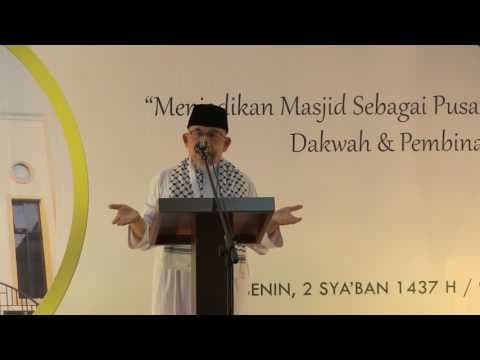
Transkrip diambil dari YouTube. Klik timestamp biru untuk melompat ke posisi tersebut di pemutar.
0:24 Peace be upon you and Allah be upon you 0:26 . Peace be upon you and Allah be upon 0:59 you. May Allah bless you and grant you 1:35 peace and blessings...Alhamdulillah, 1:39 tonight we can once again gather 1:42 through the study of the translation of 1:46 the Quran lafziah, which last Friday 1:49 night we reached verse 14 of the 1:52 An-Nisa surah. Tonight we will continue 1:59 with the next verses still in the 2:03 An-Nisa surah verse 15 until the time 2:08 of Isha prayer approaches. Therefore, 2:13 let us begin this study by reciting the 2:17 prayer of tholabul ilmi together. 2:21 Bismillahirrahmanirrahim. Rbi zidni 2:25 ilma. Allahummanfa bima alamtani waimni 2:31 ma yanfauni warzuqni ilman yangfauni. 2:36 Amen. We begin with verse 15 of the 2:42 An-Nisa surah. 2:45 Auzubillahiminasyaitanirrajim. 2:55 Bismillahirrahmanirrahim. Wallati 3:07 ya'tinal fahisyata min nisaikum 3:15 fastahidu fastashidu alaihinna arbaatam 3:26 minkum fain buyuti hatta hatta 3:42 yatawaahunnal maut au yaj'alallahu 3:49 lahunna sabila the literal meaning of 3:57 wallati remember Remember to read it 4:01 long, not short, not wallati but 4:05 wallati and the women who yatina come 4:15 to or do alfahisyata abomination. The 4:23 scholars of tafsir agree that the 4:26 language of alfahisyah which is meant 4:29 in this verse is adultery. Minisaikum 4:35 among your women, your women. 4:44 Fastashhidu, then bear witness 4:49 alaihinna over them, they are women 4:56 arbaata four men minkum from you. Fain. 5:04 So if martyrs they witness, give 5:10 testimony. Faamsikunna then detain or 5:17 lock them up those women who commit 5:21 adultery. Fil buyuti in the houses. 5:29 Hatta yatawaffaunna so that they die 5:36 amautu death au yaj'ala or make Allahu 5:44 Allah sabilan another way or punishment 5:50 . The overall meaning of this verse is, 5:57 "And the women who commit abominable 6:00 acts among your women, let four 6:13 witnesses among you witness. When they 6:23 have given testimony, then lock them up 6:32 in the house until they meet their end 6:38 or die or until Allah provides another 6:45 way for them. This verse is a verse 6:52 that was revealed about punishment for 6:58 women who commit abominable acts, 7:03 namely zina. Before the revelation of 7:08 Surah An-Nur, the 24th surah, the 7:12 second verse is about punishment. 7:16 volume or der. So before the second 7:22 verse of Surah An-Nur comes down, this 7:27 is the sentence for women who commit 7:32 adultery. This is the verse that was 7:47 revealed previously, namely the 15th 7:52 verse of Surah An-Nisa. Here the 8:16 punishment is to be confined or 8:20 detained in the house until death 8:23 lahunna sabila another way other 8:27 punishment is to be punished with a 8:30 penalty of lashing or lashing 100 times 8:34 . Then in the hadith it is explained 8:41 that if the adulterer is muhson, 8:45 meaning already married or married, 8:49 then he is stoned to death. Meanwhile, 8:56 if he is still prone to girhairu muhson 8:59 or single, the punishment is lashing 9:03 100 times. This is a continuation of 9:07 the verse that we are interpreting 9:11 tonight. Furthermore, Allah says, 9:18 walladzani ya'tiyaniha minkum faaduhuma 9:31 fain taba wa aslaha fa'ri anhuma inall 9:46 tawwabarahima meaning more specifically 9:55 walladzani and two yatianiha who commit 10:04 fahisyah or adultery minkum among you 10:10 faaduhuma then punish them. Fain ta. So 10:18 if both of them repent. Wa aslaha and 10:23 improve themselves. Fa'ridu, then turn 10:29 away or let you anhuma from both of 10:36 them. Turn away from both of them. 10:41 Innallaha indeed Allah is the answering 10:47 God repentance in the womb and mercy. 10:54 Allah is the most accepting of 10:57 repentance and mercy. The overall 11:02 meaning of this verse is the 16th verse 11:05 . And against two people who commit an 11:12 abominable act among you, punish both 11:16 of them. If both of them repent and 11:21 improve themselves, then let them be. 11:27 Indeed, Allah is Most Accepting of 11:30 repentance, Most Merciful. Commentators 11:34 state that this verse, the 16th verse, 11:38 is related to the side which is lesbi 11:44 and/or liwat, namely humu. So, if two 11:50 people of the same sex commit adultery, 11:55 the punishment is determined by the 12:00 death law. Yes, this is not mentioned 12:05 here, only here is the order to punish 12:09 them. Well, the ulama stated that the 12:14 punishment for people who commit acts 12:19 of same-sex adultery is death. Although 12:25 there are also those who equate it with 12:30 the type of punishment for adultery, 12:34 namely if he cheats on muhson, the 12:38 punishment is 100 million. If muhson is 12:44 sentenced to death by dirjab. 12:48 Wallahualam. But what is clear is that 12:51 gay and lesbian perpetrators are 12:54 punished harshly in Islamic law. But if 12:59 you repent already Of course, then we 13:04 are commanded by Allah to turn away and 13:10 let them finish. This is the condition 13:13 that they repent. Well, then Allah 13:17 explains about repentance in the 17th 13:19 verse. Innamata taubatu allallahi 13:26 lilladina yaunas bijahalah. Lilladzina 13:37 ya'malun sua bijahalatin tumma yatubun, 13:47 tumma yatubuna min qoribin, faulaika 13:53 yatubullahu 'alaihim, wanallahu' aliman 14:02 . The literal meaning of innam taubatu 14:12 is that repentance is only al alallahi 14:18 in the sight of Allah lilladzina 14:22 ya'maluna for those who commit evil 14:26 assua bijahalatin With ignorance. Then 14:34 they repent, qoribin from close means 14:37 immediately. Faulaika then they are 14:42 those who accept repentance, Allahu 14:45 Allah, alim over them. And is Allah, 14:50 kana and is Allahu Allah, the name is 14:54 because of his news, aliman is 14:58 all-knowing, the news is because of his 15:02 judgement, naat than alimah, all-wise. 15:09 Well, so Allah Subhanahu wa taala ee 15:14 will accept repentance for people who 15:20 commit crimes with ignorance. As is the 15:25 overall meaning of this verse. And 15:29 repentance is not truly repentance to 15:33 Allah, only for those who commit crimes 15:38 because they don't know. Then 15:42 immediately repent. Their repentance is 15:46 what Allah accepts. And indeed Allah is 15:52 most accepting of repentance and most 15:58 merciful. Furthermore, in the 17th 16:07 verse, we mean the 17th verse, we 16:11 repeat again, meaning that actually 16:15 repentance to Allah is only appropriate 16:20 for those who commit crimes because 16:24 they do not understand and then 16:28 immediately repent to Allah. Their 16:33 repentance is what Allah accepts. 16:37 Indeed, it is Allah and it is Allah who 16:43 is all-knowing, all-wise. Furthermore, 16:51 in the 18th verse, Allah says, waisatit 16:57 taubatu lilladzina yaalun sayyiat. 17:07 Hatta idza hadoro ahadahumul mautu qala 17:15 inni tubtul qala inni tubtulana 17:26 walalladina yamutuna wahum kuffar lahum 17:40 adzaban alima. The meaning of the 17:48 translation is the 18th verse. Waisatit 17:53 taubatu. And repentance is not 17:58 lilladzina for people who do bad things 18:05 . Hatta so idza if hadoro comes 18:12 ahadahum to one of them what comes? 18:18 Almautu death. Qala he said, this is 18:23 true, I have repented, I am alana now 18:28 wala and also not alladzina, those who 18:33 yamutuna died wahum and they were 18:37 kuffarun infidels ulaika they were so 18:44 we provided lahum for them adzaba Baban 18:49 a painful torment of aliman. Overall 18:55 meaning. And repentance is not accepted 19:02 by Allah from those who commit crimes. 19:09 Until death or death comes to someone 19:16 among them. He will say to one of them, 19:24 " I truly repent now and repentance is 19:29 not accepted from those who died while 19:35 being unbelievers. For those people a 19:40 painful punishment has been prepared. " 19:45 So, repentance is accepted by Allah if 19:50 at first he did not know when he 19:55 committed the sin. Then after that he 20:00 repents as soon as possible after doing 20:04 repentance, after committing the sin. 20:08 That is what will be accepted by Allah. 20:11 As for repentance that is done when 20:16 someone is about to die, his repentance 20:22 will not be accepted by Allah. So when 20:29 death has come to take him then he says 20:34 ," I now repent. "His repentance is 20:37 accepted. Or someone who dies in a 20:40 state of disbelief, then his repentance 20:44 is also not accepted. Those who commit 20:51 sins and he has not repented then he 20:59 dies, then for them is prepared a 21:04 painful torment. Likewise, those who 21:08 disbelieve die, then for them is a 21:11 painful torment. So a painful torment 21:15 is given to those who repent but repent 21:19 too late when they are about to die and 21:25 also to the disbelievers. Well, next 21:30 verse 19, Allah says:" Ya 21:35 ayyuhalladzina amamanu la yahillu lakum 21:43 la yahillu lakum an taritsunisaa karha 21:54 walaa ta'duluhunnal illa illa ayatina 22:12 bifahisyatim mubayyinah waasyiruhunna 22:21 bil mar'ruf fain karihtum ajalallahu 22:38 fihiiron katir. "Literally meaning:" Ya 22:46 ayyuhalladzina amanu "(O you who 22:50 believe)," la yahillu "(not permissible 22:54 )," lakum "(for you)," antaru "(to 22:57 inherit Anisaa) women," karha "(by 23:01 force). Meskiluhunna and do not make 23:05 them difficult. Litadhabu, so that you 23:10 can take/carry away, biba'dima, with a 23:15 portion of what, or ataitumuhunna, you 23:20 have given them. Illa, except, ayatina, 23:26 if those women do, bifahisyatin, with 23:31 abomination, mubayyinatin, which is 23:35 real. Waasyiruhunna, then associate 23:40 with them, bil ma'rufi, well. Fain 23:45 karihtumuhunna, then if you hate them, 23:50 faasa then, then perhaps, an takqrohu, 23:55 you hate shaian something, 23:58 waaj'alallahu, and Allah made, fihi, in 24:03 it, khairon, goodness, katsiron, which 24:08 is much. The overall meaning is, O 24:14 believers, it is not lawful for you to 24:18 inherit women by force. And don't give 24:24 them trouble because they want to take 24:28 back some of what you have given them 24:32 unless they commit a real heinous act, 24:36 namely adultery. And associate with 24:40 them in an appropriate manner according 24:44 to custom. If you don't like them, then 24:50 be patient. Because it may be that you 24:54 don't like something even though Allah 24:58 has blessed it with a lot of goodness. 25:02 According to commentators, this verse 25:07 relates to Arab customs. When one of 25:15 them dies, his wife will be inherited 25:23 by his son and then married. And if he 25:28 doesn't want her, he can marry her to 25:32 whomever he wishes. As happened to Abu 25:37 Qais bin Aslad. When he died, his son 25:41 inherited his wife, meaning his mother, 25:48 but not any of his property. Then this 25:52 verse was revealed, prohibiting the 25:57 inheritance of women. Women are not 26:01 property that is inherited, but rather 26:06 must be respected. So, this is Islam's 26:10 glorification of women, who were 26:13 previously inherited property. After 26:17 this verse was revealed, that custom 26:21 was eliminated. No one is allowed to 26:26 inherit a woman by force. This means 26:31 that if the previous custom was forced. 26:33 What if it wasn't forced? Well, it's 26:35 still not allowed, because it describes 26:37 the conditions at that time. And there 26:40 is also guidance here not to make 26:42 things difficult or difficult for women 26:45 . And Allah also commands us to treat 26:50 women well. If there is something we 26:55 dislike about a woman that we dislike, 26:59 perhaps, or perhaps, Allah makes much 27:03 good out of it. This is the brotherhood 27:08 of sisters, matters related to the 27:11 relationship between men and women, 27:14 especially in marriage. Hopefully we 27:18 can understand this and let's treat our 27:22 wives as well as possible. God willing, 27:26 they will treat us as husbands will 27:29 also be treated as well as possible. 27:33 And Allah knows best. We have reached 27:36 verse 19. God willing, we will continue 27:41 next Friday night with verse 20, still 27:45 in Surah An-Nisa. That is all we can 27:49 convey, for any shortcomings, we 27:51 apologize. Hadallahum ajmain. 27:55 Jazakumullah khairan for all your 27:57 attention. Wasalamualaikum 27:59 warahmatullahi wabarakatuh.