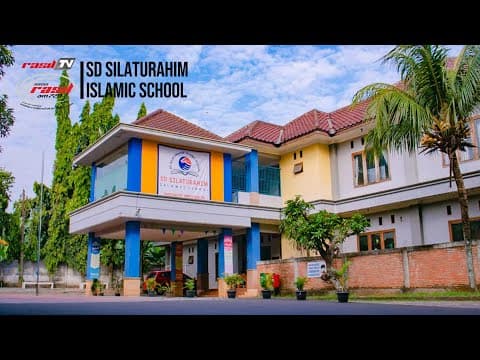
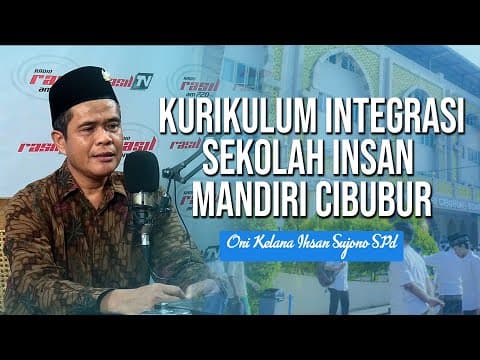
Transkrip diambil dari YouTube. Klik timestamp biru untuk melompat ke posisi tersebut di pemutar.
0:11 In the name of Allah, the Most Gracious 0:13 , the Most Merciful. Peace, mercy, and 0:14 blessings of Allah be upon you, 0:16 brothers and sisters, may Allah have 0:17 mercy on you all. 0:19 >> Praise be to Allah, we are gathered 0:22 once again on the School Window program 0:25 , which we hope will persuade and 0:27 motivate us all. To become figures who 0:32 will be of great benefit to our 0:34 children, the children of this nation. 0:37 How are you all? Are you healthy? 0:39 Praise be to Allah. 0:40 >> And we must not forget to offer peace 0:42 and prayers to our leader, our beloved, 0:44 Muhammad the Messenger of Allah, may 0:46 Allah bless him and grant him peace. 0:48 Amen. 0:49 >> May we attain his intercession and be 0:52 reunited with him at the time we long 0:55 for so deeply on the Last Day. 0:58 >> Amen. Brothers and sisters, for today, 1:03 the School Window topic is Santri Day 1:06 and the Quranic celebration with LPTQ 1:10 to forge a generation of high-achieving 1:14 hafiz, with our two guests: Ustaz Abdul 1:18 Qadir Aseggaf, Lc. Please introduce 1:22 yourself. 1:23 >> Yes. Peace, mercy, and blessings of 1:25 Allah be upon you. Peace, mercy, and 1:27 blessings of Allah be upon you. 1:28 >> Abdul Qadir Aseggaf, currently serving 1:32 as the director of the Maahad at Maahad 1:35 Khulafa Rasyidin IMC. 1:39 >> Very well. 1:40 >> And the other one is. 1:43 >> I am Muhammad Hafidin, serving as 1:45 deputy director at Maahad Khulafaur 1:48 Rasyidin Insan Mandiri Cibubur. 1:51 >> Very well, brothers and sisters. We 1:53 will divide this presentation into two 1:57 segments. The first relates to the 2:01 essence of a santri, the formation 2:04 process, and their strategic role in 2:07 society. This is so that we all know 2:13 who a santri truly is, how their 2:16 transformation process works at the 2:18 pesantren, and the urgency of their 2:21 role. In safeguarding the nation's 2:24 morals and civilization. Very well. 2:27 Peace, mercy, and blessings of Allah be 2:29 upon you, Ustaz. 2:31 >> Peace, mercy, and blessings of Allah be 2:32 upon you. 2:33 >> When talking about santri, what is 2:35 actually the definition or essence of a 2:38 santri? Is it enough to just be someone 2:42 residing at a pesantren to be called a 2:44 santri, or are there other broader 2:46 criteria inherent in a santri? 2:49 >> Yes. In the name of Allah, the Most 2:51 Gracious, the Most Merciful. Uh, Praise 2:54 be to Allah, Lord of the worlds, and 2:55 peace and prayers upon the trustworthy 2:56 Messenger, our master Muhammad, and 2:58 upon his family and all his companions. 2:59 Uh, what is the definition of a santri, 3:04 Ma'am? 3:05 >> Hehe. 3:05 >> Okay. A santri, or in Arabic literary 3:11 terms, what we know as 'murid'. Derived 3:17 from the word 'arada yuridu iradatan'. 3:20 'Murid' is the active participle. The 3:22 active participle means someone who 3:24 desires, someone who is heading towards 3:27 the pleasure of Allah. If we speak of 3:31 the word 'murid', it has actually been 3:33 adopted into the Indonesian language. 3:35 He. 3:36 >> It is borrowed from Arabic, meaning 3:39 someone who has a desire. Yes, does a 3:43 santri or murid have a definition? 3:49 Certainly, when we see the word 'santri 3:52 ' in Indonesia, it is indeed synonymous 3:56 with those who study at a pondok 3:58 pesantren, especially a traditional one 4:02 . A pondok pesantren which is generally 4:10 still led by a kiai who, what should I 4:14 say, could be called traditional. 4:20 >> He. 4:21 >> Right? So there is the term 'mukim'. ' 4:23 Mukim' is someone who lives in boarding 4:27 or lives in, what is it? In the maahad. 4:32 Is the meaning of santri or the meaning 4:34 of, uh, murid, limited only to those 4:38 studying at a pesantren? The answer is 4:42 certainly no. Why? Because it relates 4:47 to someone who learns the laws of 4:51 Sharia. So, 4:54 >> We have to find a middle ground in 4:58 general. No. A santri or student is 5:04 someone who studies Islamic sharia 5:08 sciences. Yeah. 5:10 >> Yes. Whether they study in an Islamic 5:14 boarding school (pesantren), an Islamic 5:17 school, or learn from various scholars 5:20 or clerics, they are worthy of being 5:23 called santri. So, a santri or student 5:29 is someone who pursues knowledge about 5:33 sharia laws concerning faith (aqidah), 5:37 jurisprudence (fiqh), interpretation ( 5:41 tafsir), and hadith; that is what we 5:45 call a santri. But they don't 5:49 necessarily have to be residents or 5:53 live at a pesantren. However, it is 5:58 common in Indonesia that the term 6:00 santri is synonymous with those living 6:03 in a madrasa/maahad. Like, for example, 6:06 here at Maahad Khulafa Rasyidin. 6:08 >> Yeah. 6:09 >> That is a school that is, what do you 6:11 call it? A mix of academics and what? 6:15 Spiritual and character education. 6:17 There, we still refer to our students 6:21 as santri. That's right. Why? Because 6:25 the learning is focused on religion, 6:27 sharia, and the Quran. Maybe, what's it 6:31 called? Something like that, Buuni. 6:33 >> Yes. Then, how do we know the processes 6:39 and methods typically used in a 6:42 pesantren environment? Not just from 6:47 manners, independence, and discipline, 6:50 but also from the academic side to form 6:53 their mentality to be as strong as 6:55 steel. 6:58 >> Yes. Uh. We certainly have what is 7:04 called a syllabus or method in our 7:08 learning. Because someone who learns 7:13 >> Islamic sharia is as if they are, uh, 7:20 swimming in the science of oceanography 7:23 or, uh, what's it called? Deep on the 7:26 ocean floor. Vast and wide. Sharia 7:32 science is a very vast field of 7:34 knowledge. So, we need a methodology or 7:40 a syllabus. We at Maahad Khulafa 7:46 Rasyidin certainly have, what do you 7:50 call it, uh subjects or uh, courses 7:59 related to sharia sciences. For example 8:05 , there is the study of fiqh. 8:08 >> Yes. The fiqh taught by our teachers, 8:13 the ustadz, and the supervisors at the 8:16 maahad, is taken from the book* 8:19 Safinatun Najah*, which is classical 8:22 fiqh based on the Shafi'i school. 8:26 Because the majority in Indonesia 8:29 follow the Shafi'i school, we use that 8:32 reference book. That is a book that has 8:35 been studied for generations by the 8:38 people of Indonesia. Then we also have 8:42 the study of the hadiths of the Prophet 8:44 Muhammad, may God bless him and grant 8:45 him peace. There is a summary of 40 8:49 hadiths compiled by one of our teachers 8:52 , Al Habib Umar bin Hafid. He 8:55 summarized several hadiths that cover 8:59 Islamic values, such as regarding 9:02 intention and the laws of mutual 9:06 respect. Then there are also other 9:11 disciplines, such as studying morality, 9:14 manners, and attitude, based on the 9:17 teachings of the Great Prophet Muhammad 9:20 , may God bless him and grant him peace 9:23 . In the book*Akhlak Lil Banin*. 9:27 Likewise, we have lessons on Islamic 9:32 history. 9:35 >> That is one form of our learning method 9:38 at Maahad Khulafaur Rasyidin after 9:41 Maghrib, Ustadz. Yes, after Maghrib, 9:46 for a duration of approximately 30 to 9:49 40 minutes. There, we indeed use the 9:53 talaqi method. The teacher teaches, the 9:56 student listens, then there are 9:57 questions. 9:58 >> Answering each other, asking each other 10:02 , then, uh, what? The teacher or ustaz 10:05 answers. Ah, from that syllabus, we 10:09 hope that Islamic cadres will emerge 10:12 from the Khulafa Rasyidin institute who 10:15 truly possess intellect and scholarship 10:18 . But it is wrapped with the attitude 10:22 and character of Prophet Muhammad, may 10:24 Allah bless him and grant him peace. 10:26 Character that has indeed been decreed 10:27 by the Prophet. Not character according 10:31 to, uh, Western or Western ideologies 10:34 that do not have a fixed foundation. 10:39 >> Hmm. 10:40 >> So, uh, if in the West, what is it 10:42 called? Etiquette depends on the 10:44 culture. If the culture there is fine, 10:46 then it is fine. Like, for instance, in 10:49 the Arab world, they might say a piece 10:53 of clothing is polite, even if it is 10:56 not long pants or something that covers 11:00 the aurah. If we, our, uh, moral 11:03 benchmarks are already fixed, they do 11:06 not depend solely on culture. Hmm. 11:10 >> That is from, what is it called? The 11:12 syllabus from the character development 11:15 . We also have, what is it called? 11:18 Habituating the Tahajjud prayer, 11:20 teaching students to be independent and 11:23 disciplined in the morning. No. Then we 11:27 have congregational prayers. 11:30 >> Which teaches us to socialize with 11:33 fellow friends to learn, what is it 11:37 called? Inviting them. We also give the 11:42 students the trust to wake their 11:44 friends up as well. 11:47 >> So when the supervisor, uh-huh. The 11:48 supervisor also wakes them up, we ask 11:50 for help from friends too. Come on. 11:52 >> Invite your friends. 11:55 >> Addal alal khair kafailih, as spoken by 11:56 Prophet Muhammad, may Allah bless him 11:58 and grant him peace. Inviting to 12:00 goodness is like the person who does 12:02 the good deed themselves. The reward is 12:04 the same, double even. 12:06 >> MashaAllah. From there, a character 12:09 will arise, uh, how a student who has 12:11 intellect but also has the character 12:14 and etiquette of Prophet Muhammad, may 12:16 Allah bless him and grant him peace. 12:19 >> And their mentality is like steel, 12:21 right? 12:21 >> Their mentality is steel. Why? Because 12:23 they are accustomed to being 12:24 independent and disciplined. When they, 12:27 uh, what is it called? Uh, make a 12:30 mistake, we will make a commitment. 12:32 >> Hmm. 12:33 >> A commitment to them so that, uh, it 12:36 becomes, what? Like a new promise, a 12:40 new agreement with them. 12:42 >> Hmm. 12:43 >> More or less like that. Yes. 12:45 >> Then the 40 hadiths were memorized. 12:46 >> Yes. 12:47 >> MashaAllah. 12:48 >> Alhamdulillah. We do indeed require 12:50 those 40 hadiths to be recited. 12:51 >> Uh-huh. Uh-huh. 12:52 >> Uh-huh. So it is not just limited to 12:55 understanding, but the teacher or ustaz 12:59 teaches the meaning and applies it to 13:02 our lives. 13:04 >> Of course, in a, what is it called? 13:06 >> Slowly, right? Then memorizing them. Uh 13:11 , understanding without memorizing is 13:13 like it is lacking. 13:15 >> Lacking strength. 13:16 >> Uh-huh. Correct. It is truly 13:21 extraordinary, brothers and sisters, 13:24 that our students can adapt to the 13:28 conditions taught when they are with 13:31 their mentors. But still, there is this 13:36 assumption that students are only good 13:38 in their own environment, only in the 13:40 Islamic boarding school. Whereas, how 13:44 can it be, as mentioned earlier, that 13:47 they can also adapt to many things. Now 13:51 , could you perhaps describe the things 13:54 that provide a positive influence for 13:56 these students in society? 14:00 >> Yes. This is very important. This 14:03 becomes the starting point for students 14:06 to be aware 14:07 >> uh-huh 14:08 >> of their future lives. So, I would like 14:13 to highlight that many students are 14:16 truly skilled when they are in the 14:19 boarding school, but when they are in 14:21 society, 14:23 >> they 14:24 >> struggle or they are unable to, uh, 14:28 survive. 14:29 >> Uh-huh. 14:31 >> That is because we observe and study a 14:35 certain, what you might call, knowledge 14:39 gap. For example, students are often 14:43 only taught lessons that are classical 14:47 in nature. It is also important now for 14:52 boarding schools to be aware that 14:55 students also need skills that allow 14:58 them to survive in society. There must 15:03 be skills, for instance, computer 15:06 skills, and now that AI has arrived, 15:08 they must 15:09 >> i 15:10 >> students must learn 15:12 >> things related to, what you call, 15:14 digital. So they are not 15:16 technologically illiterate. 15:18 >> So they are not clueless when they only 15:21 study subjects that are, what do you 15:23 call it? Sharia-based, and then they 15:26 graduate. Meanwhile, in society, 15:28 specifically in Indonesia which is 15:30 already, what you call, already 15:36 considered advanced and modern, these 15:40 students end up only able to develop in 15:44 their village or at home. When they 15:49 want to enter, for example, a school 15:54 level or a university level, they are 15:58 hindered by, for example, 16:01 administration. He he. 16:05 >> They struggle with things like Word, 16:09 Excel; that is the reality. Especially 16:13 now, maybe some don't understand things 16:16 like AI and so on. Yeah, right. 16:19 >> In my opinion, students need to be 16:20 equipped with developing knowledge so 16:22 that their knowledge becomes beneficial 16:24 . Their knowledge shouldn't just be 16:28 consumed by the people around them. 16:32 From there, students can, what do you 16:35 call it? Survive in a world that is 16:40 fast. Moving like this. This world has 16:45 gone from the era of printed books to 16:48 digital books now. 16:50 >> Yes. 16:51 >> Uh-huh. Exactly. 16:53 >> It wasn't that long ago we wrote, now 16:56 we type, maybe in the future it will 16:58 change again. That is what boarding 17:01 schools need to prepare for in the 17:04 future so that their students can 17:07 survive and develop in a fast world. 17:11 What do you call it? Rotating and 17:12 dynamic like this. 17:14 >> Yes. So, brothers and sisters, social 17:17 media in this day and age, even 17:19 children under 5 years old at home are 17:22 already affected, they are always 17:24 holding a phone. And as previously 17:29 stated, students should also be able to 17:31 survive outside. Then, perhaps, Ustaz, 17:38 >> so that they can color the world as it 17:41 is now in a much cooler way. Free from 17:47 provocation, free from negative things, 17:50 and instead be able to spread positive 17:53 things, what is the approach, Ustaz? 17:57 Well, uh we need to have steps for a 18:03 student in this digital age, of course, 18:07 an age that is, what do you call it? An 18:12 age where the flow of information is so 18:15 vast and biased. Certainly, for 18:18 students, it is necessary to do several 18:21 things, all of which have been taught 18:24 by Prophet Muhammad peace be upon him 18:26 and are already in the Quran. The first 18:29 thing is, um, what is it called? In 18:32 da'wah on social media or when 18:34 consuming information, we must 18:37 prioritize what is called tabayyun. Yes 18:39 . 18:40 >> Yes. In the Quran, it is said, "idza 18:42 jaakum fasikun binabain fatabayyanu." 18:45 If you are, um, what is it called? If a 18:48 fasiq person comes to you, try to 18:51 tabayyun, try to clarify. That is 18:54 important, not just for a student, but 18:58 for every Muslim; if there is 19:01 information related to any news, it 19:04 needs to be cross-checked and clarified 19:07 , not immediately spread. Especially 19:11 for an educated person, they surely 19:14 know which news is a hoax and which 19:17 news is actually true. That is the 19:20 first, so we must tabayyun or clarify. 19:22 The second, as said by the Great 19:28 Prophet Muhammad peace be upon him, " 19:30 min husni islam," meaning part of the 19:33 perfection of a person being a Muslim 19:35 is leaving matters that are not good 19:38 for them. 19:40 >> or, um, things they do not need to 19:42 respond to. Now we see the phenomenon 19:45 of, um, netizens, the current term is, 19:51 um, what is it called, +62 netizens. 19:54 Have you heard of "plus 62" netizens? 19:56 It’s how Indonesians, when they want 20:00 to, um, when there is an issue or a 20:03 problem, the comments are filled with 20:07 insults, jeers, or words that sometimes 20:10 when we read them, we laugh, or just 20:14 wonder why. 20:16 >> Yes, we really wonder, even though 20:18 those are matters we don't need to 20:19 write about. 20:20 >> Yeah. 20:22 >> Comments that we don't know about or 20:24 unnecessary comments should actually be 20:27 left alone. Why? Because what we write 20:31 or what we say will all be judged, and 20:35 will be accounted for before Allah 20:38 Subhanahu wa ta'ala. Our index finger 20:43 that we use to click or share 20:48 >> everything or scroll through anything 20:50 good will be a sign of goodness. It 20:53 will be a witness before Allah that we 20:57 have spread goodness. Conversely. 21:01 >> It is not just the tongue, right; even 21:03 fingers can be witnesses before Allah 21:06 that this finger once provided, or 21:08 shared, or distributed good things. The 21:12 opposite is true. Likewise, when this 21:14 finger is used to 21:17 >> spread hoax news or write mocking words 21:20 , 21:21 >> yeah. 21:23 >> Then it will become, um, "sayiat," or 21:26 what you call our bad deeds, which will 21:29 hinder our entry into heaven. So, back 21:34 again, after we do tabayyun, we must 21:35 leave behind what we do not need to 21:37 respond to. Don't you think? For 21:40 example, if there are cases of 21:42 infidelity between, between what is it 21:45 called? So-and-so and so-and-so, we 21:47 simply say, "Nauzubillah min zalik." We 21:51 simply say, "O Allah, keep us away from 21:53 such matters," without needing to write 21:55 , dig deeper, or comment on things like 21:58 that. Because the harm will return to 22:01 the person themselves. Perhaps it is 22:04 like that. So, a Muslim, not just a 22:06 student, needs to practice tabayyun 22:09 >> and leave behind things that are not 22:11 good for them. 22:13 >> Masyaallah, brothers and sisters. 22:16 Tabayun is a must, as we just had with 22:19 Ustaz Abdul Qadir Assegaf who gave an 22:22 extraordinary perspective regarding 22:25 santri. But before we continue to Ustaz 22:29 Muhammad Hafidin, who is here in the 22:31 position of Vice President. 22:34 >> Vice President. Correct. There is 22:36 information about an open day and 22:39 tryout at SMP IT and SMA IT Insan 22:41 Mandiri Cibubur for 6th grade 22:43 elementary to 9th grade junior high 22:46 students. When is it? Saturday, 22:51 November 7, 2026, from 8:00 to 11:00 AM 22:55 Western Indonesian Time. And this is 22:59 free, no charge. The quota is 200 23:03 children for 6 th-grade elementary 23:05 students and 100 children for 9 23:07 th-grade junior high students. 23:12 Facilities provided include free 23:14 exhibition, snacks of course, and 23:17 swimming for the 10 best participants. 23:22 For registration information, please 23:25 contact Ms. Mongfan at 0838 1129 8039 23:35 or Ms. Anisa at 08561135721. The 23:42 location is, of course, at the SMP IT 23:45 and SMA IT Insan Mandiri Cibubur school 23:48 building. Later, we will repeat the 23:51 contact information again at the end of 23:54 this show. And next, we will hear from 23:59 Ustaz Muhammad Hafidin who will explain 24:03 things regarding this santri matter. 24:09 Yes, by the way, does the word santri 24:12 actually have its own limitations, or 24:15 is it enough to just be those who 24:18 reside in a boarding school? Actually, 24:24 that could have been explained by Ustaz 24:26 Abdul Qadir earlier. 24:29 >> Uh, please add to that because I really 24:31 want to know if those called santri 24:34 aren't just people inside the boarding 24:36 school or vice versa, please add that. 24:40 Yeah. 24:40 >> Okay. Uh. It can have a broad meaning 24:44 too. 24:45 >> Uh, it means people who live in a 24:47 boarding school are indeed generally 24:50 called santri. 24:52 >> But it doesn't mean 24:55 >> those outside cannot be santri, right? 24:58 So, in my opinion, October 22nd, 25:00 National Santri Day, is actually, in my 25:03 view, 25:05 >> more precisely a day for seeking sharia 25:08 knowledge, seeking religious knowledge. 25:11 A day for seeking religious knowledge, 25:12 perhaps like that. 25:13 >> Correct. Correct. So, precisely, maybe 25:15 it can be explained better by Ustaz 25:17 Ading, is that what you call him? 25:19 >> Yes, that's correct. How about the term 25:24 we heard earlier, 25:28 >> ikhwan and akhwat? If—Wait a minute, 25:34 since it happens to be Santri Day, 25:36 celebrating this activity. 25:41 >> If I'm not mistaken, an Al-Qur'an exam 25:44 was just held together with LPTQ Bekasi 25:47 . 25:48 >> How many students participated? Yeah, 25:50 around almost 90, 80 something, right? 25:54 >> Yes, 87. 25:55 >> 87, if I'm not mistaken. Yeah. 25:58 >> How was the atmosphere and dynamics of 26:01 the exam activity for the tahsin or 26:04 tahfiz category? 26:07 >> Alright. Alhamdulillahi rabbil alamin. 26:10 Thank you, Ms. Nuning. Uh, we also 26:13 honor our mudir of Maahad Khulafa 26:15 Rasyidin, Ustaz Abdul Qadir Assegaf, 26:18 along with our most beautiful host, 26:20 Ning, 26:22 >> who has facilitated us to always strive 26:25 to continue spreading our Islamic 26:28 da'wah, especially at Maahad Khulafaur 26:32 Rasyidin, both from SMP and SMA IT 26:35 Insan Mandiri Cibubur. Uh, regarding 26:39 the question from Ms. Nuning earlier, 26:41 how was the atmosphere of the LPTQ exam 26:44 in collaboration with LPTI Bekasi City? 26:47 Yeah. 26:47 >> So, praise be to Allah Subhanahu wa 26:50 ta'ala, we are grateful that on this 26:53 Santri Day, we were able to conduct an 26:55 examination in collaboration with the 26:58 Bekasi City LPTQ, or the Institute for 27:01 the Development of Quranic Recitation 27:04 in Bekasi City. Alhamdulillah, on that 27:08 day, October 21st, we held the 27:12 examination for 87 students. Yeah. 27:16 >> For Tahfiz, there were 58. Then for 27:20 Tahsin, there were 25 students. Then 4 27:24 from the full-day program. So, the 27:28 total was 87 students. Actually, there 27:32 were more students who were going to 27:34 participate, but unfortunately, all 27:35 four of those children were ill. 27:39 >> So, it should have been 91 students. 27:41 Yeah. 27:43 >> Alhamdulillah, on that day we conducted 27:45 the exam with the LPTQ, and the 27:47 atmosphere was such that some of the 27:49 children felt enthusiastic, and some 27:51 felt nervous. However, here we wanted 27:55 to see to what extent these children 27:58 are truly serious in carrying out their 28:01 Quranic studies. 28:02 >> Yeah. 28:03 >> Here, alhamdulillah, there were those 28:05 in Tahfiz, Tahsin, and some who were 28:07 already in Takhasus. This means that 28:09 Takhasus is specifically for children 28:12 whose memorization level is already 28:14 advanced, between Tahsin and Tahfiz. 28:18 Here, alhamdulillah, 100%of the 28:20 students passed the exam. With, on 28:23 average, all good grades. Alhamdulillah 28:26 , like 28:26 >> when passing an exam, surely there are 28:29 some who achieved better positions than 28:31 the others. So, how many people are 28:33 there? 28:34 >> For the top rankings, there are five 28:36 children. 28:38 >> Tahsin, Tahfiz. 28:39 >> The best in Tahfiz. 28:42 >> The first one we mention is Azam from 28:44 10th grade. 28:45 >> Yeah. 28:46 >> Then the second position is from the 28:48 full-day program, Ustaz. From the 28:51 full-day program, there is 28:52 >> a girl, right? 28:53 >> Yeah. From the girls in the full-day 28:55 program, there is Jasmin. Then the 28:59 third one is Habibi from 7th grade. 29:02 Then the fourth one is Kenzi from 11th 29:05 grade. Then the fifth one is Mikala or 29:10 Cikal from 11th grade. Now, these are 29:14 the highest scores among the Tahfiz 29:16 LPTQ exam participants. It's like that, 29:19 Ma'am. If I may ask, what are the 29:20 benchmarks? 29:23 >> For these benchmarks, the criteria for 29:25 the highest scores in Tahfiz, as usual, 29:28 were provided directly by the LPTQ: the 29:31 accuracy of their makhraj, then their 29:33 memorization, and then the fluency of 29:36 their recitation. As for Tahsin, it is 29:40 based on their Quranic recitation, 29:43 their tartil, their makhraj, and their 29:46 tajwid. Yes, all of that is assessed. 29:48 >> Hm. By the LPTQ, which has provided us 29:51 with the assessment forms. Then we 29:54 printed the names on those forms. Then 29:56 during the exam, the children were 29:59 called and assessed by the LPTQ team. 30:02 After that was finished, we then added 30:06 up the scores given by the LPTQ. So, 30:10 here, for the highest score, it is not 30:13 just seen from the grade, but from how 30:16 serious the child is in learning the 30:19 Quran. Then, it is seen from how deep 30:23 our children's love is 30:26 >> in continuing their journey through the 30:28 study of the Quran. So, the most 30:31 important thing is how to foster the 30:33 children's love for the Quran so that 30:35 it will become a guiding principle for 30:38 the students 'lives. 30:40 >> Masha'Allah. So congratulations, Azam. 30:42 Who else was it again? Jasmin, Habibi, 30:45 Kenzi, and 30:47 >> Mikala. 30:48 >> Hopefully, this will be a foundation to 30:51 further improve and optimize what has 30:54 already been achieved. Okay, regarding 30:58 this matter, what is the impact on the 31:01 school and the students of conducting 31:03 this Quran examination in collaboration 31:06 with LPTQ Bekasi? The impact must be 31:09 very significant, right? 31:11 >> Yeah. Could you describe it? 31:13 >> Yes. Uh, as for the impact later 31:17 >> Uh, perhaps Ustaz Ading can also add to 31:20 it, but the first impact is very 31:22 significant for our school because our 31:25 school wants to cultivate the process 31:28 of learning the Quran first. 31:31 >> We must apply and continue to develop 31:33 this for the children so that 31:36 >> Uh, we study, then we practice it, and 31:39 in the process of practicing or 31:41 studying, there must be an evaluation. 31:45 Well, this is what we will take so that 31:48 we continue to be better, better, and 31:50 better. That is the first one, which is 31:54 our first impact at the school, so that 31:56 the development of the Quran, this 31:58 Quranic guidance, continues to get 32:00 better. That is the first one. The 32:03 second is for, uh, what is it? Parents. 32:08 >> Yeah. 32:09 >> So that after we provide guidance at 32:12 school, parents also accompany and 32:14 synergize so that our Quranic guidance 32:17 at school, at this ma'had, is very, 32:19 very serious. So what we hope for is to 32:24 show the quality of children's reading; 32:26 those who initially couldn't read the 32:28 Quran before entering school, God 32:30 willing, at school they can already 32:32 read the Quran. Those who initially had 32:35 little memorization, God willing, later 32:38 their memorization will increase, and 32:40 what we hope for is that it is mutqin ( 32:42 precise). Now, thirdly, after the 32:46 Quranic guidance at school, then the 32:50 synergy with parents, thirdly, we don't 32:54 just assess from within, but we also 32:59 have to, what is it? Coaching, meaning 33:02 the examination is with other 33:04 organizations like LPTQ earlier. So we 33:07 collaborate with external organizations 33:10 so that the assessment is also 33:12 objective and the children also feel 33:15 that their Quranic guidance is serious. 33:18 And that is where there will be what is 33:20 called the three strengths of synergy. 33:23 The first is the synergy of the school, 33:26 then parents, and external institutions 33:28 that always become the point of testing 33:31 for the children. So that the school, 33:34 then the parents, then the external 33:37 institutions that test them must all be 33:40 together to always accompany the 33:43 children's Quranic development. So that 33:47 the impact will be very large and 33:49 beneficial, as well as positive for our 33:51 children. Like that. 33:55 >> What about the response from parents 33:57 after this, how is it received by the 33:59 school? 34:00 >> As for the response from parents 34:02 yesterday, there were parents who were 34:03 anxious, "Oh, can my child do it? Can 34:06 my child do it?" But alhamdulillah, 34:08 when we finished reporting to the 34:10 parents, alhamdulillah, the children 34:12 had passed. But we didn't disclose the 34:15 grades. 34:16 >> Because this is n Yes. 34:18 >> Yes, we didn't disclose the grades. 34:21 >> Alhamdulillah. But for the results, 34:23 they have passed, and the parents are 34:25 relieved. There are also parents who 34:28 want, "Please, for the second phase, I 34:30 want my child to participate again." 34:32 >> Well, God willing, the second phase 34:33 will be mandatory, Ustaz. Yes. 34:35 >> That's right. Later, God willing, 34:37 everyone will be required. 34:38 >> 17-19, yes. 34:39 >> On the 17th, 18th, and 19th of December 34:43 . 34:44 >> So we will have a second phase, which 34:47 is on the 17th and 18th of December. 34:50 >> About 2 months left for the children to 34:53 reach a memorization of at least 2 juz 34:56 for the next exam with the LPTQ 34:59 institution again. 35:01 >> MashaAllah. If earlier for the brothers 35:03 and sisters, it was at least 40 hadiths 35:05 . If this one is 2 juz, yes. Perhaps is 35:08 there anything you want to add, Ustaz 35:10 Abdul Qadir, regarding the 35:12 >> impact, yes. 35:13 >> Yes. 35:13 >> Okay. If from my perspective, maybe 35:17 it's seen from quality control on the 35:19 school's side, yes. So the school 35:21 provides a standard or quality 35:23 assurance 35:24 >> yes 35:25 >> for students and parents, what do you 35:28 call it? Ensuring that the children's 35:32 memorization has been tested or, what 35:35 do you call it? tested read in front of 35:41 people who have the expertise. 35:44 >> Yes. 35:44 >> There is quality control, quality 35:46 assurance from the school. Then for the 35:49 children, this becomes, what do you 35:51 call it? It becomes a form of valuable 35:55 experience. maybe 35:57 >> yes 35:58 >> The child has a valuable experience, 36:02 and also boosts their mentality being 36:06 tested by people who have, what do you 36:11 call it, experience or knowledge in 36:15 that field. For parents, of course, 36:19 parents see this impact, becoming 36:22 comfortable and having a sense of, what 36:24 do you call it, satisfaction with the 36:27 school. 36:28 >> that has facilitated 36:30 >> the children to be tested directly by 36:33 the institution that is, what do you 36:36 call it, an official one that is 36:39 >> competent, yes. That's right. So that 36:42 was quality assurance, 36:44 >> Yes. 36:46 >> Then parent satisfaction, and thirdly, 36:49 the students have experience and also 36:52 grow the mentality to step forward to 36:55 try, what do you call it, reciting 36:58 their memorization to the institution. 37:02 >> MashaAllah. Brothers and sisters, 37:05 fathers and mothers, who would not feel 37:08 grateful and feel very happy if their 37:11 beloved child is close, familiar, and 37:14 can even memorize verses and chapters 37:17 that all this time we only read, read, 37:20 and read. And regarding the presence of 37:25 this Santri Day, yesterday there was a 37:29 continuous program, perhaps how about 37:33 the collaboration activities with LPTQ 37:37 which will be a symbol of spirit for 37:40 Santri Day in grounding the Qur'an in 37:44 our school. Are there specific plans or 37:49 specific hopes or other 37:51 >> stages? 37:52 >> For the student exam stages from tahsin 37:56 , tahfiz, and takasus, 37:59 >> indeed, we have a program that we have 38:01 planned. 38:03 >> uh for phase one, which we already 38:05 carried out yesterday on October 21, 38:07 2026, precisely on a Wednesday. Then 38:11 phases 2 and 3 are on December 17-18. 38:17 2026, uh, because our plan is indeed, 38:20 as I said, this program is not just a 38:22 one-time thing. We want to keep getting 38:26 better, continue to develop, and keep 38:28 progressing in Quranic guidance. So, we 38:31 have this goal, which is firstly to 38:34 strengthen the children's memorization. 38:38 Then, uh, what do you call it? 38:40 Solidifying the Quran recitation for 38:42 children who cannot read the Quran yet. 38:44 So, we want all the children who 38:47 graduate from our school, Insan Mahit 38:50 Cibubur, to be proficient in their 38:53 Quran recitation and finished with 38:56 their memorization, so that when they 39:00 leave school and enter society, they 39:03 already have the habit of reading the 39:06 Quran, the habit of loving the Quran, 39:09 so they can apply it in society. That 39:13 is our hope, so that when the children 39:17 leave our school, they are ready and 39:20 their mental, that iron will, is ready 39:23 to face rain, storms, whatever, they 39:26 are ready to endure. 39:29 >> Like that. 39:30 >> Yes. What's clear is that if there are 39:35 stages being carried out by the school 39:37 regarding the collaboration with LPTQ, 39:39 it will certainly produce very cool 39:41 things. Is there anything you want to 39:44 add, Ustaz? 39:45 >> Uh, maybe 39:49 >> I want to discuss something a bit 39:51 further but important. 39:53 >> Yeah. 39:53 >> About what is happening right now in 39:55 Palestine. Uh, you may. 39:58 >> You certainly may. 40:00 >> Yes. We are currently grieving deeply; 40:03 eh, today and yesterday, nearly 2,000 40:07 Palestinians who are in the West Bank 40:10 or Ad-Daffah al-Gharbiyyah or the West 40:13 Bank 40:14 >> who now, starting from yesterday, have 40:18 had their houses flattened and 40:22 destroyed and even, uh, they have been 40:27 expelled. We fear this is becoming the 40:31 third Nakba. Uh, of course, they did 40:37 this by taking the opportunity when two 40:40 mujahid 40:41 >> uh 40:43 >> brothers from the Ja'bah family carried 40:46 out what is called, uh, jihad. 40:50 >> Yeah. 40:50 >> Shooting some so-called Zionist 40:55 soldiers. Then from there, they 40:59 launched what is called, uh, what do 41:02 you call it, uh, tarhil or the third 41:05 Nakba, the expulsion of the Palestinian 41:11 people. 41:11 >> Yeah. 41:12 >> Who are in the West Bank. Up to this 41:15 moment, I see nearly 2,000, uh, 41:17 Palestinians who were forcibly expelled 41:21 and in the Khalil region, or as the 41:26 Israelis call it, Hebron. Yeah 41:29 >> it has been emptied and blockaded. This 41:35 is one form of, uh, our sadness, uh, 41:40 our hope to Allah Subhanahu wa ta'ala. 41:44 Hopefully, uh, the Palestinian people 41:47 who are now affected by this tragedy 41:50 will be given strength by Allah. Am. 41:53 >> Amen. 41:54 >> May Allah also provide a way out and 41:57 hopefully Allah will open the hearts of 42:01 the Islamic leaders who currently, 42:06 indirectly, have not had a single, uh, 42:09 Islamic leader speak up. 42:12 >> Yeah 42:13 >> about what is happening in, uh, in the 42:15 Khalil region located in the West Bank. 42:19 In this moment, I want to invite all 42:22 Muslims and even all humanity who still 42:26 have a conscience. Let us all raise our 42:30 prayers, raise our hands and pray. May 42:33 Allah grant ease, grant victory and 42:38 independence to the Palestinian people 42:44 who are currently in misery and in 42:48 sadness. Their homes are destroyed, 42:52 their places of residence are destroyed 42:55 , they are expelled from their own land 42:57 . This is very, very, very sad indeed. 43:04 Hopefully, our voices can reach the 43:07 leaders and those who have a conscience 43:11 . 43:13 >> Masha Allah. Yes, brothers and sisters. 43:17 Imagine 2,000 Palestinians losing their 43:19 right to live there because they were 43:20 expelled. And even though from afar we 43:25 can only offer prayers, hopefully the 43:28 universe hears our individual prayers 43:31 regarding 43:33 >> the suffering that is happening there. 43:36 Amen. 43:37 >> Well, we are at the end, perhaps we can 43:40 hear closing ideas from our two guests 43:44 regarding Santri Day and the Quranic 43:47 celebration with LPTQ in forging a 43:49 generation of high-achieving huffaz. 43:53 Please. From my side, for us, the Quran 43:58 is not just a superior school program, 44:01 but the Quran is the soul of education 44:04 in Islam. So, we want our children at 44:10 school, at the maahad, not only to be 44:13 academically intelligent, but also 44:16 intelligent in their religious studies 44:20 or in their Quran, so that these 44:23 children have strong memorization, 44:26 correct recitation, and have morals 44:29 that reflect the Quran. That is all 44:33 from me. There will be additions from 44:35 Ustaz Abdul Qadir later. 44:37 >> Yes. 44:37 >> Yes. As for the santri earlier, the 44:42 closing statement is that being a 44:44 santri does not require one to be in a 44:48 pesantren area. You are a santri when 44:52 you study the Quran, study the Sunnah 44:54 of Prophet Muhammad peace be upon him. 44:57 Having character like the character of 44:59 the Prophet Muhammad peace be upon him 45:01 is our reflection. It is our reflection 45:05 in becoming a santri. Certainly, to be 45:09 a santri, one needs guidance, needs a 45:12 teacher, needs a mentor who can carry 45:16 out or provide the light of guidance to 45:19 the student. And also, students need to 45:23 master digital matters, social media, 45:30 and what is called the dynamics of what 45:35 is happening in the world. Then, 45:40 Islamic boarding schools or boarding 45:44 institutions must facilitate the needs 45:49 that a student must possess so that 45:53 when they leave the boarding school, 45:57 they have the foundation to survive and 46:01 live within a dynamic society. Perhaps 46:06 that is all from me. Yes, those were 46:10 the closing ideas from our two speakers 46:14 , Ustaz Abdul Qadir Asepf, LC, and also 46:18 Ustaz Muhammad Kafidin, S. Once again, 46:22 for the information I mentioned earlier 46:25 , at the end we can mention the contact 46:30 numbers for the open day and the TKA 46:33 tryout at SMPIT and SMA IT Insan 46:36 Mandiri Cibubur. Please contact Ibu 46:40 Mukfan at 083811298039. Yes, 46:47 083811298039. Or Ibu Anisa at 0856. 46:57 1135721. Once again, 08561135721. 47:09 Hopefully, our School Window discussion 47:11 this time truly persuades us regarding 47:13 how our children should not just be 47:15 academically intelligent because that 47:18 is not enough; it must also be 47:19 supplemented with an understanding of 47:22 the Quran. Once again, thank you very 47:25 much for your presence, which has 47:26 enlightened us all. May there be God's 47:28 guidance and grace. Peace be upon you, 47:30 and God's mercy and blessings.